
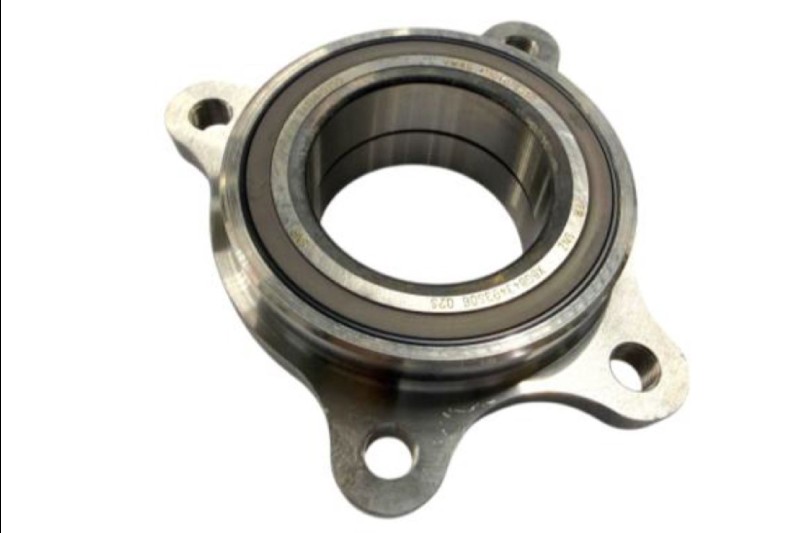
No success for Grasser Racing Team at the appeals court of the German governing body DMSB (Deutscher Motor Sport Bund) on Friday: The Lamborghini team’s appeal against the disqualification of race winner Mirko Bortolotti for a non-compliant wheel bearing at the DTM race at Oschersleben was rejected. The DMSB officially confirmed the decision.
Nevertheless, team principal Gottfried Grasser says the team will now make use of its right to appeal the decision again and take the case to an FIA court. “We were right on all of our points,” Grasser told Motorsport-Total.com.
“The DMSB believes it is right as well. So if it’s 50:50, the decision goes in favor of the DMSB. We are now going to FIA in Paris. So it is definitely going into the next round.”
Grasser announcement: Could DTM title decision be delayed?
As reported, the Grasser team has the option of appealing the decision again because it does not compete under a DMSB license, but under the license of the Austrian federation AMF (Austrian Motorsport Federation). For a German team, the national appeals process would be exhausted with a ruling by the DMSB appeals court – and the case would therefore be closed.
If the team follows through on its announcement and files an appeal with the FIA within seven days of the ruling being announced, this could theoretically mean that there will be no champion after the DTM season finale in Hockenheim.
The FIA hearing would not take place until after the final weekend from October 9-11 – and the outcome would directly affect the points standings of the title contenders: With two races remaining, Thomas Preining leads Maro Engel by 23 points and Marco Wittmann by 24 points. If Bortolotti’s disqualification were overturned, Wittmann would be 23 points behind and Engel 24 points behind based on the current standings.
Why Bortolotti was disqualified
But what has happened so far, and what is the case actually about? During a routine inspection of the top-four cars after the finish on July 26, it was discovered that the wheel bearing confiscated from Bortolotti’s winning car did not correspond to the DTM GT3 homologation or a reference part. As a result, the car was disqualified on August 13.
The stewards based their decision on Article 5.1 of the DTM Sporting Regulations. It states: “All parts illustrated or specified in the FIA GT3 Homologation or in the GT3 DTM Homologation must be used exactly as supplied by the respective vehicle manufacturer.”
“Any modification or processing is prohibited. Specification, material, weight or function may not be changed. In order to determine the conformity of the parts in question, the spare parts supplied by the vehicle manufacturer may be used as a reference.”
However, Gottfried Grasser’s team appealed the decision because it believed that the machining of the wheel bearings was “free,” apparently based on formal errors in the regulations.
How the DMSB hearing unfolded
The case then went before the DMSB appeals court in Frankfurt on Friday from 3 p.m., under the chairmanship of lawyer Rainer Wicke and two assessors. Grasser was represented by lawyer Thomas Fleischer, who works for the motorsport-experienced law firm Dr. Betzler.
DTM technical coordinator Robert Maas was also present as an expert and explained the technical aspects of the case. According to information from Motorsport-Total.com, the hearing lasted a little more than two hours. According to the DMSB, the central issue was whether the DTM homologation is actually valid if the details contained in it were never approved by the FIA.
Does the DTM supplementary homologation not apply?
For background: GT3 cars are normally homologated by the FIA. However, since 2025 the DTM has used a supplementary homologation that was introduced to eliminate gray areas – and therefore costs. According to the DTM Sporting Regulations, it takes precedence over the FIA homologation.
DTM homologation: This is how the Lamborghini wheel bearing is shown
Foto: Lamborghini
This is also clarified in Article 5.1 of the DTM Sporting Regulations. It states: “The requirements of the DTM GT3 Homologation take precedence over the FIA GT3 Homologation and the FIA GT3 Technical Regulations.”
That is highly significant in this case because, according to information from Motorsport-Total.com, the reference wheel bearing is shown in detail in the DTM homologation – including its exact specification, photos, drawings and installation instructions.
Lamborghini wheel bearing: Hardly any details in FIA homologation
The FIA homologation of the Lamborghini Temerario GT3 does not even contain a precise specification of the permitted wheel bearings, let alone photos. Only the dimensions and the material (metal) are specified. The Grasser team apparently argues that the DTM supplementary homologation was never approved by the FIA and that the FIA homologation should therefore actually apply.
What is interesting in this context is that the FIA is indeed not particularly enthusiastic about different GT3 series deviating from the FIA homologation and – like the DTM or GT World Challenge Europe (GTWCE) – going their own way. This could theoretically be a factor in the decision-making process before an FIA court.
At the same time, the Lamborghini Temerario GT3 benefited from the DTM supplementary homologation after its initial difficulties: Under a special regulation covering the rear wing and boost pressure, the new car was given improved performance and is allowed to compete in the DTM and GTWCE outside the performance window of the FIA homologation.
We want your opinion!
What would you like to see on Motorsport.com?
– The Motorsport.com Team
Disclaimer : This story is auto aggregated by a computer programme and has not been created or edited by DOWNTHENEWS. Publisher: motorsport.com




