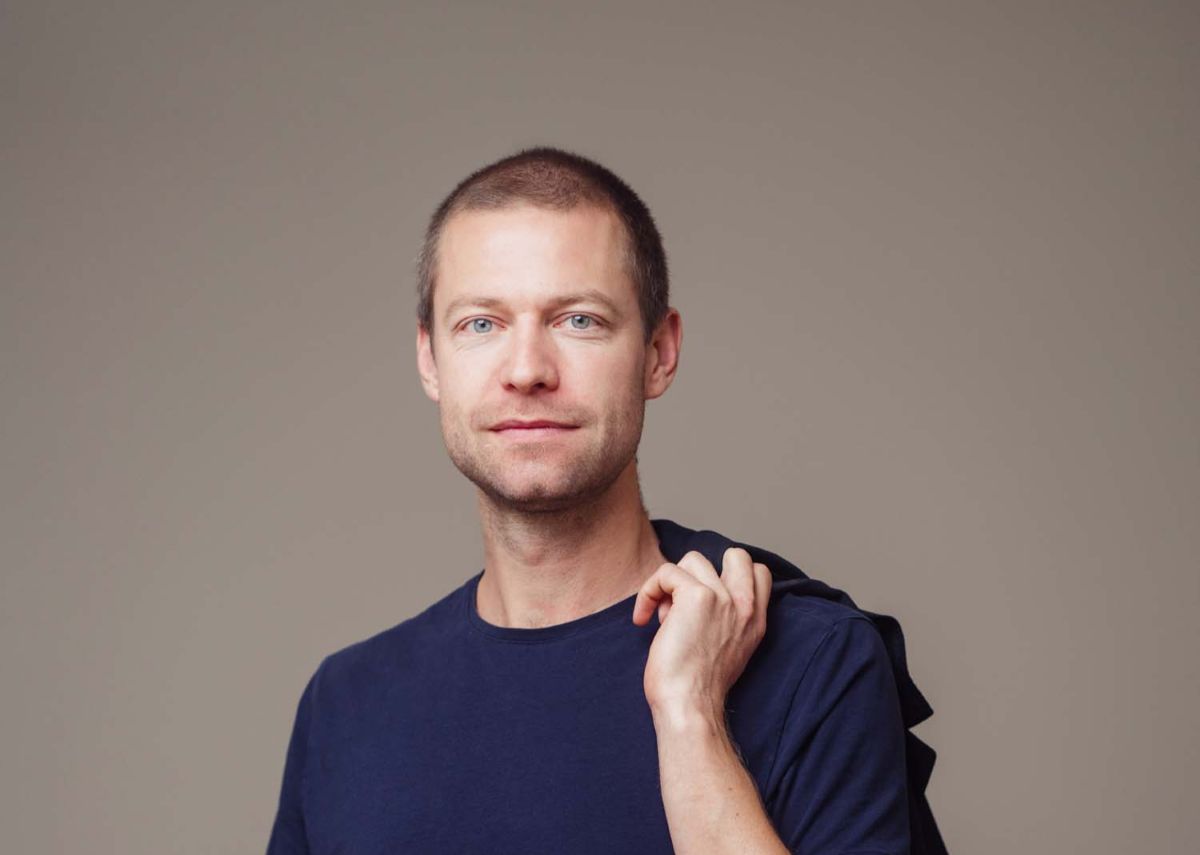
After travelling across Saxony-Anhalt, the team behind Recht Solidarisch says foreigners are already feeling the impact of anti-migrant policies. Lawyer Lukas Theune told The Local what they found and why they want more people to get involved.
When lawyers and civil society organisations began preparing for the possibility of a government led by the far-right Alternative for Germany (AfD) in Saxony-Anhalt, they didn’t start by drafting lawsuits. They started by listening.
Interview teams travelled across the state speaking to civil society organisations to understand where pressure was already being felt and what people feared might come next.
The findings became the basis for Recht Solidarisch, a legal support platform designed to help people defend their rights.
In an interview with The Local, lawyer Lukas Theune explained what those conversations revealed, why immigrants and foreign residents emerged as a key concern, and why he believes people should start preparing now rather than waiting for problems to arrive.
Foreigners increasingly in the firing line
One of the ideas behind the project is that legal rights don’t automatically protect themselves.
Policies or administrative measures that may ultimately be ruled unlawful can still affect people’s lives if people can’t find the information, support or resources needed to challenge them. It’s a problem to which foreign residents may be particularly susceptible.
“People without a German passport are treated in a particularly discriminatory manner in Saxony-Anhalt,” Theune said.
His conclusion isn’t based on assumptions but came after teams of interviewers travelled through the state speaking to people on the ground.
The researchers wanted to know what was happening, where civil society was coming under pressure and what people feared could happen under an AfD-led government.
“We formed teams of interviewers,” Theune explained. “Some came from Saxony-Anhalt itself, while others travelled there. We met with a wide variety of people, ranging from a local radio station to the Refugee Council to queer communities that organise Pride parades.”
READ ALSO: How civil rights groups in Germany are responding to the far-right threat
Despite the concerns, Theune said the organisations they spoke to were far from despairing.
“The people who are active have been active for years or decades, defending a free society,” he said. “They aren’t desperate. They keep fighting.”
But what did emerge more than once was a feeling that the rest of Germany wasn’t paying enough attention to developments in the state.
“There was sometimes a feeling of being left all alone,” Theune said.
What the interviews revealed
According to Theune, concerns about immigration policy surfaced repeatedly.
Many of the groups spoke about measures they believe already make life more difficult for refugees and immigrants.
One example is the payment card system for asylum seekers, which replaces cash payments with restricted payment cards. Housing conditions and access to basic support were also recurring issues.
“Attempts are made to deprive asylum seekers of food and deny them decent housing,” Theune said. “That’s already the way it is, but there are fears it will get much worse.”
The teams also heard repeated concerns about the loss of funding for civil society organisations.
“The allocation of resources is a major issue,” Theune said. “There are many small local struggles where city and county administrations are cutting funding because the organisations receiving support don’t align with their political agenda.”
A funding cut may not sound dramatic, but it can have immediate consequences. Advice centres can lose staff, projects can close and support networks can disappear long before legal challenges or political disputes have been resolved.
READ ALSO: ‘Revoke residency’ – What could the AfD do in Saxony-Anhalt after election win?
Concerns not limited to immigration
Theune also pointed to proposals in the AfD’s programme for Saxony-Anhalt that could affect other groups as well.
“The AfD has, for example, stipulated in its government programme for Saxony-Anhalt that children with disabilities should no longer be allowed to attend mainstream schools,” he said.
One reason Recht Solidarisch was created, he explained, was to give people a starting point if they wanted to challenge such measures.
“If parents want to challenge this legally, they can find helpful information on the site,” he said. “What arguments can they use? Which court would they have to go to? Where can they turn for help?”
Inspired by the legal response to Trump in the US
Theune told The Local that one of the biggest influences came from the United States and the way the American Civil Liberties Union (ACLU) prepared for Donald Trump’s return to office.
He recalled hearing ACLU lawyer Ben Wizner describe how the organisation had examined Republican policy proposals before Trump’s inauguration and prepared legal challenges in advance.
Theune mentioned one example cited by Wizner, in which a lawsuit was reportedly filed within an hour of the relevant executive order being signed.
“We found that very impressive,” he said. “A sensible way to prepare for a potentially new authoritarian government that no longer cares about what is legally possible or where fundamental rights are being violated.”
The problem, he said, is not simply that controversial policies might be introduced. The bigger concern is that measures which exceed legal limits can have real-world consequences if nobody is prepared to challenge them.
And, in order for that to happen, affected individuals and organisations first need to know their rights, find legal support and bring a case.
READ ALSO: What to do in Germany if you experience workplace discrimination
What foreign residents can do
For Theune, the most important message for foreign residents is not to accept discrimination as inevitable.
“We don’t accept this,” he said.
It’s a phrase that captures the wider philosophy behind the project – people should not assume that a policy is beyond challenge simply because a government announces it.
Lukas Theune is one of the organisers behind Recht Solidarisch. Photo courtesy of Lukas Theune
Theune’s advice to foreign residents is straightforward: get informed, connect with others and don’t wait until a problem becomes personal before learning where help is available. Support networks exist and legal challenges can be organised collectively rather than individually.
“We want to encourage people to come closer together and show solidarity. We want them to realise that this is the situation in Saxony-Anhalt right now, but who knows how things will develop in other federal states,” said Theune.
“We really hope that people without German passports won’t just accept this situation.”
Practical help
More immediately, the team behind Recht Solidarisch is also looking for feedback from The Local’s readers.
For example, the website – which only launched in mid-September – is currently available in German, something Theune acknowledges could be a barrier.
The team wants to know whether English-language versions or versions in other languages would actually be used.
“We’d be really interested to know: Can you make use of the site if you translate it using DeepL?” said Theune. “Would you like an English translation? Would that help you? Would you use it? Which other languages do people want?”
Disclaimer : This story is auto aggregated by a computer programme and has not been created or edited by DOWNTHENEWS. Publisher: thelocal.de