Ministers are working up sweeping plans for welfare changes including scrapping a key disability benefit for under-25s and replacing it with a multibillion-pound package of support to get into work, the Guardian has learned.
Whitehall sources said the package of changes under debate was much bigger than previously thought, as Andy Burnham’s government hopes to persuade more people on benefits back into work.
The move could be fraught with political danger after last year’s dramatic welfare rebellion by Labour MPs. But ministers have spent weeks trying to persuade them the plans are about reform, and feel confident opposition has waned.
The plans are still awaiting the conclusions of reviews by Alan Milburn, who is looking at young people’s employment, and the Timms panel, which is examining the personal independence payment (Pip), a non-means-tested benefit that helps sick and disabled people with support costs.
However, a central option under consideration for young people is removing the health element of universal credit for claimants under 25, which has already been almost halved to £217 a month, and offering intensive support for people to get into work. The possibility of removing it for existing claimants – not just new ones – is being looked at.
The extra support will include subsidised jobs for younger people, more targeted “back to work” schemes and support with mental health, as part of a drive to help more of the nation’s one million 16 to 24-year-olds not in work, employment or training (Neets) back into the workplace.
As part of the same package, officials are looking at a new system to replace the Pip, which is claimed by four million people, after attempts to change existing eligibility criteria were rejected by MPs last year.
One possible plan is for a separate regime to apply to the under-25 agegroup, with reduced or withdrawn entitlements – although those with the most severe and debilitating disabilities would not lose any money.
More broadly, officials are working up plans under the replacement system for a new set of eligibility criteria and assessments for the extra costs of disability, and looking at whether this would apply to all claimants of working age, or those below a cut-off point such as 50 or 60. Again, those with the most severe conditions would not lose money or be reassessed.
Officials have also been returning to the idea of cuts to the Motability scheme at a future budget, after axing tax breaks worth £300m. The scheme allows disabled people to use their Pip benefit to lease new cars for three years.
One Whitehall source said removing or further cutting the health element of universal credit for those older than 25 had been considered, but government sources said this was not on the table.
Officials have looked at systems in other countries, such as Denmark, which restricts access to its “disability pension” for under-40s, who instead are given help with flexible jobs and training unless they have no ability permanently to work.
A government source said: “We will be bringing forward a comprehensive package of support and reform to tackle the scandal of a million young people not in education, employment or training. The details are yet to be decided, but we are committed to enabling work and opportunity, while always protecting those unable to work.”
The significant changes would need legislation, with ministers and officials looking at a bill encompassing the replacement for Pip and changes to the under-25 system to be presented in the next session of parliament next year.
Pat McFadden, the work and pensions secretary, used his conference speech this week to describe changing the welfare system as a “moral crusade”, saying too many younger people were stuck claiming benefits for too long.
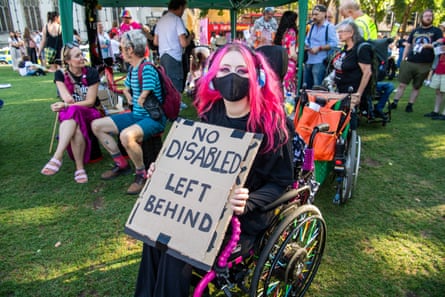
However, the scale of the plans could reignite concerns among Labour MPs about the impact on the cost of living for disabled people, particularly when Pip is a non-means-tested benefit that is unrelated to a person’s employment status.
Kemi Badenoch, the Conservative leader, has gone further by saying she would ban young people from signing straight on to the benefits system if her party won the next election, as part of a plan to cut £23bn from the welfare bill. Under-25s with less than six months of continuous employment would no longer be able to claim universal credit and would instead have to undergo intensive job coaching.
Reform UK plans to cut the overall welfare bill by £50bn, with Pip replaced by another cash benefit that would be restricted to only the “gravely ill and severely challenged”, while “lower level conditions” would get support overseen by local authorities.

Polling suggests that while the public favours cutting the welfare bill overall, they believe that tackling the root causes of joblessness instead of cutting benefits is the best way to do it. Burnham has said he wanted to avoid “crude cuts”, and used his party conference speech to signal an overhaul of the welfare system to pay for an expansion of youth jobs and training support.
UK welfare spending has reached £333bn this year, with pensioners receiving roughly 55% of the budget, and young people including Neets – but not children – about 2.5%. Milburn said it was “shameful” the government spent 25 times as much on benefits for them than it did on supporting them into work.
More than 40 of the UK’s leading charities warned ministers earlier this year against imposing tougher benefit sanctions or cuts on disabled young people.
In their joint letter to Milburn and McFadden, they said cutting support or bringing in sanctions risked pushing thousands of vulnerable youngsters deeper into poverty and further away from employment.
The disability charity Scope has estimated about half of households with an under-22 receiving the universal credit health element are already in poverty, which it said could rise to more than nine in 10 if support was removed.
Campaigners warned that any move to cut benefits or increase conditionality rules was likely to drive many youngsters further away from the jobs market.
Lucy Schonegevel, the director of impact at Action for Children, said: “We are deeply concerned by reports that disability benefits for under-25s could be cut. If confirmed, that would be at odds with the prime minister’s recent warning against ‘crude cuts’ … Serious investment in high quality, tailored employment support is vital, but employment support alone cannot overcome a lack of jobs.”
A DWP spokesperson said: “The Milburn and Timms reviews, due in the autumn, will lay the foundation for sustainable reform, and we will not pre-empt their findings.
“We are already changing the system through the youth guarantee, narrowing the gap between universal credit standard and health rates, restoring face-to-face assessments, and investing a record £3.5bn in employment support for disabled people and those with long-term conditions. We will always ensure there is a safety net for the most vulnerable and those who are unable to work.”
Milburn has said that too few young people who moved on to disability benefits received help into work. Many became “trapped” on benefits, with evidence showing half were not in work 15 years later, an outcome he called a “catastrophic failure”.
He appeared to hint at the potential political risks of cuts to benefits at a Labour party conference fringe meeting on youth employment on Monday, saying “when it comes to benefit cuts it will be tricky” – but added that not acting would be financially unsustainable and worse for young people.
About 184,000 young people in the UK aged 16-24 receive the universal credit health element. The government has already cut this benefit, having previously announced a 50% reduction to £217 a month for most new claimants from next April.
Disclaimer : This story is auto aggregated by a computer programme and has not been created or edited by DOWNTHENEWS. Publisher: theguardian.com