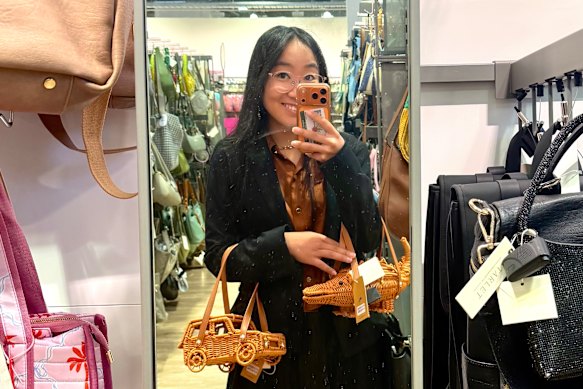
Since the beginning of the year, my mortgage repayments have ballooned by nearly $300 a month. My savings, of course, have taken a hit – but mostly from me spending more (and not necessarily on the things I strictly need to be buying).
It sounds a bit counterintuitive. The conventional wisdom is that my spending on goods and services should shrink as I find myself pouring more of my income into my mortgage, especially if I’m feeling pessimistic about the economy and want to build up a bigger safety buffer.
After all, cutting back spending is the rational thing to do when we’re faced with cost-of-living pressures and warnings of a slowing economy, right? We tighten our belts and stash away what we can.
It’s also what the Reserve Bank is relying on happening. Interest rates work in various ways. But especially in Australia, where most people’s borrowing costs move in line with the official cash rate set by the Reserve, the main way they work is by reducing the amount of money people have to spend.
That’s supposed to weaken overall demand and reduce how much businesses can raise prices.
Yet, despite five interest rate rises this year and prices continuing to grow above the Reserve Bank’s 2 to 3 per cent target, Australian consumer spending has remained relatively resilient.
Of course, some of this can be explained by the fact that some Australians – largely those who are older, have paid off their mortgage and have large savings in the bank (which grow faster as interest rates rise) – have become better off and more willing to spend and enjoy the finer things in life.
It’s called the ‘lipstick effect’: small, indulgent purchases (such as a nice lipstick) can, in tough times, make us feel disproportionately good.
Consumer spending is also partly driven by outlays most of us don’t have a choice but to partake in.
For example, while some of us might have curbed our car usage (or, if you’re like me, never driven to begin with), many have no choice but to continue paying for fuel even as the price has surged thanks to conflict in the Middle East.
The oil-price surge has also flowed through to other parts of the economy, including the cost of manufacturing and transporting many of the things we buy, among them groceries.
Spending on things like food, utilities and fuel is generally considered non-discretionary: we don’t really have a choice about whether to stop feeding ourselves, powering our fridge or turning up to work.
As the prices of these things and essential services such as healthcare have continued to rise, so has our overall spending, whether we like it or not.
But as several major banks have noted, discretionary spending – cash splashed on “nice to have” things including holidays, entertainment and nice clothing – hasn’t shrunk either. In fact, the biggest bank in the country, CBA, said discretionary spending in September was up nearly 7 per cent compared with a year ago.
Commonwealth Bank senior economist Ashwin Clarke said households still appeared to be prioritising spending on things such as the performing arts, live entertainment, electronics and gambling.
Part of the reason for this, he said, was that interest rate changes could take some time to be passed on to mortgage repayments, and that households tended to take time to cut back when budgets came under pressure.
Undoubtedly, there are those who are really doing it tough. While most households are ahead on their mortgage repayments or have solid savings buffers, there are some that have fallen into financial hardship and others that are only just staying afloat.
But for those who are managing to stay afloat, even if things are a bit precarious, it’s not necessarily surprising that spending on non-essentials continues.
The past few years have been mentally and emotionally exhausting for many people: we’ve tackled a pandemic and geopolitical tensions, and confronted acts of violence that have scarred communities.
Add to this the constant pressure of seeing prices growing faster than wages or working extra jobs or hours, and it makes sense that people want, or perhaps need, an escape.
What might seem unnecessary may actually become especially important during difficult times.
While shopping excessively can lead to distress and financial hardship, buying things can also relieve stress or bad moods (sadness more so than anger, according to some studies). It’s probably the reason why the term “retail therapy” exists: spending can be a way we cope with difficult times.
It might be because buying things we want gives us a sense of control: something we may feel we lack when we’re sad or stressed. Being faced with soaring prices, for example, can make us feel a bit helpless. By buying something we don’t necessarily need, but which brings us joy, we can feel like we’ve regained some control.
Indulging in this self-rewarding behaviour can also boost our ego, self-esteem and sense of emotional security, and help us feel like we’re maintaining our sense of identity. When shared experiences such as concerts and sporting events are indulged in, this can also help us feel more connected. And travel, while it might feel indulgent, is the ultimate escape and perspective shift we might be craving when life feels hard.
It’s also possible that while our incomes (adjusted for inflation) remain lower than they were before the pandemic, the past couple of years of above-inflation growth in wages has put most Australians in a slightly better position and led to a period of “revenge spending”. That is, making up for the purchases and experiences we put off during the pandemic and for several years after it.
That doesn’t mean big-ticket items are much more affordable, though. While house prices have dipped recently, they remain out of reach for many Australians after decades of property prices growing faster than wages. It may not seem rational (wouldn’t you save more?) but when large and long-term goals feel less achievable, many people end up reallocating income to immediate, gratifying purchases. Some label this “doom spending”.
These micro-luxuries – things like cosmetics, a nice coffee, or dining out at a casual venue – are generally seen as unnecessary purchases (and therefore something that, when budgets are tight, we’re more likely to cut back on) but during downturns, the way we think and behave can change.
It’s called the “lipstick effect”: small, indulgent purchases (such as a nice lipstick) can, in tough times, make us feel disproportionately good. And if there’s any time that a pick-me-up might feel especially welcome, it’s when we’re not feeling the best.
Most of us want inflation to come down, and one of the ways we can bring this about is to cut how much we’re spending. But we’re all hostage to what’s called the “collective action problem” in economics: most of us would benefit from lower price growth, but there’s little incentive for any of us, individually, to slash our spending in order to achieve this. Why? Because those of us who did show restraint would bear the cost, but there would be little benefit to making this sacrifice unless enough of us agreed to reduce spending enough to dampen demand and inflation.
All this reminds us of some important things about economics. First, humans do not always act as rationally as most economic theories assume. Second, our perceptions and behaviours are not set in stone and can be affected by how we’re feeling and the environments we’re in. And third, we’re not completely crazy for spending more when we might be expected to save.
It might feel like a contradiction that we’re spending more on “unnecessary” things while facing cost-of-living pressures, but that’s not necessarily the case. In tough times, restraint can feel especially punishing, and a nice treat might feel closer to essential.
The Business Briefing newsletter delivers major stories, exclusive coverage and expert opinion. Sign up to get it every weekday morning.
 Millie Muroi is the economics writer at The Sydney Morning Herald and The Age covering workplace and economics. She was formerly an economics correspondent based in Canberra’s Press Gallery and the banking writer based in Sydney. Instagram/TikTok: @millie.muroiConnect via X or email.
From our partners
Disclaimer : This story is auto aggregated by a computer programme and has not been created or edited by DOWNTHENEWS. Publisher: www.smh.com.au