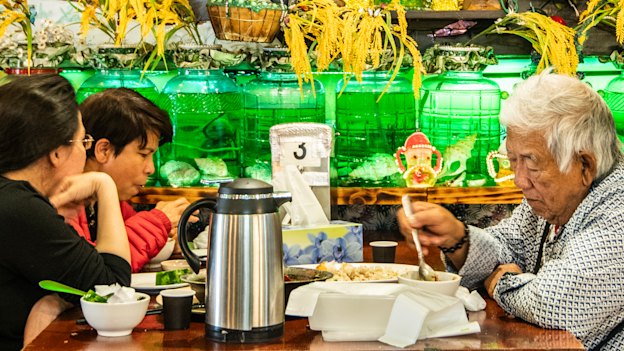
Everyone in western Sydney has a secret. It could be a takeaway curry spot in Homebush west. It could be the butcher in Granville with a secret grill out back. Or a burek spot in Cabramatta that’s discussed in hushed tones.
But a series of massive openings in Sydney’s west – including the metro, the Powerhouse Parramatta and the Western Sydney International Airport – has brought a wave of visitors and an existential question: Should those secrets be shared?
Should the family-owned eateries that have reconnected generations of migrants to their traditions be open to everyone? Should the many spots to dance to non-English music be shared?
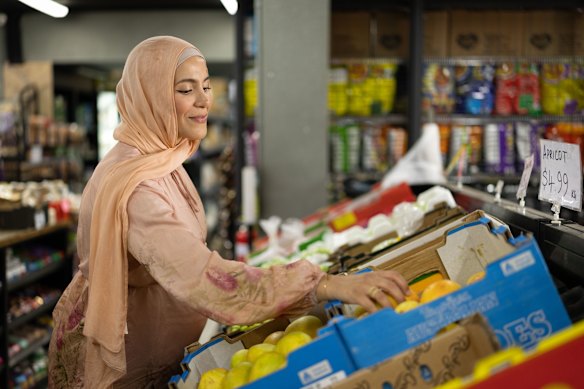
Or, in the interest of preserving the culture and history of western Sydney, should those secrets be kept in a vault, away from outsiders?
Bankstown Poetry Slam co-founder and director Sara Mansour admits she is wary of the flipside to blurring the divide between Sydney’s east and west.
“I feel very protective over the legacy that migrants have created and sustained in these communities for so long.
“We take so much pride in what we’ve built, despite all the racism and all the discrimination and all the bigotry.”
She describes a steady flow of people from outside the region visiting the poetry slam, forcing her to navigate a narrow path between welcoming popularity and conserving the event’s local connection.
It’s a dynamic that could become increasingly common as western Sydney is eyed with curiosity by the rest of the city, with its racial histories, economic and cultural output slowly being recognised as essential to Sydney.
And while there isn’t overt opposition to that process, there remains trepidation the rush to uncover it may destroy some of the things that make it special.
Food as currency
Thang Ngo has always believed in the currency of food and respect.
Both are integral to western Sydney. They underpin the region’s interconnected communities and act as an economy all its own.
“My mum would take spring rolls to our neighbours after they help us. We couldn’t speak English, and we couldn’t do anything else to thank them. It was our currency.
“Food has always been a way for us to find common ground,” Ngo adds.
The former Fairfield councillor has been at the forefront of the fight against negative perceptions of western Sydney for nearly three decades.
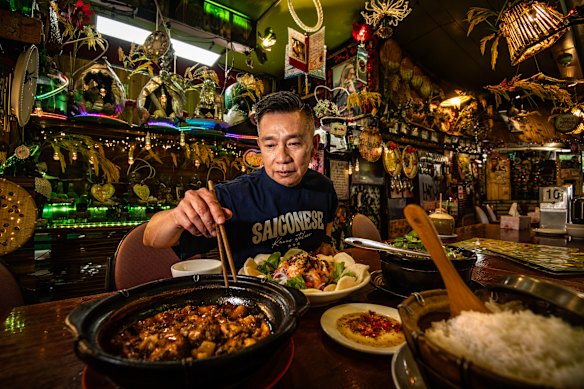
He took that fight online, starting a food blog called Noodleys to introduce people to the thriving culinary scene in Sydney’s west he felt was ignored.
“All the food reviewers were writing about fine dining, hatted restaurants, but the mom-and-pop restaurants out in Cabramatta, out in Lakemba, out in Bankstown, the people who actually work seven days a week, didn’t get any mention in the mainstream media,” Ngo said.
“In fact I suspect those reviewers didn’t go much further than Ashfield, to be honest.”
Ngo advocates for an open city, or “one Sydney”, and says gate-keeping or withholding food spots is as much a barrier as imagined lines dividing the city.
But to Vivian Pham, a Vietnamese-Australian author from western Sydney, there is a danger the region may be reduced to the food it offers.
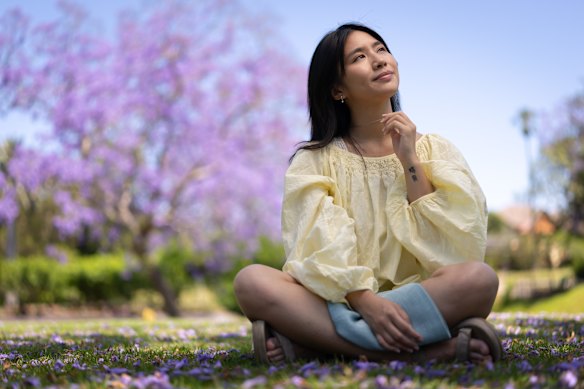
She wondered if the cheap lunches offered by migrant communities in the region have become the “price of entry for different migrant and refugee groups to become accepted”.
“It can feel like we only accept migrants or refugees when they cook for us and when they offer a cheap lunch special for us, and then we see the value in their work and their lives.”
Pham is deeply plugged into the region’s swelling cultural scene, rattling off a series of events and performances she’s excited about like lines of poetry.
She says western Sydney’s cultural separation from the rest of Sydney is a positive. In her eyes, this division fostered a unique identity, and a “hyper-multiculturalism”.
“Western Sydney can feel so far from the world when you’re growing up, but you eventually realise how cosmopolitan it makes you. Because every suburb is ruled by a different culture, and we share borders that are so malleable.”
She describes an almost utopian vision of migrant communities intermingling and feeding off each other, their traditions and identities forming a unique tangle.
To her, this web of faith, food and aspiration has become productive, fuelling the region’s growth and its magic.
That mix has also generated something unique: a shared identity.
Trading in secrets
Nathan Asani has always had a forensic understanding of Sydney’s niche cultural lines, and he has a prediction:
“Western Sydney will become the cultural centre of the city.”
Asani is the voice behind popular Instagram account “Monkey Boy”, which seeks to tell stories about life in Sydney via a series of biting memes.
He has skewered all corners of the city, placing him in an ideal position to discuss Sydney’s changing culture.
“The western Sydney identity is definitely one of the most unique identities in Australia, and I think it will come to inform the rest of the city’s identity as it becomes the face of Sydney.”
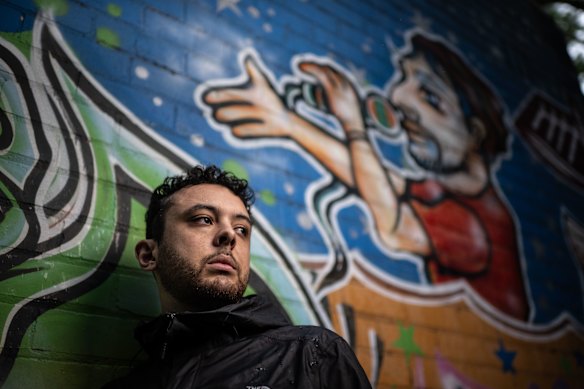
He believes the west represents everything eastern Sydney is not: gritty, interesting, affordable and young. He thinks the city will be enamoured by this vision of itself, and in doing so, collapse the sense of segregation.
Asani says western Sydney can attract a “Bourdain-esque” crowd – a reference to the late US globetrotting chef Anthony Bourdain – and people seeking to elevate their cultural capital through seeing a region considered remote.
Mansour, who built Bankstown Poetry Slam into an institution, shares how to balance the commodification of culture and genuine curiosity.
“Don’t just consume. Show up, show support, and be part of the community.
She says the process is one of mutual respect. “Of course we will invite you into our homes, feed you and give you everything. We’re going to share knowledge and resources because that’s who we are.
“And if that’s not who you are as well, then you’re just being extractive and exploitative. The worst thing you can do to us is be disrespectful. Especially when there’s a wealth or class discrepancy.”
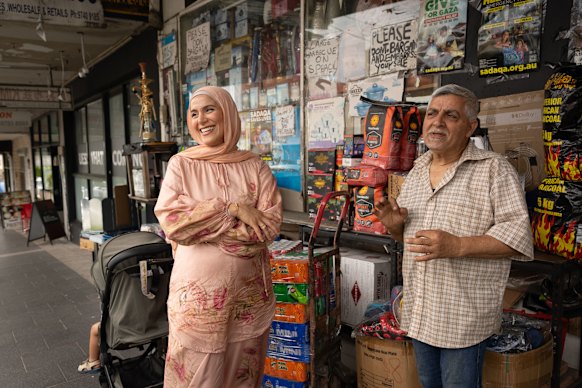
It’s a vision of Sydney where the trading of secrets becomes the basis for a unified city, where nobody keeps their favourite spots under wraps any more.
It is also one where believing in any line dividing the city becomes irrelevant.
Deputy Premier and Minister for Western Sydney Prue Car believes the invisible cultural divide between east and west is becoming pointless.
“I think the concept of a ‘Red Rooster line’ or something like that is pretty outdated. I think western Sydney has always been the heart of the city, and people are only realising it now.”
Car believes the metro, airport and Powerhouse openings are about improving access and social cohesion, and the government hopes the greater exposure will bring more people from disparate parts of Sydney together.
Despite acknowledging that some might still withhold their favourite spots to preserve the western Sydney they know, Car is happy to share hers: The Log Cabin Hotel, overlooking the Nepean River, in Penrith.
“I go there all the time with my parents, and they always ask, ‘Why would you live anywhere else?’”
Start the day with a summary of the day’s most important and interesting stories, analysis and insights. Sign up for our Morning Edition newsletter.
Disclaimer : This story is auto aggregated by a computer programme and has not been created or edited by DOWNTHENEWS. Publisher: www.smh.com.au