TEHRAN – The World Food Program (WFP) has released a report, expounding on activities in Iran over the month of October.
In October, WFP food assistance reached 36,572 beneficiaries, including Afghan and Iraqi refugees, through a hybrid combination of in-kind food and cash-based transfers (CBT).
Under the in-kind food assistance, WFP distributed 287.42 mt of fortified wheat flour (ration of 9 kg per person). In larger settlements, the flour is provided to support well established bakeries, while in smaller settlements, flour rations are distributed directly to beneficiary households.
Under cash-based assistance, the minimum Expenditure Basket was revised in collaboration with CAFIA, thereby increasing beneficiaries’ cash entitlements by up to 67 percent effective October 2026.
Monthly transfers for male-headed households rose from IRR 8 million to IRR 13 million per person, while those for female-headed households increased from IRR 9 million to IRR 15 million per person.
By October, WFP Iran helped ease the financial burden associated with the gluten-free dietary needs of 60 refugee celiac patients from WFP’s beneficiaries by increasing their additional cash entitlement From IRR 9.7 million to IRR 40 million on top of their regular food assistance.
WFP supported 416 refugees with disabilities across ten settlements, with their additional monthly cash entitlement increasing from IRR 3 million to IRR 6 million per person, on top of regular assistance.
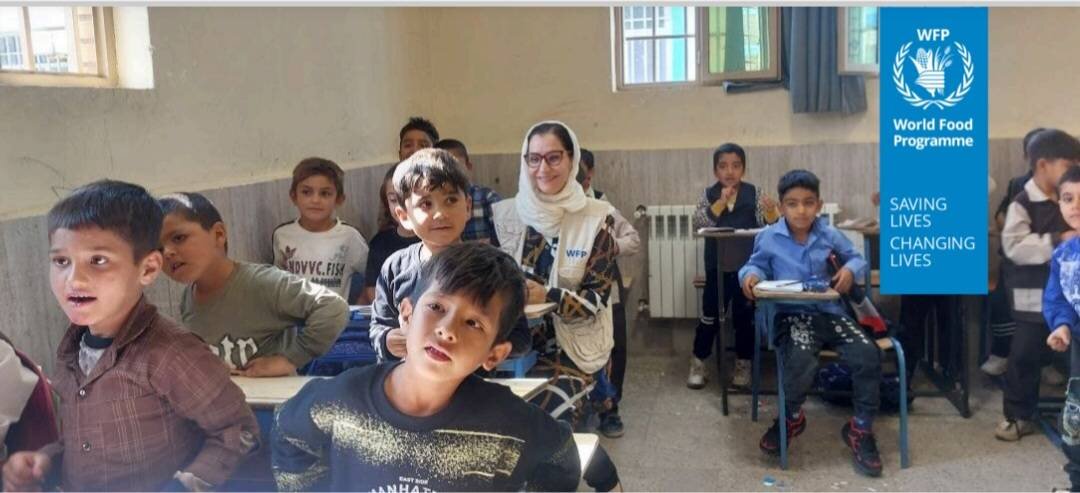
The school feeding program and education incentives resumed in October, following the reopening of schools for the new academic year, reaching 8,540 students.
In October, WFP supported 27 income-generating projects in 18 settlements to improve economic resilience and self-sufficiency for 334 refugees, 44 percent of whom were women, and the remainder were youth. These activities included welding, tailoring, baking, farming, and other trades, providing opportunities for women and youth to develop practical skills, strengthen social connections, and actively engage with their communities.
WFP continues to oversee coordination with the United Nations Office for Disaster Risk Reduction (UNDRR) and MoFA on Sendai Framework reporting, supporting the monitoring and reporting of disaster losses, risks, and progress against global disaster risk reduction targets.
Additionally, discussions were held with UN partners to consolidate DRRM priorities for the two-year United Nations Sustainable Development Cooperation Framework (UNSDCF) covers 2023–2027 extension, helping integrate disaster risk reduction into strategic UN planning and government engagement processes.
During October, eight rounds of cash transfers were completed for Iranians affected by the conflict across six provinces: Tehran, Alborz, Sistan-Baluchestan, Bushehr, Hormozgan, and Khuzestan. A total of 2,568 households (9,568 individuals) received WFP assistance during the reporting period.
Verified and eligible households received cash assistance based on household size. Households with one to three members received IRR 210 million; households with four to five members received IRR 350 million; and households with six or more members received the maximum transfer amount of IRR 420 million.
Operational needs in Iran remain fluid and require regular adjustment and reassessment of funding requirements.
Despite the uncertain response scale –driven both by continued refugee movements and the evolving needs of the host community – available resources remain insufficient to meet the needs of impacted populations under any currently foreseeable scenario.
In 2025, WFP sustained food assistance to some 33,300 vulnerable refugees living in 20 settlements across 13 provinces, including 404 refugees with disabilities (40 percent women) who received monthly cash top-ups. About 183 women and 190 men received WFP livelihood support.
WFP doubled cash transfer values since January 2025, safeguarding access to food amid price volatility and protecting the most vulnerable households.
Assistance remained uninterrupted, with targeted adjustments: wheat flour entitlements reduced from 12 kg to 9 kg (Nov-Dec) and school snacks paused (Oct-Dec) to stretch limited resources.
To promote girls’ education and reduce barriers to attendance, approximately 2,629 girl students received cash incentives as part of WFP’s commitment to empowering young women. Some 9,261 boys and girls and their teachers benefitted from WFP school snacks.
For more than four decades, the Islamic Republic of Iran has hosted Afghans fleeing conflict and hardship. In 2025, WFP remained essential to protecting the food security of vulnerable refugees residing in 20 settlements, where households rely on shelter, education and primary health care by the Government and other humanitarian actors, complemented by WFP’s monthly food assistance (through cash and in-kind modalities).
The program’s focus is on maintaining a dignified minimum basic needs while prioritizing those with the highest vulnerability, including households headed by women and persons with disabilities.
Operations are implemented in close collaboration and coordination with the Center for Alien and Foreign Immigrant Affairs (CAFIA), WFP’s primary governmental counterpart, and with International Non-Governmental Organizations (INGO) and UN agencies, mainly the United Nations High Commissioner for Refugees (UNHCR), to ensure coherent refugee support and referral pathways.
Despite a complex year, marked by economic volatility and temporary operational risks, WFP sustained core assistance to settlement refugees. To safeguard purchasing power, WFP increased cash-based transfer values by 100 percent in January 2025 following the recommendation of a settlement-specific Minimum Expenditure Basket (MEB) assessment; this was complemented by a one-time cash top-up to cushion households during market instability and reduced income after the Iran-Israel 12-day conflict.
Targeted adjustments preserved program continuity: wheat flour entitlements were reduced from 12 kg to 9 kg per person for November-December, and the school snacks program was suspended for October to December.
These measures limit service disruptions while protecting life-saving transfers for the most vulnerable. Livelihood activities were scaled down given funding shortfalls and corporate efficiency measures, with WFP continuing to explore cost-effective, resilience-building options that can be re-activated as resources allow.
By December 2025, Iran continued to be one of the world’s largest refugee-hosting countries, sheltering approximately 2.5 million Afghans, including 773,000 individuals with official refugee status. Among them, around 35,000 critically vulnerable refugees reside in 20 settlements across 13 provinces.
MT/MG
Disclaimer : This story is auto aggregated by a computer programme and has not been created or edited by DOWNTHENEWS. Publisher: tehrantimes.com