
What can we see during the partial solar eclipse?
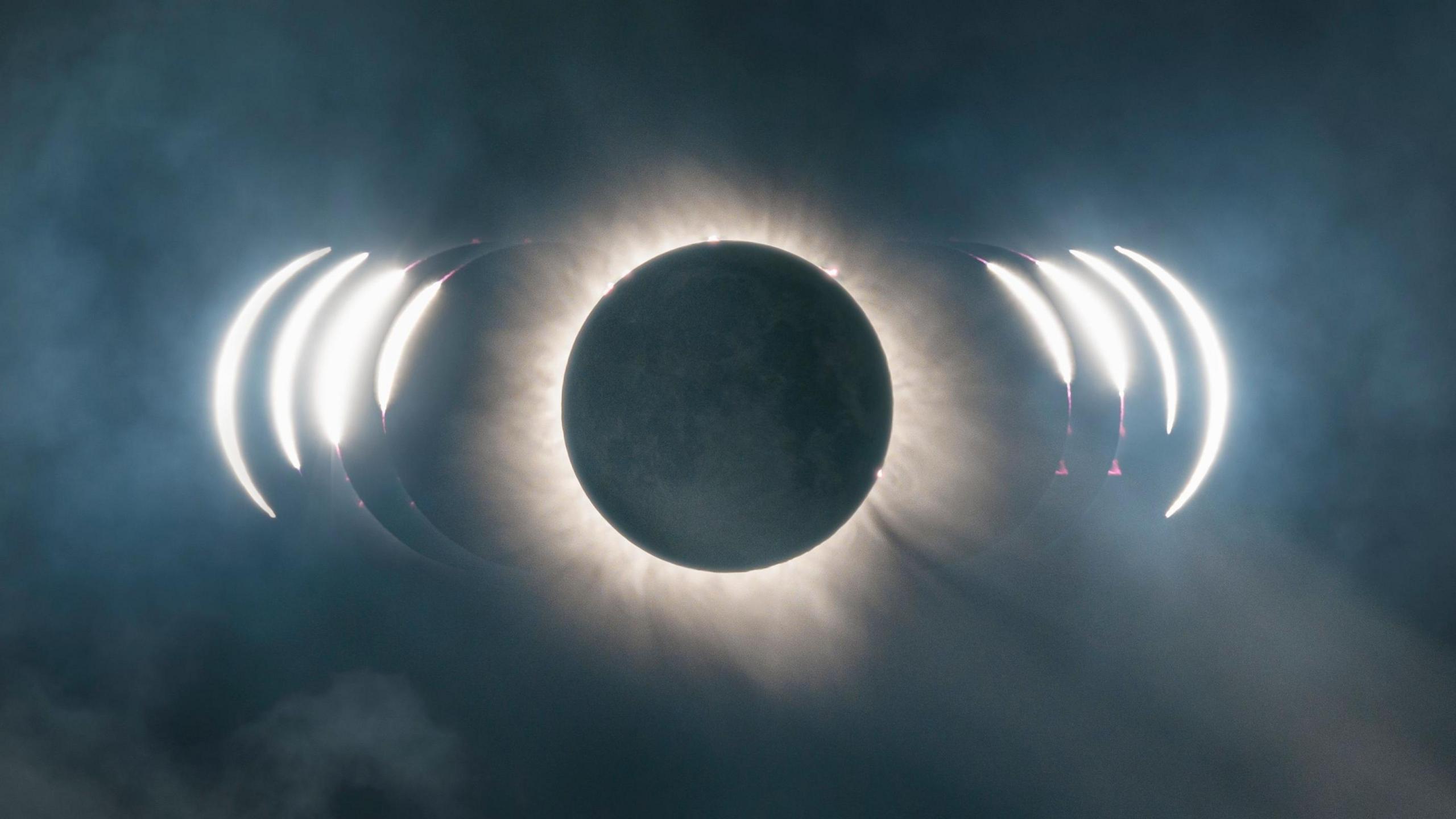
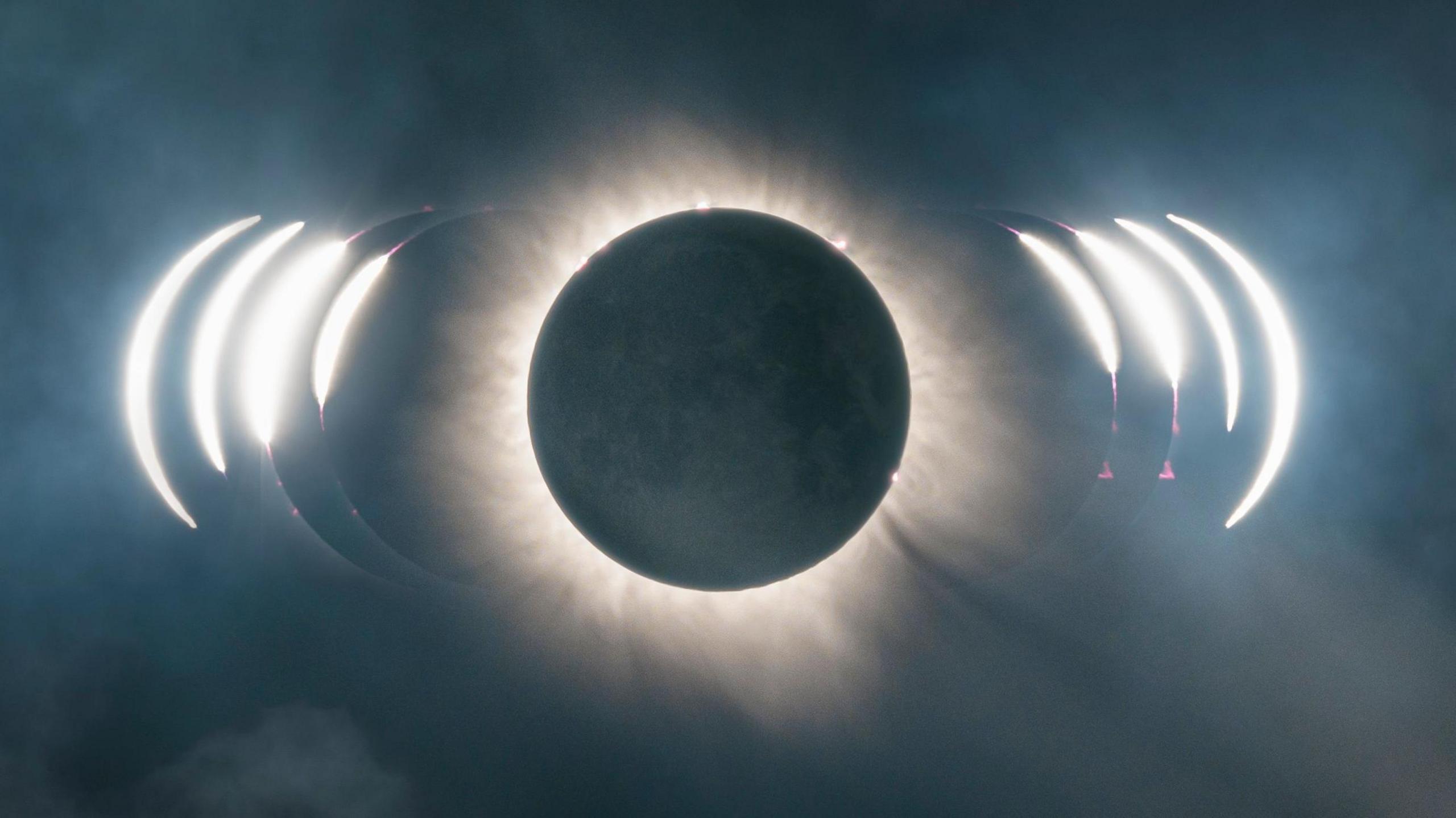 Image source, Josh Dury
-
Published
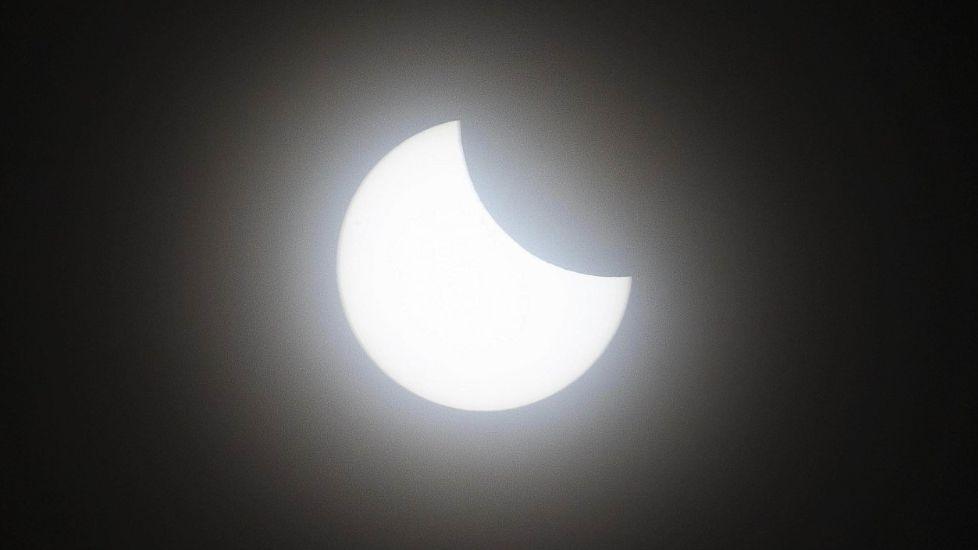
A partial solar eclipse is set to be visible across the South West and Channel Islands on Wednesday evening.
The entire event is set to last about one hour and 50 minutes, starting at about 18:20 BST and finishing by 20:10.
But what is a solar eclipse and just what is expected to happen?
The cosmic event requires the sun, the moon and the earth to be in a perfect alignment.
When this happens, the moon casts two types of shadows.
The team at the National Space Centre said the main event of this year’s total solar eclipse will be visible in a giant arc moving across from northern Russia to Greenland, Iceland, Spain and northern Portugal.
They said although the “arc of totality – the path the eclipse shadow takes – misses us here in the UK, we will still get to see over 90% of the sun covered by the moon”.
The next full solar eclipse in the UK is due to take place in 64 years, on 23 September 2090.
‘Birds will fall silent’
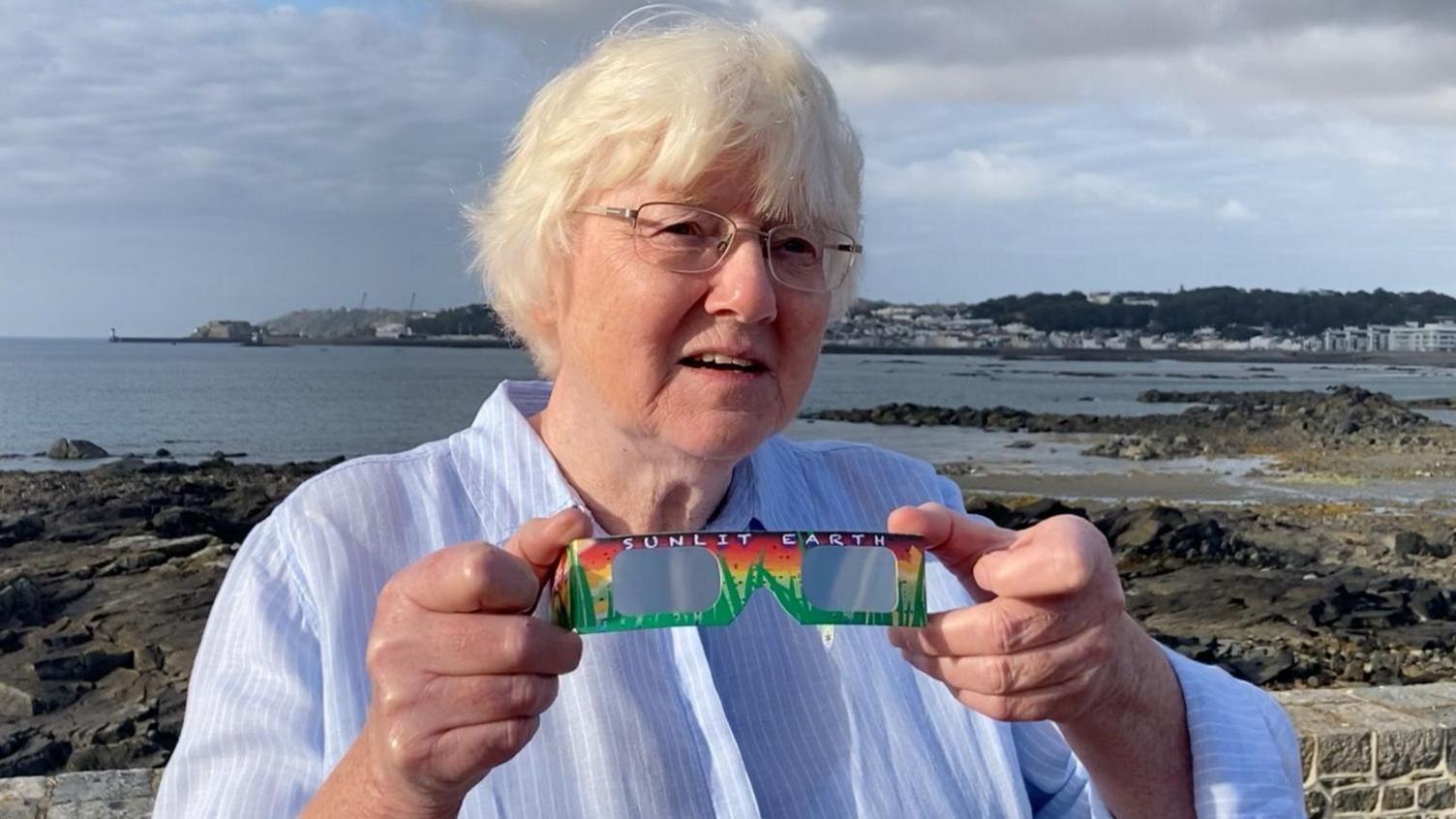
Guernsey-based Dr Jean Dean, fellow of the Royal Astronomical Society, said nature would alter its behaviour as the eclipse progresses.
She said: “First contact is when the edge of the moon touches the edge of the sun and after first contact, you will very quickly see the moon start to bite the sun.
“A little while after this, you should start to notice a slight change in temperature and the sky starting to darken.
“As the maximum approaches, nature will begin to respond. Birds will fall silent and nyctinastic plants (plants that open their leaves during the day and close them at night) such as clovers, dandelions and daises will close.
“Nature will then return to normal, the sky will lighten and the temperature will rise slightly.”
‘A bit eerie’
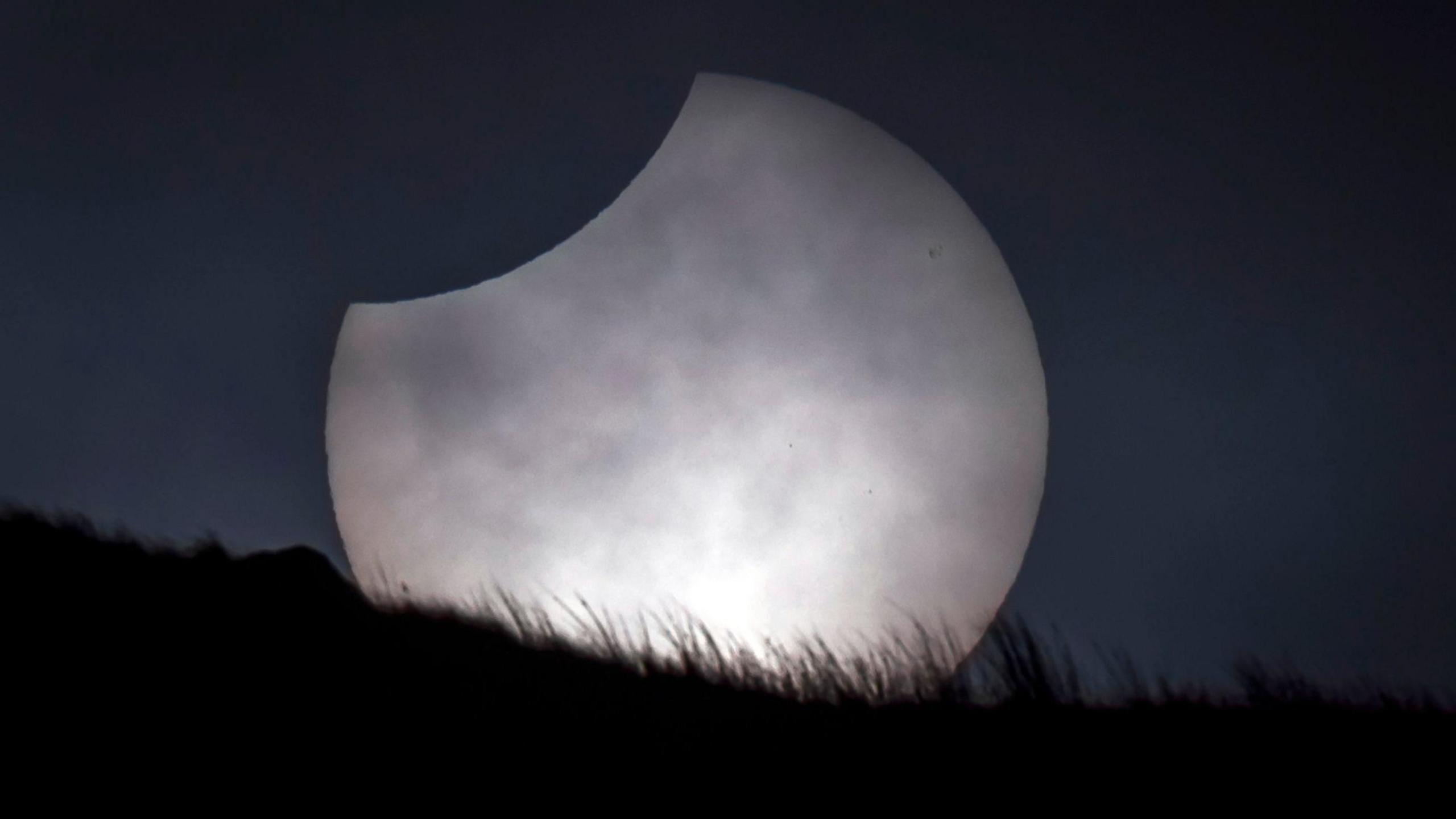 Image source, PA Media
Plymouth Astronomical Society chairman Chris Cooke said the darkness brought by the eclipse would be “eerie”.
He said: “I’ve been chasing eclipses as long as I can really, as much as my wife would allow me to do.
“All my holidays are eclipse chasing holidays.
“So what’s coming up in August is not a total eclipse from the UK, it’s a partial, but this partial is where the the moon will block out the sun almost fully, but not quite.
“It’s the darkest partial solar eclipse since 1999 and things will get a bit eerie.”
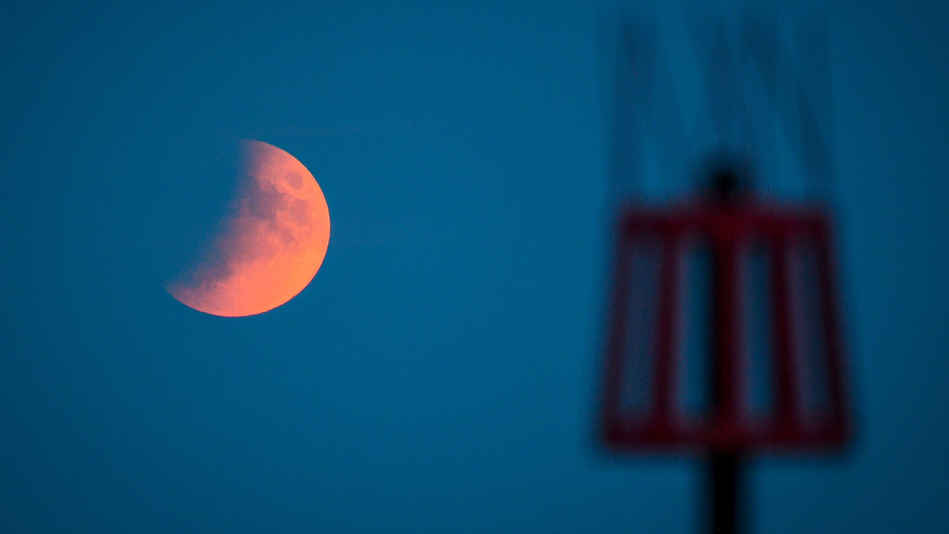 Image source, PA Media
People watching the eclipse have been urged to avoid looking directly at the sun without the right protection.
Following the 1999 total solar eclipse, the Royal College of Ophthalmologists reported, external about 70 cases of people experiencing vision problems after watching the eclipse.
The college said about 40% of those people had looked at it for less than a minute.
The UK Health Security Agency (UKHSA) has issued a warning and said the sun would appear dimmer than usual, which would make it easier to look at directly, which result in damage to eyesight.
The agency recommended the use of eclipse glasses and handheld solar viewers, providing they were genuine models.
The UKHSA also suggested alternatives such as a pinhole viewer, watching the sun’s image projected through a colander or the gaps between tree leaves, or projecting the sun’s image onto a sheet of paper using a simple pinhole projector.
Follow BBC Cornwall on X, external, Facebook, external and Instagram, external. Follow BBC Devon on X, external, Facebook, external and Instagram, external. Send your story ideas to spotlight@bbc.co.uk, external. Follow BBC Guernsey on X, external and Facebook, external.
-
-
Published3 days ago
-
-
-
Published2 days ago
-
Related internet links
Disclaimer : This story is auto aggregated by a computer programme and has not been created or edited by DOWNTHENEWS. Publisher: newsrss.bbc.co.uk




