TEHRAN – It is not a final peace treaty. It is a one-week, step-by-step starter deal.
Iran says: if the United States accepts our conditions — all of which, Tehran insists, were already promised in the interim agreement of June 17, known as the Islamabad Memorandum of Understanding (MoU) — then:
Days 1 to 5: the U.S. lifts military and economic pressure, fighting stops, and Iranian and Omani technical teams prepare the Strait,
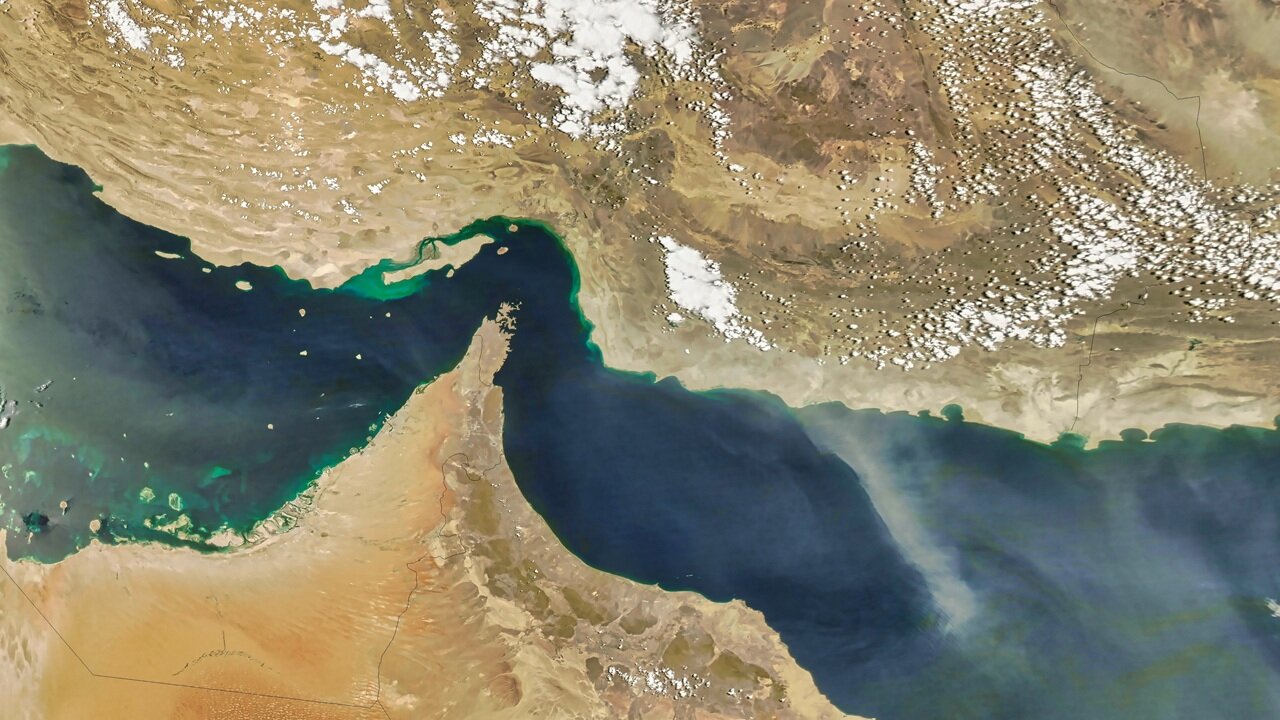
Day 6: the Strait of Hormuz reopens and normal commercial shipping resumes,
Day 7: Iran and the U.S. start talks on a final deal on “mutually agreed subjects,” including the nuclear program.
“The seven-day timeline will start as soon as the United States accepts this plan,” Foreign Minister Abbas Araghchi told reporters outside the UN Security Council in New York on September 25. “And on day seven, the talks with the U.S. will be started for the final deal.”
The formal paper was handed to the U.S. envoys Steve Witkoff and Jared Kushner through Qatari mediators during the UN General Assembly, September 22-25. The U.S. sent back its views last week, also via Qatar. Tehran says those views are now under review in Tehran.
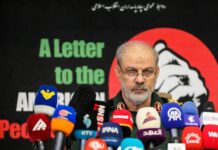
Parliament Speaker Mohammad-Bagher Qalibaf — who is also Iran’s chief negotiator — says reopening depends on seven conditions based on the Islamabad MoU:
“The position of the Islamic Republic of Iran is completely clear and firm, and the Strait of Hormuz will not be opened until our seven conditions, based on the Islamabad Memorandum of Understanding, are met.” — Qalibaf, October 4, in parliament.
No official English text of the plan has been published. What follows is reconstructed from the consistent statements of Araghchi, Qalibaf, Foreign Ministry Spokesman Esmaeil Baqaei, and Deputy Foreign Minister Kazem Gharibabadi.
Why do we need to know about the Islamabad MoU of June 17?
You cannot understand the 7-Day Plan without it.
After months of war that began in late February with U.S.-Israeli strikes on Iran and Iranian retaliation against shipping and regional bases, Pakistan and Qatar mediated a short interim understanding signed by Iran and the U.S. in Islamabad on June 17.
It was a 14-point MoU that did three things:
Established a brief ceasefire;
Created a 60-day window to negotiate a final peace;
Linked two files: (a) security in the Strait of Hormuz and (b) Iran’s nuclear program.
Under that MoU, Iran agreed to facilitate safe passage of commercial vessels from the Persian Gulf to the Sea of Oman and back, without tolls, while talks continued. Iran immediately opened technical talks with Oman — the other coastal state of the Strait — to implement it.
The MoU collapsed within weeks. Each side blames the other: Iran says the U.S. never lifted its naval blockade, never eased oil sanctions, and continued strikes; the U.S. says Iran kept attacking ships that did not follow its authorization rules, so President Donald Trump declared the deal “over” in July.
Iran’s argument today is simple, repeated by President Masoud Pezeshkian to Al-Jazeera: “We want nothing new. Just go back to that MoU and stick to it.”
Araghchi in New York put it the same way: “The actions the United States should take are not new. They are all already in the MOU.”
The difference is speed: 60 days in June is now compressed into 7 days.
What does Iran want the U.S. to do?
Tehran has not released a numbered list, but four core demands were detailed by Araghchi in New York plus three clarifications added by Baqaei and the Supreme National Security Council. Together they make the “seven conditions” Qalibaf refers to:
A full ceasefire on all fronts, including Lebanon
Not only in the Persian Gulf. Fighting must stop everywhere from day one. Araghchi explicitly named Lebanon. It remains unclear whether this also covers the renewed fighting between Yemen’s Houthis and Saudi Arabia.
End of the U.S. naval blockade
Lift the blockade of Iranian ports and islands in and around Hormuz and stop intercepting Iranian tankers. Baqaei’s wording on October 4: “a complete end to disruption of Iran’s commercial navigation.”
Oil sanctions waiver
Issue a license allowing Iran to legally sell and ship oil again.
Release of frozen assets — at least $12 billion
Make accessible Iranian funds frozen abroad. Iranian officials present this as a trust-building and humanitarian step, not payment for talks.
Cancel post-June unilateral sanctions
Lift the extra sanctions imposed after the June MoU on shipping, petrochemicals, airlines, rail and banking. Baqaei: “lifting all recent unilateral sanctions.”
Stop strikes and military intervention
End air and naval strikes and guarantee no new attacks during implementation. Qalibaf stressed Iran judges “actual behavior, not daily statements or tweets.”
Accept the Iran-Oman safe navigation route
Accept the safe lane mechanism agreed between the two coastal states, Iran and Oman, as the basis for traffic management — rather than a U.S.-led escort operation. Baqaei, citing Tasnim on Sept 23: “acceptance of the safe shipping route based on understanding between the two coastal governments [Iran and Oman].”
Secretary of the Supreme National Security Council Mohsen Rezaei summarized the first cluster as the three main ones: end war on all fronts, free the assets, end the maritime blockade.
How would the seven days actually work?
Araghchi gave the clearest timetable:
Day 0 – Acceptance: Washington says “yes” through Qatar. The clock starts the next morning.
Days 1-5 – Parallel steps: Fighting stops. The U.S. announces the ceasefire, stands down blockade forces, issues the oil waiver, and orders the release of funds. At the same time, Iranian-Omani teams do 4-5 days of technical work: clearing hazards, restoring vessel-traffic systems, notifying shippers and insurers.
Day 6 – Reopening: “The strait would be open,” Araghchi said. Normal maritime passage is restored.
Day 7 – New talks begin: With Hormuz open, nuclear and other issues go on the table for a final deal.
In short: Hormuz first, nuclear second. Tehran says nuclear talks cannot happen under blockade and bombing.
What does the U.S. say? Where is the deadlock?
President Trump said on September 26-27 he rejected the Iranian proposal as “unacceptable” / “insufficient” and, according to the Wall Street Journal, told aides that bombing could resume after the congressional midterms.
But diplomacy did not stop. Reuters reported on September 30, quoting an official briefed on the talks, that Washington’s reply had reached Araghchi via Qatar.
The U.S. public position, from UN Ambassador Mike Waltz and a White House official to CNN, is:
Iran wants “sanctions relief and billions in frozen assets before negotiations over its nuclear programme.” Washington is willing to give relief, but only with “concrete progress” on nuclear first.
In other words, both sides largely agree on what a final package contains — Hormuz + sanctions relief + nuclear steps. They disagree on *in what order*.
Baqaei confirmed this on October 4: “The Americans’ propositions are more or less in line with their previous positions, specifically on the nuclear issue. We told them our focus at this stage is the Strait of Hormuz.” He denied reports, notably in Bloomberg, that Tehran had offered IAEA access to bombed nuclear sites in exchange for sanctions relief: “Iran has not entered into nuclear discussions.”
Gharibabadi added the same day: U.S. views “are currently being examined inside the country… At the same time, Iran is preparing itself for any other possible scenario.”
Bottom line: Tehran’s message to an American reader is — Do in 7 days what you signed in June, then we talk about everything, including nuclear. Washington’s reply is — Show nuclear movement first, then you get relief. Qatar is now shuttling that sequencing dispute between the two capitals, while a second U.S. carrier stays in the region and Iran keeps Hormuz closed as its main leverage.
Disclaimer : This story is auto aggregated by a computer programme and has not been created or edited by DOWNTHENEWS. Publisher: tehrantimes.com