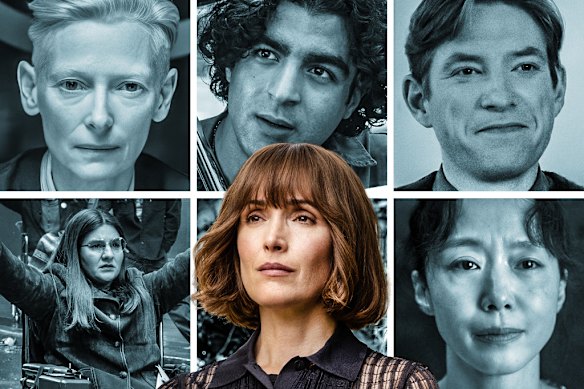
This week’s picks include Rose Byrne’s small-town legal drama The Good Daughter, the return of the Domhnall Gleeson mockumentary The Paper, the elegant Korean drama Possible Love and gritty German cartel drama 4 Blocks Zero.
The Good Daughter ★★ (Stan*)
Set in a small Georgia town full of secrets, corrupt cops and horrific violence that scar generations, The Good Daughter evokes the American literary lineage of the Southern Gothic. Not in terms of quality, but the quantity of its traumas – and its characters’ frequent quoting of Flannery O’Connor.
Adapted by Karin Slaughter from her best-selling thriller of the same name, The Good Daughter is a six-episode onslaught of violence that frequently stretches believability. It would be hard to recommend the series if not for its magnetic cast led by Meghann Fahy and Rose Byrne, who add tenderness and care into a somewhat callous, schlocky layering of traumas.
At the show’s centre are the Quinns: defence attorney Rusty (Brendan Gleeson) and his daughters who have followed him into law, Charlie (Fahy) and Sam (Byrne).
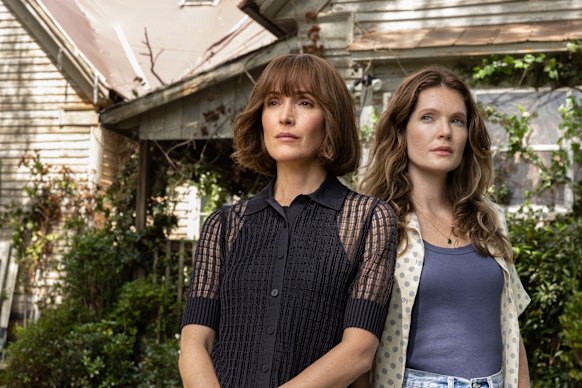
They were a family of four. As seen in The Good Daughter’s opening flashback to their childhood, the sisters’ relentlessly clever mother (Olivia Williams) was murdered in front of them before they were both attacked in a home invasion by two teenage boys.
Minutes later, The Good Daughter follows the adult Charlie as she witnesses a school shooting committed by Kelly, a teenager with an intellectual disability (Shayna Benardo, absolutely heartbreaking).
Given Charlie’s a witness and Rusty lands in hospital after being stabbed by an unknown enemy, Sam arrives reluctantly from New York to take Kelly’s case. With a sharp black bob, sheathed in artfully shapeless black clothing, Sam – now a patent lawyer – presents as the cold, prim-lipped opposite of Charlie, a warm-hearted country attorney driven by a sharp sense of justice.
The only visible clue as to Sam’s past is a slight limp that occasionally requires a cane – sleek, retractable and stored in her handbag – as well as chic prescription glasses that a local judge demands she take off. It’s one of many indignities the Quinns face, the town full of power-abusive police and furious locals who say they are lying about the attack.
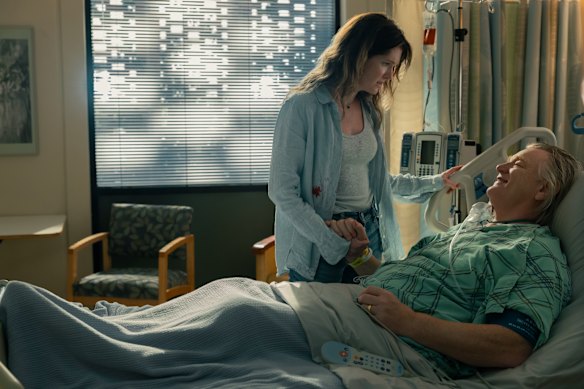
All a little relentless, right? There’s nothing wrong with a series examining how violence compounds and weighs down survivors – and it’s a credit to the cast, including Audrey Grace Marshall and Drew Cheek playing the Quinns in flashbacks, that The Good Daughter lets its audience feel that suffocating force, too.
The series isn’t humourless, either. Charlie is fond of a crude swear or explicit joke, while all three Quinns, in addition to quoting O’Connor and Emily Dickinson, are sharp-tongued. “Velma? Your sister’s clearly a Daphne,” says Rusty, correcting Sam’s jab.
But even the cutesy one-liners are emblematic of what frustrated me throughout The Good Daughter – for a show about untangling so much trauma, there’s never any real sense of mess.
The Paper ★★★ (Binge)
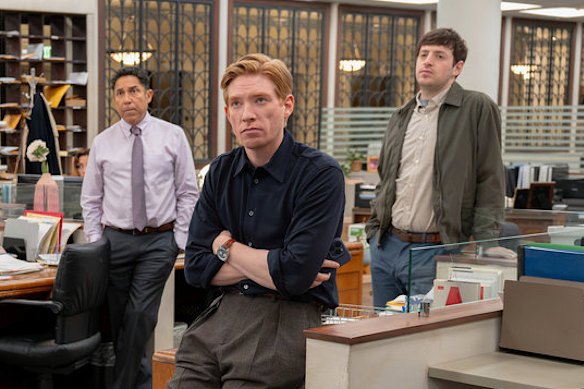
Much like the newspaper it follows, The Office US’s spin-off – now in its second season – has moments of success, but struggles to stand on its own. On premise, The Paper is clever and, sadly, timely. The Office’s mockumentary crew have moved onto the Toledo Truth Teller, a once essential Ohio print publication now churning out clickbait to stay afloat.
Closer to Leslie Knope than Michael Scott, The Paper’s propelled by Ned (Domhnall Gleeson), an impassioned editor eager to prove old-school journalism can still sell. While most of the staff catch his enthusiasm, corporate aren’t convinced.
Neither is Esmerelda – a brash, loud Italian who loved her lazy job, ironically often going to elaborate efforts to undermine Ned. Played outrageously big by Sabrina Impacciatore (The White Lotus), Esmerelda brings a slapstick-soap energy entirely at odds with The Paper’s drab setting. It can be too much, such as when she goes undercover as a boy at her son’s school, but she’s certainly memorable. That can’t be said for much of The Paper’s second season, filled with multiple will they/won’t they plots, none of which match Pam and Jim.
However, The Office took time to find a distinct voice from the original, bleaker British version – and its seasons had double the length of The Paper’s to experiment, too. In the meantime, The Paper’s familiarity has its own appeal, especially if you’re among the millions continually rewatching The Office US.
Possible Love ★★★★ (Netflix)
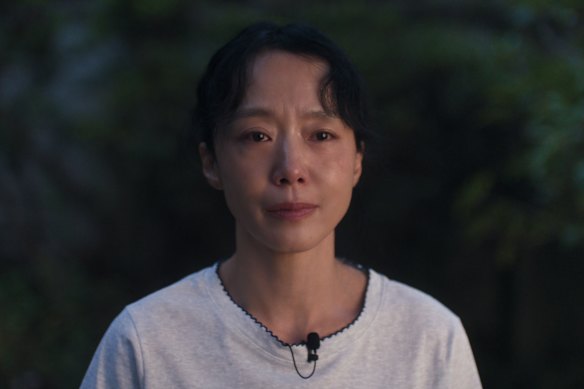
Korean auteur Lee Chang-dong’s first film in eight years would make for an excellent companion piece to You Can See Everything, Nathan Fielder’s mind-bending documentary about Elizabeth Holmes. Both are self-reflexive, three-hour epics about the ethics of filmmaking. Possible Love is an elegant, novelistic drama that, as with so much South Korean cinema, pierces the country’s deep class divisions. It’s a story of two couples: one struggling after factory layoffs, the other with hedge-fund wealth, allowing Ye-ji (Parasite’s Cho Yeo-jeong) to make a documentary about the former, showcasing the injustices of the working class.
Being Heumann ★★★★ (Apple TV)
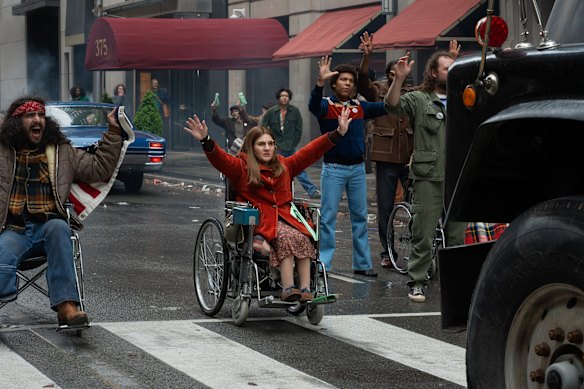
Sian Heder’s follow-up to CODA – a cloying, visually inert drama about a predominantly deaf family, led by deaf actors – is much stronger than that baffling Best Picture winner. A fiery, funny biopic of the late disability rights activist and wheelchair user Judith Heumann, Being Heumann pairs CODA’s best element – authenticity from casting disabled actors in disabled roles – with the weight, vibrancy and radical ethos of a historic 1977 protest. Heumann (Ruth Madeley) leads 100-plus people, predominantly disabled, in a multi-week sit-in of a federal building, refusing to leave until the Secretary of Health (Mark Ruffalo) passed long-delayed civil rights legislation.
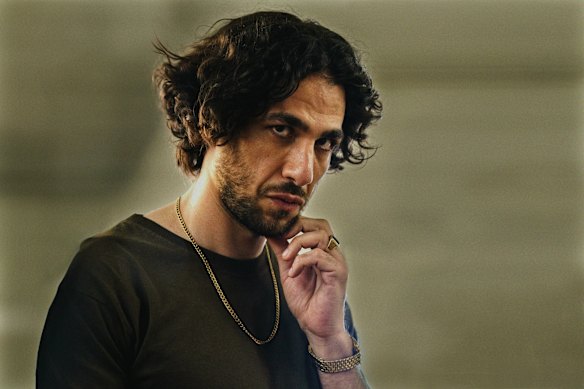
4 Blocks Zero ★★★ (HBO Max)
Often cited among Germany’s best shows of the 2010s, gritty cartel drama 4 Blocks struggled to catch on in Australia, lost in the annals of Amazon Prime Video and presently unavailable on any streamer. Requiring no prior knowledge, perhaps prequel series 4 Blocks Zero will fare better. Set in the grimy Berlin of the mid-’90s, it centres on the Hamadys – 4 Blocks’ dangerous cartel, here a family of Lebanese refugees. Reminded daily by teachers, police and neighbours they aren’t welcome, the criminal underworld proves far more – and forcibly – inviting. Tense, juicy and emotionally nuanced.
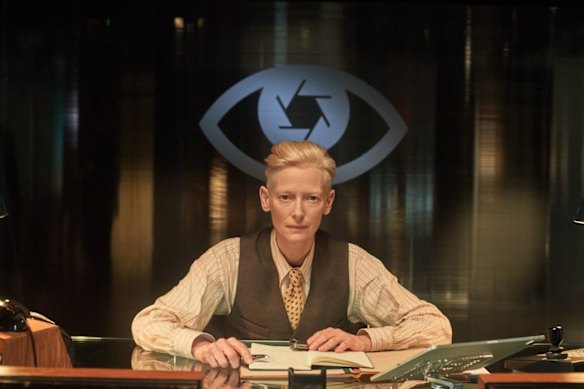
Broken English ★★★★ (DocPlay)
As daring as its subject, Broken English is a bizarre, brilliant docu-fiction portrait of the late British rock legend Marianne Faithfull. Filmed before Faithfull’s death in January 2025, co-directors Ian Forsyth and Jane Pollard frame its interviews and performances – including the singer’s last, accompanied by Nick Cave and Warren Ellis – as part of a project by the fictional Ministry of Not Forgetting. George MacKay interviews Faithfull and others in-character as an archivist; Tilda Swinton his boss, a bureaucrat intent on enshrining the singer as more than Mick Jagger’s muse. Occasionally obfuscating, mostly magic.
*Stan is owned by Nine, the publisher of this masthead.
Want more TV? We’ve got you.
Disclaimer : This story is auto aggregated by a computer programme and has not been created or edited by DOWNTHENEWS. Publisher: www.smh.com.au