
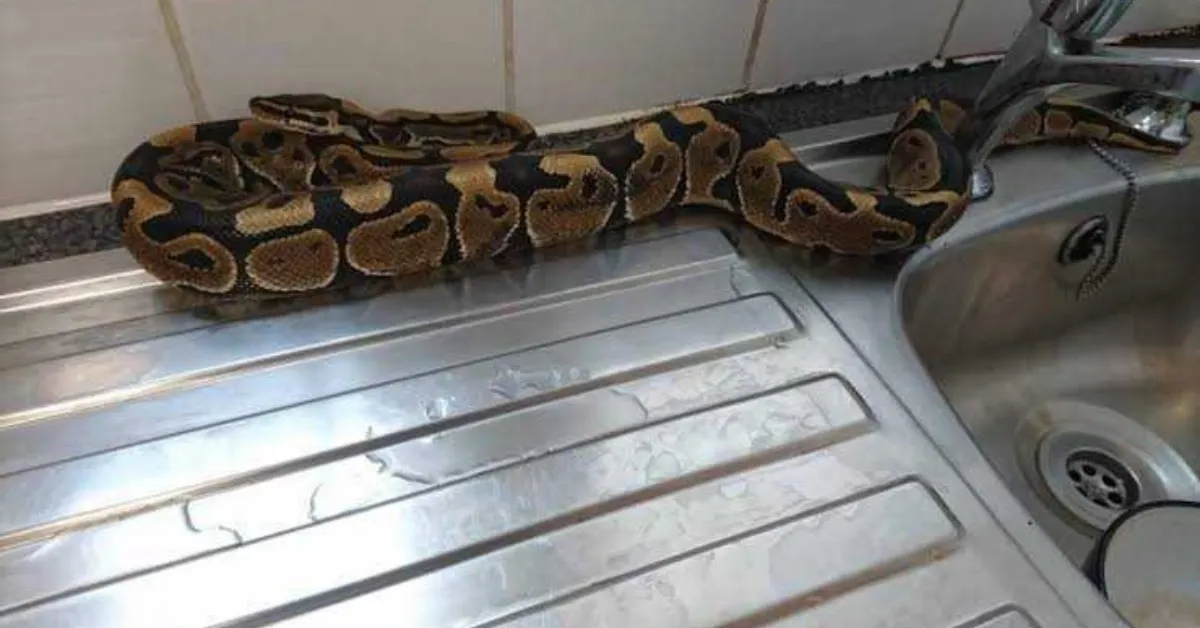
The kitchen cabinet was the last place the family expected to find a snake.
On a rainy morning last July, residents of a third-floor apartment in Delhi’s East of Kailash opened a cabinet to discover a three-foot-long Indian rat snake curled up quietly inside. The yellow-and-black-banded reptile had likely sought shelter indoors after days of relentless rain.
Instead of panicking, the family called for help.
A trained rescue team from Wildlife SOS arrived and safely relocated the non-venomous snake.
It was far from an isolated incident.
Throughout last year’s monsoon, rescue teams across India responded to snakes turning up in unexpected places.
A spectacled cobra was rescued from beside a gas cylinder at Jawaharlal Nehru University’s canteen. Another Indian rat snake was safely removed from Prime Minister Narendra Modi’s residence. In Agra alone, rescuers attended more than 100 snake rescue calls between June and mid-July, including 34 Indian rat snakes and 23 spectacled cobras.
Even in Kashmir, snakes were reported inside car bonnets and chicken coops.
Every monsoon, similar stories emerge from across the country. They may seem unusual, but they point to a simple reality: when heavy rain transforms the landscape, snakes are forced to move too.
Sometimes, a house is just higher ground
For most of the year, snakes live in burrows, termite mounds, rock crevices, or beneath thick vegetation. When heavy rain floods these shelters, they have little choice but to look for dry, safe places to wait out the weather.
Homes, garages, sheds, and storerooms often provide exactly that.
Their movement has little to do with people.
Snakes do not enter homes to hunt or attack humans. In fact, they generally avoid human contact.
They’re simply trying to survive until the floodwaters recede.
The monsoon also reshapes the food chain.
Rodents flee flooded burrows, frogs become more active, and insects multiply around standing water. Since snakes feed on these animals, they naturally follow their prey, bringing them closer to human settlements.
Rain also cools the ground. As cold-blooded animals, snakes depend on their surroundings to regulate body temperature. Dry concrete floors, staircases, walls, and enclosed spaces can offer warmer and more stable conditions than waterlogged fields.
Why snake encounters increase during the monsoon
India records the world’s highest number of snakebite deaths.
Around 58,000 people die from venomous snakebites each year, accounting for nearly half of all snakebite fatalities worldwide.
A landmark 2020 study estimated that more than 1.2 million people died from snakebites in India over the previous two decades. Nearly half of those who died were between 30 and 69 years old, while around a quarter were children.
/filters:format(webp)/english-betterindia/media/media_files/2026/07/10/snake-rescue-1-2026-07-10-15-00-43.png)
The same research found that, between 2001 and 2014, the lifetime risk of dying from a snakebite before the age of 70 was about one in 250 across India, rising to nearly one in 100 in some high-risk regions.
The monsoon is one of the busiest times for snake rescuers because breeding season coincides with flooded habitats, increasing the chances of snakes and people crossing paths.
That’s why prevention is far more effective than dealing with a snake after it has already entered a home.
How to keep snakes away
The good news is that most snake encounters can be prevented with simple household maintenance.
The first step is to block potential entry points.
Snakes can squeeze through surprisingly small gaps. Openings beneath doors, cracks in walls or foundations, damaged vents, and uncovered drain pipes are all common ways they get inside.
Installing door sweeps, covering drains with wire mesh, and sealing gaps around the house can greatly reduce the chances of a snake entering.
The area around your home matters just as much.
Tall grass, piles of dry leaves, stacked firewood, unused bricks, and cluttered storage spaces provide cool hiding spots where snakes can remain unnoticed.
Keeping the surroundings tidy, trimming vegetation, and storing materials away from walls removes many of these potential shelters.
Food sources can also attract snakes—indirectly.
Rodents are their primary prey, while frogs thrive around stagnant water and damp gardens.
Proper waste disposal, controlling rodent populations, avoiding spilled bird feed, and keeping potted plants slightly away from exterior walls can make your home less attractive to both prey and predators.
Some households also sprinkle bleaching powder or phenol around the property’s perimeter. While these are sometimes used as deterrents, experts say they should never replace practical measures such as sealing entry points and maintaining a clean environment.
If you find a snake indoors
Finding a snake in your bathroom, kitchen, or bedroom can be frightening.
But experts say the safest response is also the simplest.
Do not try to catch it.
Do not attempt to kill it.
Instead, close the door to the room if you can, keep children and pets away, maintain a safe distance, and immediately contact trained wildlife rescuers or your local forest department.
Professional rescue is important because many snake species are protected by law. Even experienced handlers require specialised training to safely capture and relocate them.
Several states, including Karnataka and Kerala, have introduced certification programmes and operational guidelines for snake rescuers, reinforcing that only trained professionals should handle these situations.
Many non-venomous snakes pose little immediate danger and often leave on their own if left undisturbed.
Learning to live with the monsoon
The monsoon changes more than rivers and roads. It also changes the movement of the wildlife that shares our surroundings.
For homeowners, that means preparing homes before the rains, reducing places where snakes can hide, and staying calm if an unexpected visitor appears.
Snakes are among nature’s most effective pest controllers. By feeding on rodents, they help limit animals that damage crops, spread disease, and invade homes.
Understanding why snakes appear during the rainy season may not make an encounter any less surprising, but it can replace fear with perspective.
Sometimes, the snake curled up inside a kitchen cabinet isn’t looking for trouble.
It’s simply looking for a dry place to wait until the rain stops.
Sources:
‘Understanding Why Snakes Enter Homes and Their Preferred Hiding Spots’: by Pooja Shah, Published on 11 February 2026
‘How to stay safe from snakes during the rains’: by Sonali Acharjee, Published on July 29 2024
‘Three dozens of snakes found hiding under floor tiles in house in Chhattisgarh’: by Ejaz Kaiser,Published on 3 July 2025
Disclaimer : This story is auto aggregated by a computer programme and has not been created or edited by DOWNTHENEWS. Publisher: thebetterindia.com





