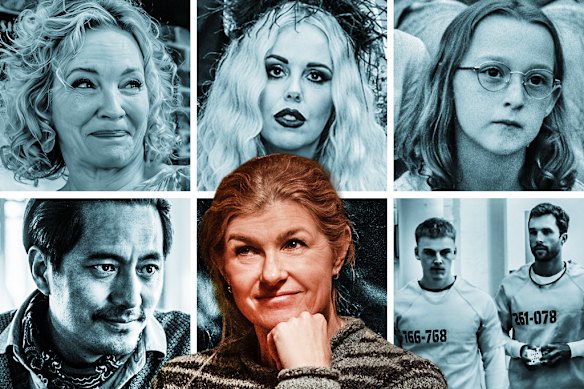
This week’s picks include Netflix’s repellent yet captivating reality show experiment, Connie Britton’s entrancing comedy Phony, the return of Kiwi comedy Happiness and a monumental biopic of sherpa Tenzing Norgay.
The New Stanford Prison Experiment (Netflix) ★★★
When Netflix announced it was re-creating one of psychology’s most notorious, unethical studies for a reality show, backlash was immediate. Given reality TV’s tendency to exploit, psychologists (armchair and professional) and academics questioned how Netflix’s version, produced for entertainment, could possibly be ethical.
Conducted in 1971 by Stanford University professor Philip Zimbardo, the experiment divided 24 college-aged men into mock inmates or prison guards. Intended to run for two weeks, the simulation ended after six days, as guards enacted a series of cruel punishments leading to emotional and psychotic breakdowns.
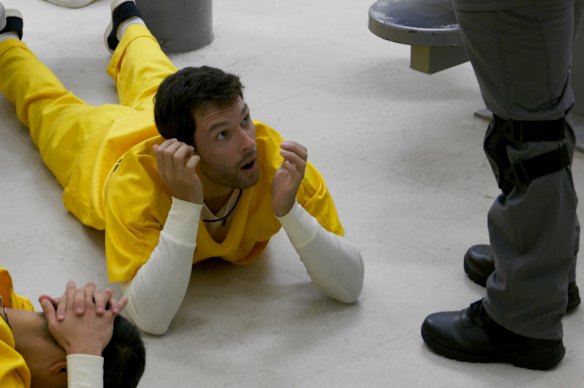
While its findings are discounted due to the experiment’s many ethical failures, it maintains a strong footing in pop culture – a perverse story of depravity ripe for multiple documentaries, podcasts, films and recreations (the BBC reenacted it for a documentary series in 2002).
From the outset, I found Netflix’s version repellant: a potential new low for reality TV that turns prison into a playpen that subjects its participants to potential cruelty and all but ensures abuse from viewers who will be disgusted by some of the actions.
That still sits true now that I’ve watched all six episodes. But it also sits uneasy, as this is one of the most confronting, thought-provoking reality shows I’ve watched in a long time.
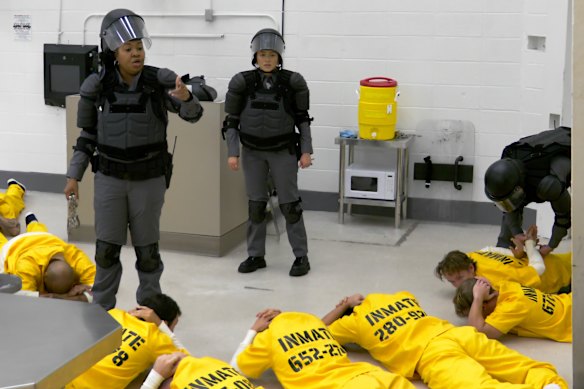
Executive produced by reality TV power-duo Jane Lipsitz and Dan Cutforth (Project Runway, Top Chef), it places 30 Americans – eight guards, three of them female, and 22 prisoners – in a decommissioned area of an active prison in Georgia to ask if power corrupts. It’s a question the show’s experts – Pulitzer-winning journalist Trymaine Lee, psychologist Alison Wood Brooks and retired correctional officer Michael Cantrell – return to again and again with little insight, perhaps because the answer (yes, duh!) is apparent to anyone alive.
While avoiding specifics, Netflix’s version is, thankfully, nowhere as depraved as Zimbardo’s experiment. Beyond the ethical (and insurance) safeguards in place, perhaps knowing that millions will watch this was a deterrent for many participants to go all out – but not all, with subtle and dramatic cruelties on display.
Underneath the pseudo-psychology and reality TV twists is the show’s much more poignant – albeit not directly stated – point. Again and again, we see the dehumanising effect the US prison system (the world’s largest prison population with 1.8 million people incarcerated according to the World Prison Brief) has on guards and prisoners: how it pushes people towards their worst selves.
“This is turning me back into the f—ing person I used to be,” says one former prisoner. “I spent a lot of time bettering myself as a person … I don’t want to be that guy any more.”
There’s no doubt several punishments and big moments will create outrage. But it’s the small moments of insight such as the above – as well as the revealing differences as to how a person’s race and class informed their time on the show – that will hopefully stay with people and start more impactful conversations.
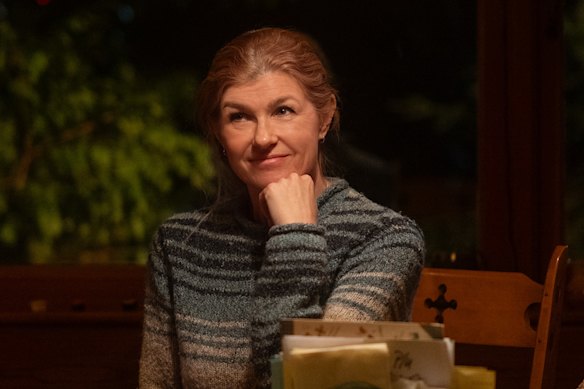
Phony (Disney+) ★★★★
Considering that its central conceit is that a teen boy suddenly believes his mother is an imposter, it’s slightly ironic that Phony – based on the four of eight episodes available for review – is shaping up to be a singular thriller-comedy.
Sonny (Sam Nivola, best known for an incestuous kiss on The White Lotus) is a bubbly high school senior priding himself on likeability, working the halls each day as if a politician. He’s modelled himself, subconsciously or not, off his mother Ellen (fellow White Lotus graduate Connie Britton), the affable school principal.
With just the two of them at home, Sonny and Ellen are remarkably close, though Sonny resents that she doesn’t share everything with him, even if he withholds a few things, too.
One (minor) car crash later, and Ellen looks off, though no one else notices – though you will, with Britton’s face altered slightly into uncanny valley territory. Freaking out and Googling the likes of, “Is it kidnapping if you are still at home”, Sonny tries to catch Ellen out without arousing suspicion, soon enlisting a bemused amateur PI (Meera Syal) and a previously home-schooled duo. Created by Nick Paley (Marcel The Shell With Shoes On), Phony’s a strange, enthralling mix – a naturalistic coming-of-age comedy and a heightened thriller that leaves you also questioning what is and isn’t real. If its second half doesn’t derail, it’ll be a special show.
Happiness (HBO Max) ★★★★
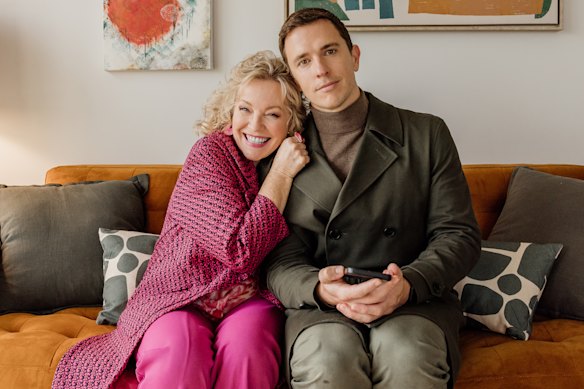
In a just world, Happiness is a worldwide smash. This charming Kiwi musical comedy series – billed as the country’s first – centres on Pizazz, Tauranga’s premiere amateur society, run by Gaye (Rebecca Gibney). When her prodigal Broadway director son (Harry McNaughton) returns from New York, he’s soon sucked back into Pizazz’s petty dramas and glittering glory via The Trojan Horse, an original musical. Back with a Sherlock Holmes musical for its second season, Happiness is sharp, delightful and, true to amateur theatre, economical, packing plenty to love into its 20-minute episodes.

Janet Planet (SBS On Demand) ★★★★
Understated and underseen, this coming-of-age from Pulitzer-winning playwright Annie Baker and A24 is reminiscent of Aftersun and Blue Heron, albeit with far less trauma. Set across a languid Massachusetts summer in 1992, Janet Planet focuses on the co-dependent relationship between new-age acupuncturist Janet (Emmy-winner Julianne Nicholson) and her precocious, 11-year-old daughter Lacy (Zoe Ziegler). Friendless, Lacy spends her days observing Janet – and her relationships – with confusion, angst and wide-eyes as she waits impatiently (“You know what’s funny? Every moment of my life is hell”) for her life to begin, unaware it already has.
Last One Laughing UK: Halloween (Amazon Prime Video) ★★★
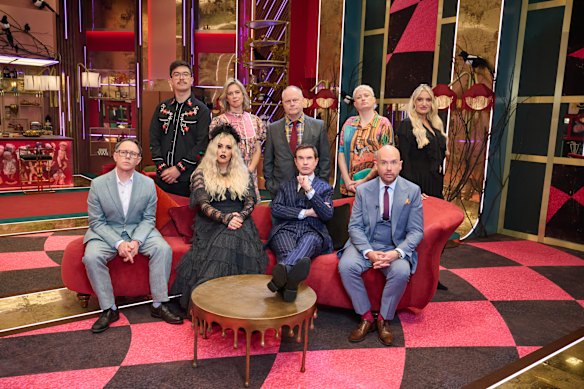
Celebrate spooky season with this four-episode edition of Last One Laughing, where host Jimmy Carr adds a one-off rule to the competition: Not only can the comedians competing not laugh at one another’s jokes, or they’ll be eliminated, but they now can’t scream either. PG jump-scares, such as fake spiders, are added in, and the comics’ pre-prepared performances have a horror slant, such as an unforgettable rendition of Edgar Allen Poe’s poem The Raven. Competitors include Tom Allen, Daisy May Cooper, Jack Dee and season one highlight Lou Sanders.
Tenzing (Apple TV) ★★★
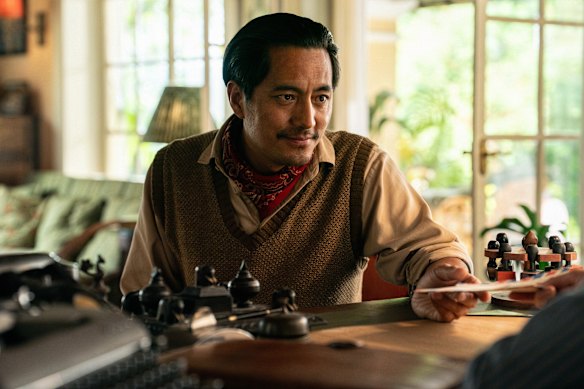
A decade after her monumental documentary Sherpa, Australian filmmaker Jennifer Peedom returns to Mount Everest for a biopic of Tenzing Norgay (Genden Phuntsok) – the Nepalese-Indian man who made history in 1953 as the first to reach Everest’s peak, alongside climbing partner Sir Edmund Hillary (Tom Hiddleston). Sidelined by history, Tenzing’s heroics and skills are recentred in this otherwise very traditional biopic, which switches between the icy, awe-inspiring climb led by John Hunt (Willem Dafoe) and Tenzing’s early life. Shot across Nepal and New Zealand, the film’s breathtaking cinematography and sheer scale elevate the film.
Want more TV? We’ve got you.
Disclaimer : This story is auto aggregated by a computer programme and has not been created or edited by DOWNTHENEWS. Publisher: www.smh.com.au