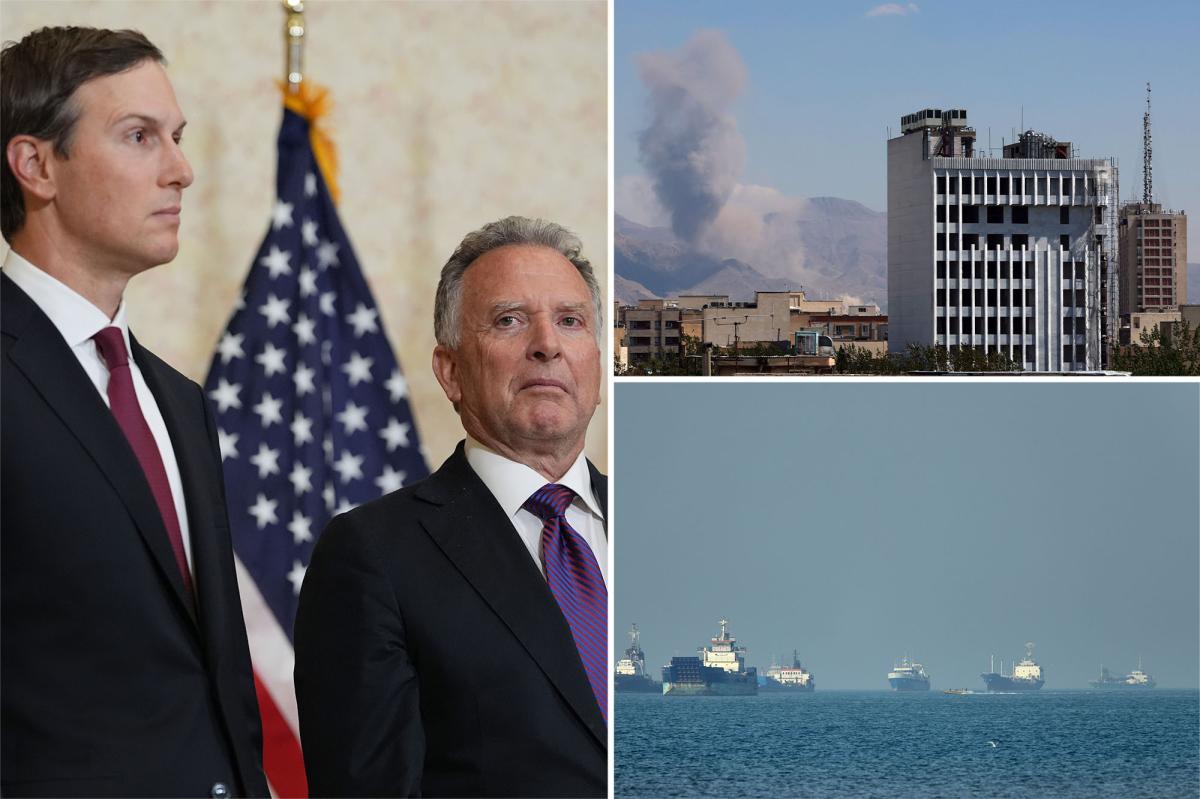
WASHINGTON — Negotiators are quietly hammering out the details of a 14-point framework for peace talks between the US and Iran — and nuclear elements are finally on the table for discussion.
The emerging memorandum of understanding — described as a one-page agreement — would serve as the foundation for a broader treaty to be negotiated later, according to sources familiar with the talks.
The US has offered provisions that would see Iran halting uranium enrichment, the easing of some US sanctions and the reopening of commercial shipping routes through the Strait of Hormuz, which Tehran has repeatedly threatened during the conflict, sources familiar with negotiation efforts have told The Post.
Talks could resume as early as next week in Islamabad, the Wall Street Journal reported Wednesday, but multiple draft proposals have so far been passed back and forth between Washington and Tehran. Mediator Pakistan is now attempting to consolidate agreed-upon terms into a single-page framework.
“If the framework of issues for debate is accepted, it would trigger a 30-day window for negotiators to hammer out the details,” a source familiar with mediations said.
The talks are being led by Trump envoys Steve Witkoff and Jared Kushner, with Pakistan acting as a key intermediary between Washington and Tehran.
But major sticking points remain — especially over Iran’s stockpile of enriched uranium and whether or when Tehran would be allowed to resume any enrichment activity in the future.
“The main hurdle is the duration of enrichment restrictions,” a Pakistani source told The Post on Wednesday. “There’s no final deal yet.”
Trump has said any remaining enriched uranium must be turned over to the United States, rejecting alternatives that would place the material under the control of a third country.
Tehran is likely to refuse such a measure, holding meetings recently in Moscow, as Iranians would prefer their nuclear-armed ally Russia to take the material if forced to give it up.
US officials have already refused such a proposed arrangement, an American source familiar with the negotiating process told The Post.
The US has also asked Iran to swear away its right to enrich uranium ever again, but negotiators are discussing whether the parties could instead agree to a moratorium that would place a to-be-determined timed ban on enrichment.
Washington may be open to offering Iran a deal if Tehran could agree not to enrich uranium for the next 15 to 20 years, and Iran may be willing to counter with a 5- to 10-year moratorium, according to sources familiar with mediation efforts.
However, Trump has previously — and fervently — rejected the idea that Iran should ever have the opportunity to enrich again in the future, telling The Post last month he didn’t want the Tehran regime to “have a win.”
Washington has also proposed a gradual lift on its blockade of Iran’s ports if Tehran agrees to reopen the Strait of Hormuz during a 30-day negotiation period, according to the Wall Street Journal.
A Pakistani source confirmed the one-page document outlines “Hormuz de-escalation” and a plan to “restore shipping.”
The Journal also reported Wednesday that talks have focused on mutual de-escalation in the waterway, including Iran easing restrictions in the strait while the US softens elements of its maritime blockade during negotiations.
As of Thursday, Iran was still committed to claiming “sovereignty” over the strait — and as recently as Wednesday was still pushing to collect tolls from ships for its usage and asserting the authority to do as it wishes in the waterway.
US Ambassador to the United Nations Mike Waltz accused Iran of violating international law through its mining and “tolling” operations in the Strait of Hormuz — demanding the UN Security Council force Tehran to back down.
“We like to talk a lot about international law here at the UN,” Waltz said at a press conference. “Well, Iran’s indiscriminate mining and tolling efforts in the Strait of Hormuz are textbook violations of international law.”
The US ambassador then rattled off a list of demands for Iran that he suggested the security council support.
“Cease attacks on commercial shipping, cease mining and remove its mines from an international waterway. Cease tolling — charging illegal tolls in the Strait of Hormuz — and allow the UN to move forward with humanitarian aid, life saving aid through that international corridor,” he said.
“It’s really that simple,” he added.
His words came after announcements this week from Iranian state media touted the launch of what Tehran called the “Persian Gulf Straits Authority” — an effort Waltz said would effectively force international commercial ships to pay fees to transit the waterway.
Iran’s insistence on maintaining some permanent role overseeing the Strait of Hormuz is also expected to complicate any final agreement, according to the Wall Street Journal.
To entice Iran to make a deal, the proposed agreement includes potential economic “sweeteners” —such as some sanctions relief and unfreezing of assets — but dollar figures have not been formally determined.
The unfrozen assets could be used to rebuild damage caused by the war, now in its third month.
In previous proposals, the financial benefits were to have been rolled out in phases.
Asked for comment on the document on Wednesday, the White House pointed The Post to comments the president made that it was “very possible that we’ll make a deal.”
“We’ll see if we get there. They can’t have nuclear weapons. It’s very simple… We have to get what we have to get,” he said Wednesday. “If we don’t do that, we’ll have to go a big step further — but with that being said, they want to make a deal.”
The White House did not immediately respond to a request for new comment on Thursday.
Disclaimer : This story is auto aggregated by a computer programme and has not been created or edited by DOWNTHENEWS. Publisher: nypost.com