As the head of a wildly successful visual effects studio, Lara Hopkins knows how to keep a secret.
Lara Hopkins reckons she was eight or nine when she started helping out at the family bakery in a tiny town outside the Barossa Valley. She had to stand on a chair to see over the counter.
“I think it’s a pretty significant time in your life when you’re a kid, and you learn how to work. Knowing how to treat customers, it actually translates. If you’re working on a $20 million film or if you’re serving somebody a pie and a can of Coke, it’s still the same level of service,” she says.
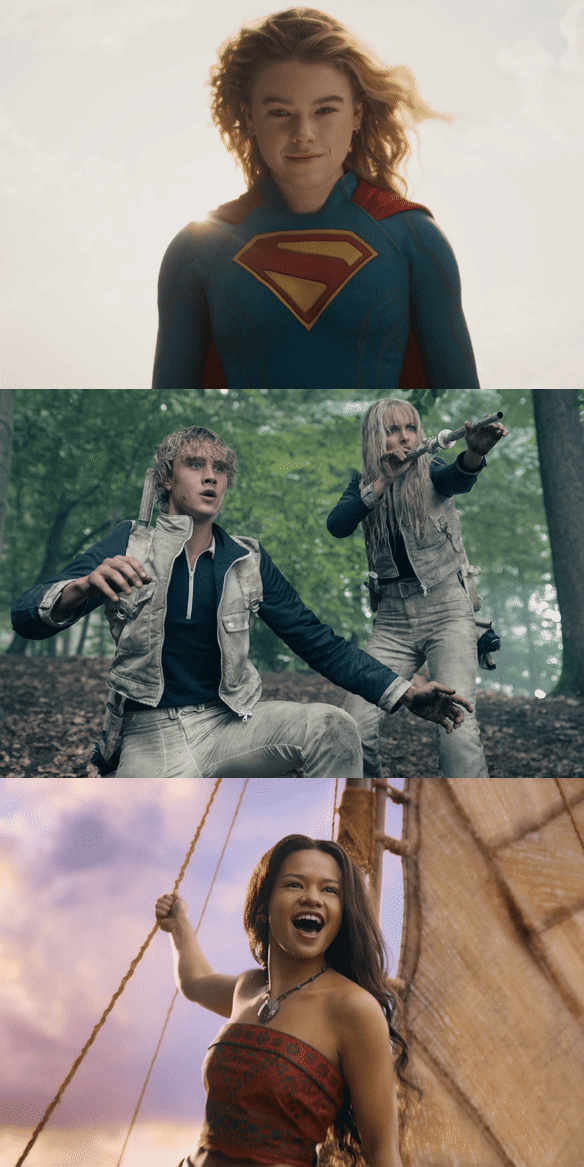
Today Hopkins is studio head of the Melbourne branch of Framestore, one of the world’s leading visual effects empires. From Project Hail Mary to Wicked to Superman, you might not know Framestore’s name, but you know its work.
Shop assistant to studio head isn’t an obvious career path. When Hopkins left home, she’d decided she wanted a career in the arts. “I knew that I wasn’t a creator. I knew that I was an organiser,” she says. She spotted an ad for a production assistant role with Adelaide’s Anifex studio and beat around 500 other applicants to get her foot in the door of the film biz. The company specialised in animation; she’d never really given that side of the industry much thought. This was the early ’90s, and digital wasn’t on anyone’s radar. “Everything was done in either 2D animation, cell animation or stop-motion, clay animation.”
The animators Hopkins was helping out shot on 35mm film, and the painstaking pace of the work meant that a full day resulted in just two or three seconds of footage. “That’s when I started to love animation. The people that work in animation are very special people. They love the craft. They have patience like no one else,” Hopkins says.
Then came a company outing to catch a little movie named Jurassic Park. When the team emerged from the cinema, it was as though the ground had shifted beneath their feet. “As a group we all kind of went: ‘This is going to change everything that we do.’ And it did.”
Hopkins began to work her way up in the industry. She landed a job at Sydney (visual effects) VFX company Animal Logic, whose sizzle reel at the time included heavy-hitters like Babe, Happy Feet and The Matrix. She was appointed animation producer. “That’s when I got my love of really managing talent. Seeing how if you have the right team on a show and the right skill sets, shows go beautifully, projects go well. And if they don’t, things go pear-shaped. Around then is where I developed my management ethos, which is around creating an atmosphere that [means] people can produce their best work.”
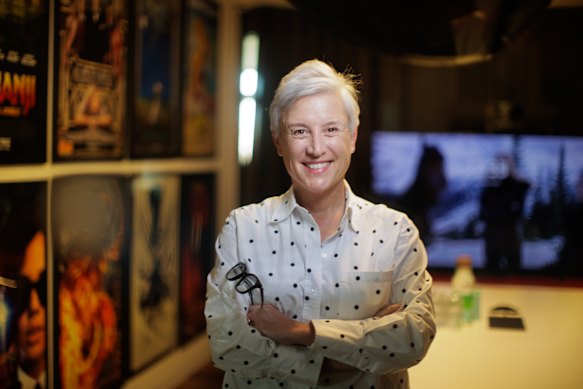
By the mid-2000s Hopkins had worked her way up to the role of CG manager at Framestore’s London office, and her affiliation with the company eventually saw her helping to establish studios in Chicago, Montreal and Los Angeles. But when Framestore decided to set up shop in Australia in 2022, Hopkins had already returned to the country to work with Industrial Light and Magic, the FX company founded by George Lucas.
“It was a very difficult decision to leave ILM. But now there was going to be a Framestore in Australia, and I wasn’t part of it. That was weird. I was 52, 53, and thought ‘I won’t have another chance to run a studio. I better do it now’.” When Hopkins established Framestore’s Melbourne office, the studio counted 180 staff on its books. Today the headcount is 340.
Last month, two of Framestore’s made-in-Melbourne movies were released in cinemas: The Sheep Detectives and Mortal Kombat II. This month sees the release of Supergirl, and the studio has seven other films in production, including the next Hunger Games instalment, Minecraft 2, and more that are tightly under wraps.
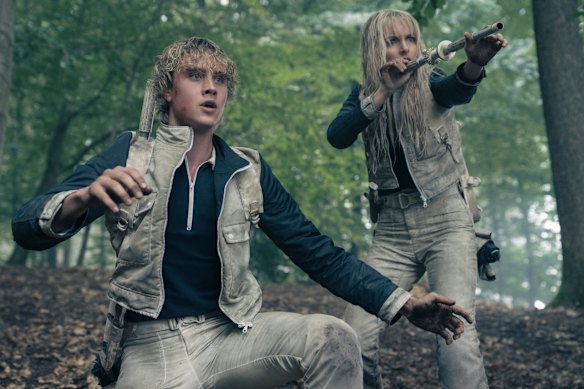
Few viewers of next month’s live adaptation of Moana will suspect that much of its idyllic Pacific setting was conjured in an unassuming office building on St Kilda Road. The mute facade conceals rows upon rows of top-end computers in a setting that wouldn’t be out of place in a high-tech thriller. As we tour the studio, Hopkins is careful to ensure that none of the many monitors betray something that’s not for journalistic consumption. Such secrecy abounds in the world of VFX.

When we first met in 2025, Hopkins couldn’t even talk about The Sheep Detectives, or Three Bags Full, as it was known then. Even after the film’s cinema release, Framestore has had to stay on the down-low in terms of all the work it has done to create photo-realistic talking ovines.
“When films like this come out, the studios always ask us to hold off talking about how we made the sheep until the film’s been in cinemas for three or four weeks. There’s an element of not wanting to pull back the curtain. Sometimes the best visual effects are the ones that you have no idea are in there.”
Hopkins is particularly proud of The Sheep Detectives, and how it has resonated so strongly with audiences of all ages. “There’s a real sense of soul and character to these digital sheep that we haven’t seen. And it’s also 100 per cent Framestore. Across all of our studios, no other company worked on it.” Most of the time the Melbourne studio will share the workload with Framestore offices in London, Montreal, Mumbai or elsewhere. Modern visual effects might take huge amounts of computing power, but at the end of the day it’s all ones and zeroes. Sharing massive files with colleagues on the other side of the world is as easy as hitting “send”.
Australia’s reputation within this corner of the industry is strong: the country is home to 14 animation and VFX companies. And while the overall gender ratio in animation skews 70/30 in favour of men, nine of those locals studios are led by women. Hopkins is friends with many of those female peers, and in recent years they’ve joined forces to advocate for their industry to government. “Even though we often compete when bidding on shows, we put that to one side,” says Hopkins.
When other companies in Melbourne score big-budget jobs, the industry as a whole flourishes. On any given project, Framestore already shares its workload with the competition. Why not collaborate with someone you had lunch with last week? “We’re on the same time zone. We’re down the road from each other. We know each other. There are all sorts of really good things about Victoria being seen as a place to sort of be sending complex work. And the talent’s here.”
As for the future, the world of digital effects would seem ripe for disruption by AI. But this year’s Cannes Film Festival saw producers notably downplaying the AI hype, emphasising its usefulness for mundane tasks rather than creative authorship. “It’s very easy to look at (AI) and go, my goodness, this can do everything. What does this mean for us? But when you actually look at the AI image generation, it’s all very samey-samey,” says Hopkins.
Machine learning has been in Framestore’s toolkit for longer than most of us have known of its existence, but the actual utility of the technology leans towards quick mock-ups of edits.
“It’s going to take more to generate finished images that you would expect to be able to see in an IMAX theatre. AI is quite unwieldy,” Hopkins says. “You’re using it as a tool but ultimately, for that final image, you need a person’s hand.”
Supergirl is released nationally on June 25; Moana is released on July 8.
Want more movies? We’ve got you.
Disclaimer : This story is auto aggregated by a computer programme and has not been created or edited by DOWNTHENEWS. Publisher: www.smh.com.au