
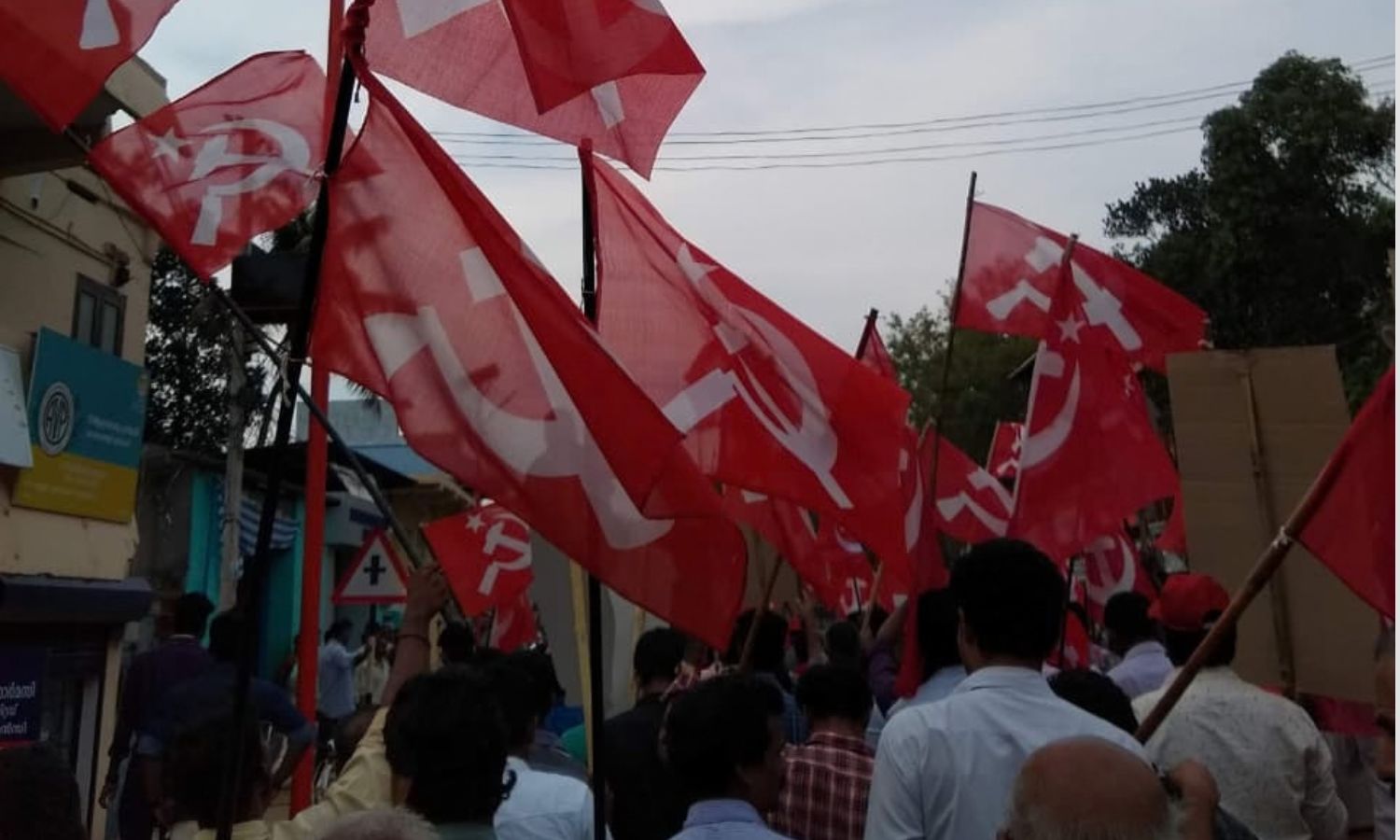
The CPI(M) is heading towards unfamiliar territory in Parliament.
At its peak, the party had 17 members in the Rajya Sabha. That number fell gradually—to 13, then nine, eight, five and eventually three. With its diminished strength in the Kerala Assembly, replenishing those numbers is going to become increasingly difficult. What was once a substantial Left presence in the Upper House could soon be reduced to its smallest footprint in decades.
For the CPI(M), this is obviously part of a much larger political problem. The party that once governed three states has seen its electoral geography shrink dramatically. Kerala remained the exception to that decline for some time; a reduced legislative presence there now has consequences in Delhi too.
But there is another side to this story that receives less attention.
The number of CPI(M) MPs has been falling for years. Their visibility in some of the country’s political and parliamentary debates has not always fallen with it.
That distinction matters.
Take the recent student protests. A.A. Rahim, V. Sivadasan and John Brittas were among those who came out in support of the students early. They went to Jantar Mantar after the police action and raised the issue in the Parliament. Rahim went further, approaching the Supreme Court over the alleged use of facial-recognition and biometric-surveillance technology during the protests, raising questions of privacy, free speech and the right to peaceful assembly.
It is easy to dismiss such interventions as the predictable politics of an Opposition party. Sometimes they undoubtedly are. But Parliament has always depended on Opposition MPs doing precisely this—taking issues that begin outside the House and forcing them into the formal political conversation.
The same pattern can be seen elsewhere.
Rahim introduced a Right to Disconnect Bill in 2026, seeking protection for employees from having to respond to work calls and messages beyond working hours. He also raised the issue of suicides among bank employees, linking them to work pressure, harassment and unrealistic targets. His interventions outside Parliament have included the Manipur crisis and the wrestlers’ protest.
Brittas has occupied a somewhat different space. His interventions have often relied on government replies, official figures and financial data. Public debt, the future of free UPI transactions, complaints around E20 petrol, FCRA action against NGOs, railway administration and the fiscal pressures facing Kerala have all figured in his parliamentary work.
Sivadasan has concentrated much of his attention on education and employment—examination failures, faculty vacancies, education spending, digital exclusion and workers’ rights. Outside Parliament, his work has also included the community-library movement in Kannur, aimed at widening educational and digital access.
None of this began with the present set of MPs.
During the farmers’ agitation against the three farm laws, K.K. Ragesh was frequently at the protest sites around Delhi as part of the wider farmers’ movement. In Parliament, he opposed the Bills, moved amendments and demanded a division vote. His tenure also included interventions during the CAA debate and attempts to force an immediate discussion on the 2020 Delhi violence through Rule 267. He was also involved in relief and fact-finding efforts in riot-affected areas.
There is something worth noticing here. The farmers’ agitation showed how parliamentary politics and politics outside Parliament could intersect. An MP could challenge legislation inside the Rajya Sabha while remaining involved with the movement opposing it outside. Ragesh’s six-year parliamentary record was later recognised with a Sansad Ratna Award in the retired-members category.
There are older examples too.
P. Rajeev’s intervention on Section 66A of the Information Technology Act is worth remembering. In December 2012, long before the Supreme Court eventually struck the provision down, Rajeev moved a statutory resolution challenging it on free-speech grounds. At his farewell from the Rajya Sabha, Arun Jaitley spoke of his command over parliamentary procedure and said that he kept the government benches on their toes. Ghulam Nabi Azad referred to him as an “encyclopaedia of rules”.
K.N. Balagopal’s interventions were often rooted in more everyday economic concerns. Rubber prices, the problems facing Kerala’s cashew industry and its workers, expensive airfares and airport charges were among the issues he repeatedly took to Parliament.
There is a temptation in Indian politics to measure parliamentary relevance almost entirely through numbers. It is understandable. Numbers decide governments, determine committee strength and, ultimately, decide whether legislation passes.
But they do not tell us everything about Parliament.
A member sitting on a relatively empty Opposition bench can still ask an uncomfortable question. A private member’s Bill can put an issue into the parliamentary record even when it has little prospect of becoming law. A procedural intervention can force attention towards something the government would rather discuss later—or not discuss at all.
None of this requires agreement with the CPI(M)’s politics. Its positions have been contested throughout its history, and its electoral decline is itself the product of democratic choices made by voters across states where the Left was once powerful.
That is precisely what makes the coming decline in its parliamentary numbers worth watching.
The CPI(M) may soon have fewer MPs than at almost any point in its history. That tells us something important about the condition of the party.
It does not necessarily tell us the value of the space those MPs occupied.
Parliament needs numbers to make governments. But it also needs members willing to use its rules, questions and debates to make governments answer.
“As those benches grow emptier, the loss may eventually be felt not in the arithmetic of Parliament, but in the arguments heard within it.”
(The article is authored by S. Sruti, Assistant Professor , Department of Political Science, Shyam Lal College (E), University of Delhi)
Disclaimer : This story is auto aggregated by a computer programme and has not been created or edited by DOWNTHENEWS. Publisher: deccanchronicle.com




