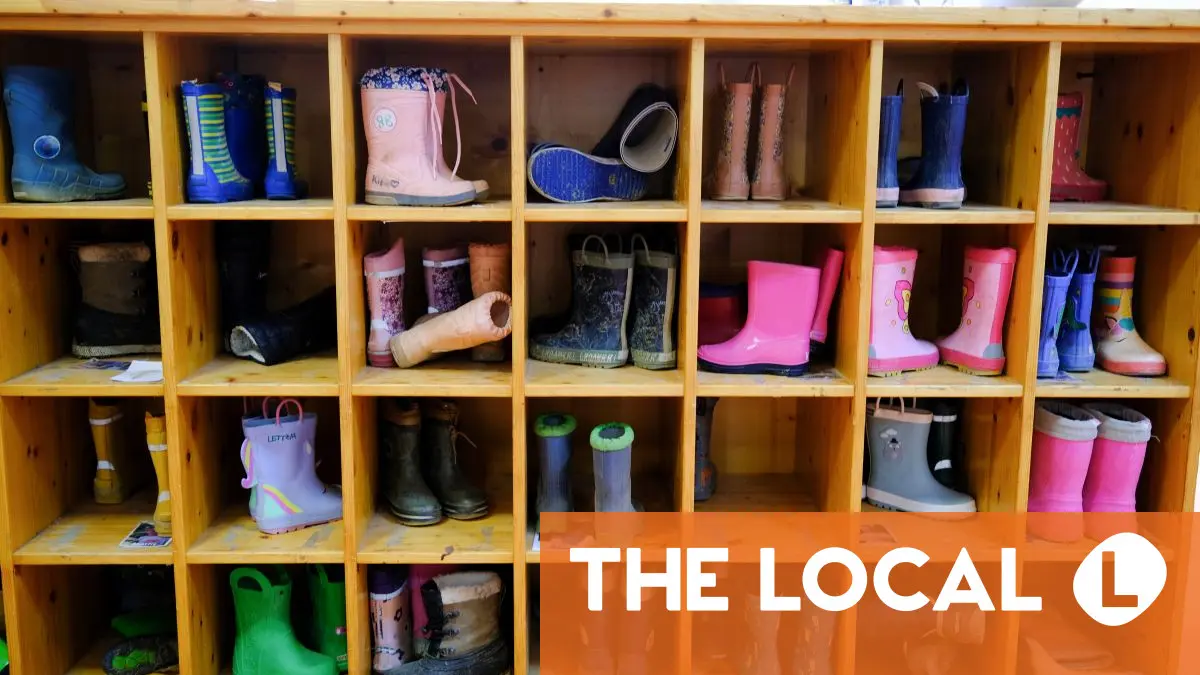
Germany’s daycare is generously subsidised, but one in six toddlers misses out. Here’s where it’s hardest to find a place – and which families struggle most.
Germany’s childcare system is a gift: Fees are low or even non-existent in some places, and children have a legal right to a place from their first birthday.
But if you’ve tried to find a daycare (Kita) place in the last few years, you’ll know that a right on paper doesn’t always mean a place in practice.
You might assume things would be getting easier, because Germany has far fewer babies than it used to. Births fell by nearly a fifth between 2021 and 2025.
But a new study from the Federal Institute for Population Research (BiB) and the German Youth Institute (DJI) says otherwise. In 2025, around one in six one- and two-year-olds had no daycare place, even though their parents wanted one.
However, the study also shows big differences in availability depending on where you live and your family’s background.
‘Kita-Gap’
The authors of the study call the difference between the places parents want and the places children actually use the “Kita-Gap”.
Their portal draws on a large annual survey of more than 33,000 parents. In 2025, it found that one in six children aged one to two whose parents expressed a need for daycare did not receive a spot.
BiB director Katharina Spieß put it bluntly: “The declining birth rate alone will not eliminate these barriers to access.” In other words, empty places elsewhere don’t automatically mean a place for your child.
READ ALSO: How to survive your first year as a parent in Germany
Where is the gap biggest?
Geography matters enormously. The portal’s state figures cover children aged one to under three, using survey data from 2023 to 2025.
Bremen comes out worst: 31 percent of children there, nearly one in three, don’t get a place despite their parents wanting one.
At the other end of the scale, Mecklenburg-Western Pomerania and Saxony-Anhalt do best, with just about six percent of families left without a daycare place in each state.
There is also a clear divide between east and west more generally. In eastern Germany, 10 percent of children miss out, compared with 21 percent in the west.
The study offers some clues about why, but no definitive explanation.
Bremen’s education senator’s office says the city has enough places and that many are vacant, which would suggest the problem may be about access rather than raw supply.
Falling birth rates may also be freeing up capacity in some places. Saxony-Anhalt, for example, recorded its fewest births since reunification in 2025, and some facilities there say they have open places.
Relative childcare costs across the states may also play a part but don’t appear to be a decisive factor. Saxony-Anhalt charges fees for under-threes, for example, and still has one of the smallest gaps.
You can find an interactive map with figures for all 16 states here.
READ ALSO:
Who struggles most?
Where you live is only part of the story. When it comes to finding a daycare place, the study found that three groups of families face the biggest hurdles.
Among families who mostly speak a language other than German at home, 34 percent of one- and two-year-olds were without a place despite their parents wanting one.
The figure was 30 percent for families at risk of poverty and 23 percent for families where the parents don’t have a university degree. For families outside these groups, it was 15 percent.
The researchers found that families who mostly speak another language at home want a place almost as often as everyone else, at just under 70 percent. But only 35 percent of their children actually attend.
“They are left empty-handed more than twice as often,” said BiB researcher Anna Daelen.
Even among children aged three to six, when almost everyone attends, these families are 12 percentage points less likely to use a daycare place.
The search itself is harder too. Across all families, 43 percent of those who looked for a place found it difficult. Among families who mostly speak another language at home, that rises to 56 percent.
READ ALSO: How Germany’s plan to test 4-year-olds will affect bilingual families
Disclaimer : This story is auto aggregated by a computer programme and has not been created or edited by DOWNTHENEWS. Publisher: thelocal.de