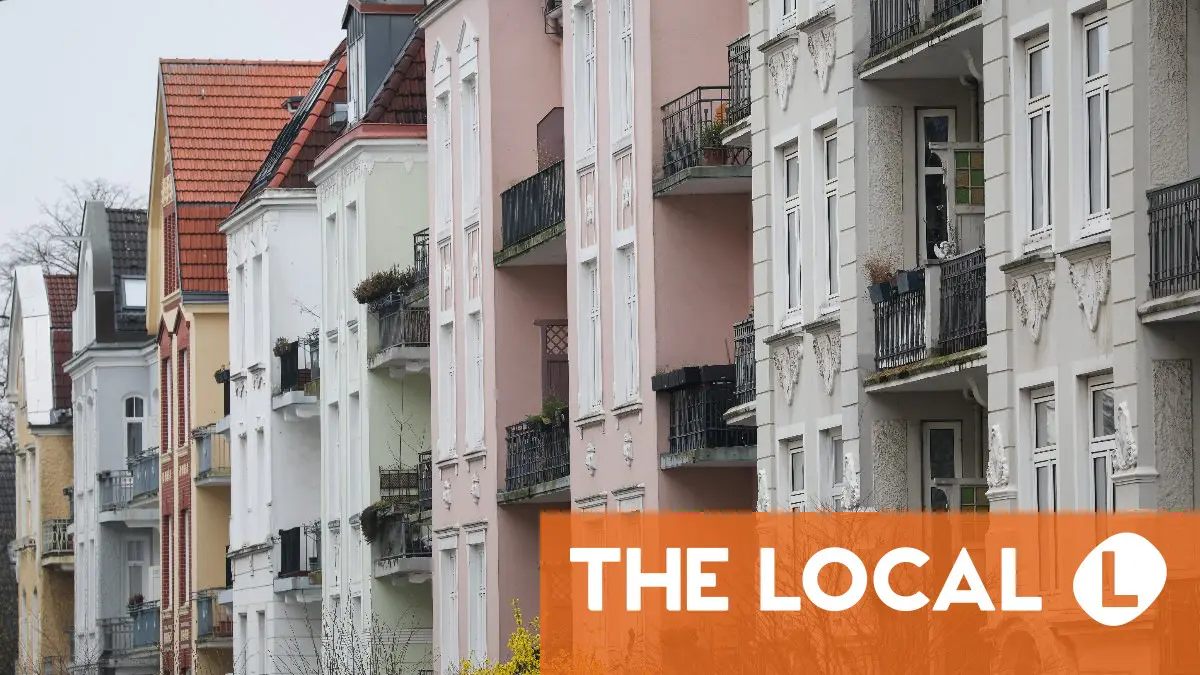
Rents are continuing to rise in Germany, but the situation differs in each city. From Berlin’s (slight) slowdown to rocketing rents in Hamburg and Frankfurt, here’s what the latest research tells us about renting in Germany this year.
Anyone familiar with renting in Germany’s larger cities will be aware of how difficult it is to find an affordable place to live.
So how is the rental market developing this year?
According to a new report by Immowelt, asking rents are continuing to rise – although there are stark differences depending on where you live.
How much have rents risen in Germany?
The rental market in Germany remains strained. According to the report, the proportion of rental enquiries on Immowelt rose from 80.6 percent in the same period last year to 81.7 percent between January and August 2026.
Experts say high financing costs are making it difficult for many people to buy property, which in turn is fuelling demand for rental flats.
Rents for existing flats across Germany have risen by 2.1 percent since the start of the year to an average of €10.83 per square metre. In the same period last year, the increase was 3.9 percent.
In Germany’s 15 largest cities, the rise was more pronounced, averaging 2.9 percent.
READ ALSO: The German cities with the most and least expensive student housing
What’s happening in Berlin?
Rental growth in Berlin – where prices have shot up in recent years – is slowing, according to the research.
Rents in the capital have risen by 1.8 percent since the start of the year, reaching an average of €14.63 per square metre.
Among the 15 largest cities, only Leipzig (+1.3 percent) recorded a smaller increase. Over the same period last year, rents in Berlin rose by 4.4 percent.
The slower growth comes against a backdrop of already high prices: Berlin remains the fourth-most expensive of the rental markets surveyed.
At the same time, pressure on demand from people moving to the city has eased.
According to the Berlin-Brandenburg Statistical Office, Berlin’s net migration fell to just under 19,700 people in 2025, a drop of around 27 percent compared with the previous year.
Meanwhile, the areas surrounding Berlin continued to grow slightly, a trend that is also reflected in rental prices around the capital.
However, there’s no sign of the difficult renting situation in Berlin easing. Although rents are rising more slowly, they remain at a high level.
READ ALSO: What you can learn from my ‘failed’ apartment search in Germany
Hamburg and Frankfurt see strongest increase
Asking rents are rising much more sharply in Hamburg and Frankfurt. Hamburg has recorded the largest increase of the cities surveyed since the start of the year, with asking rents up 4.8 percent to €13.98 per square metre. Frankfurt follows with a rise of 4.7 percent to €17.12.
In both cities, the number of newly built flats has recently fallen. In Hamburg, 5,976 flats were completed in 2025 – around 28 percent fewer than in the previous year, research shows. In Frankfurt, the figure fell by 9 percent to 3,684, according to the Frankfurt statistics portal.
Meanwhile, Munich remains by far the most expensive rental market of Germany’s 15 largest cities.
In the Bavarian capital, asking rents rose by 2.8 percent to €21.65 per square metre – around €4.50 more than in Frankfurt, the next most expensive city.
Cologne, Bremen and Dresden above the national average
In both Bremen and Dresden, asking rents are rising at an above-average rate of 3.4 percent. Cologne recorded a rise of 3.1 percent, and Nuremberg 3 percent.
The momentum in Cologne has slowed. Following a 9.7 percent increase over the same period last year, rents have risen by just 3.1 percent so far in 2026.
A total of 4,623 newly built flats were completed in Cologne in 2025 – the highest number in at least 10 years. Experts say this additional supply could go some way towards easing the pressure on prices.
Rents are also rising at a comparatively moderate rate in Dortmund (+2.1 percent), Düsseldorf and Stuttgart (both +2.4 percent).
In fact, Duisburg and Dortmund remain the most affordable of the 15 rental markets surveyed, with average asking rents at €7.60 and €8.34 per square metre respectively.
Immowelt said although the rise has slowed in some major cities, that hasn’t made the German rental market easier to navigate.
“Demand for rental flats remains high, whilst buying a property remains difficult for most households and new-build activity is weak in many places,” said the real estate company. “As a result, upward pressure on asking rents is likely to persist.”
Disclaimer : This story is auto aggregated by a computer programme and has not been created or edited by DOWNTHENEWS. Publisher: thelocal.de