- Nvidia’s board investigates CEO amid national security concerns.
- CEO’s personal admissions, alleged China ties add scrutiny.
- Ian Buck, Colette Kress emerge as top internal candidates.
- Replacing founder Huang challenging; ARM’s Rene Haas considered.
Jensen Huang Successor: Nvidia’s search for a possible successor to Jensen Huang has become a subject of intense investor and industry speculation, with the chipmaker’s board facing questions over the future of its co-founder and longtime chief executive. While the company has not announced any leadership transition, reports of an independent board investigation into national security concerns surrounding Huang have brought succession planning into sharper focus.
The Nvidia board announced on November 8 that it would conduct an independent investigation following reports that Huang may have been targeted by a foreign intelligence operation. The company said a committee of independent directors, assisted by external legal counsel, would oversee the inquiry. Importantly, the board also stated that it had no reason to believe that national security or Nvidia’s confidential information had been compromised, and expressed confidence in Huang and his leadership team.
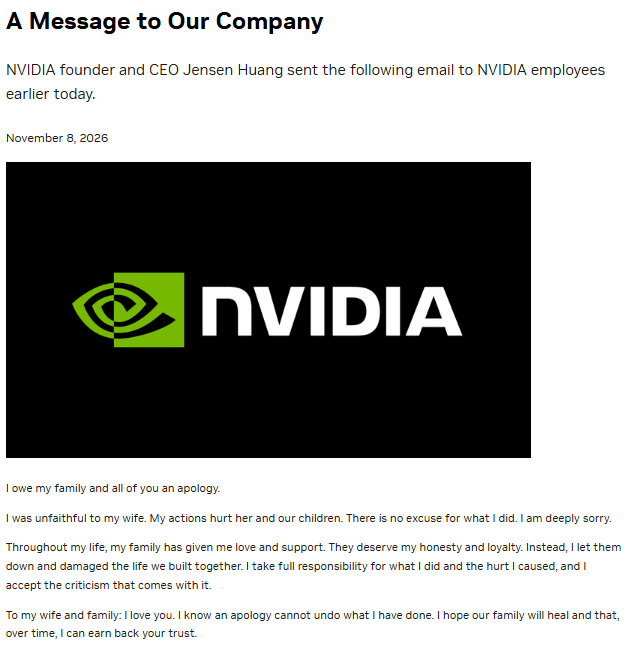
The development comes after Huang acknowledged in a message to employees that he had been unfaithful to his wife and apologised to his family, colleagues and shareholders.
Separately, media reports have raised questions about his alleged association with a Chinese business executive suspected by US intelligence officials of having links to Beijing. These allegations remain subject to scrutiny.
Reuters reported on November 12 that Nvidia’s board was meeting to consider whether Huang should remain in his position. The report identified longtime company executives Ian Buck and Colette Kress as two of the leading internal possibilities if a leadership change takes place.
However, replacing Huang would be an extraordinary challenge for Nvidia. The executive co-founded the company in 1993 and transformed it from a graphics processor manufacturer into a central player in the global artificial intelligence industry. Here are the names being discussed as potential successors.
ALSO READ: AMD, Broadcom, Or TSMC? Who Could Benefit If Jensen Huang Loses His Grip On Nvidia
Ian Buck: The Engineering Veteran And Leading Internal Contender
$NVDA Meet Ian Buck, inventor of CUDA, and VP of Hyperscale and High-Performance Computing. And POTENTIALLY the next CEO of Nvidia. Here he is in 2008, speaking about the history of CUDA, beginning with his research at Stanford. https://t.co/KVMYSjBlIz
— Alex Invests (@stockpickerspb) November 11, 2026
Ian Buck has emerged as one of the strongest potential candidates for Nvidia’s top job, particularly if the board prioritises technical leadership and continuity in its AI business.
Buck joined Nvidia in 2004 and currently serves as vice president of hyperscale and high-performance computing. He also leads product development for hyperscale AI, overseeing hardware and software initiatives that support the company’s partnerships with major technology players.
His biggest qualification is his contribution to CUDA, Nvidia’s software platform that enables developers to use graphics processing units for general-purpose computing. CUDA has become a crucial part of Nvidia’s competitive advantage, creating a vast ecosystem of developers, researchers and businesses that rely on its technology.
Buck holds a doctorate in computer science from Stanford University. Before joining Nvidia, he worked on Brook, an early programming system that helped establish the foundations for general-purpose GPU computing.
His technical expertise and nearly 22 years at Nvidia make him an attractive candidate for investors concerned about maintaining the company’s technological edge. Reuters reported that prediction-market activity also favoured Buck as a potential successor, although trading volumes were limited and such odds are not an indication of an actual board decision.
Colette Kress: The Safe Pair Of Hands For An Interim Role
Semafor is reporting some board members favor appointing Colette Kress as interim CEO. https://t.co/OkUkulTz6o
— Andrew Curran (@AndrewCurran_) November 12, 2026
If Nvidia needs someone to take charge immediately, its veteran finance chief Colette Kress could be among the most practical choices.
Kress joined Nvidia in September 2013 and serves as executive vice president and chief financial officer. She has become one of the company’s most visible executives, regularly appearing alongside Huang during quarterly earnings presentations and investor interactions.
Before joining Nvidia, Kress held senior finance positions at Cisco and Microsoft. She also spent several years at Texas Instruments, giving her extensive experience across the technology and semiconductor industries.
Her familiarity with Nvidia’s financial operations, investors and business strategy makes her a credible candidate to provide stability during a leadership transition.
Reuters reported that some members of Nvidia’s board were considering Kress for an interim CEO position. Analysts have also suggested that her financial and operational experience could help reassure investors during a period of uncertainty.
However, the distinction between an interim appointment and a permanent CEO role is important. Nvidia’s business is deeply rooted in semiconductor engineering, software development and long-term technology planning. Kress’s finance background makes her a potentially reassuring caretaker, but the board could ultimately prefer a technology-focused leader for the permanent position.
Rene Haas: Could An External Semiconductor Leader Enter The Picture?
If I had to put money on which external candidate could become next $NVDA CEO then it would be $ARM CEO Rene Haas. He spent 7 years at Nvidia and understands Jensen’s culture and what makes him interesting is that Nvidia’s Grace and Vera CPUs run on Arm architecture so while he missed rise of NVLink, Mellanox and rack-scale AI he understands CPU side of Nvidia’s platform better than almost anyone else on the outside.
— Shay Boloor (@StockSavvyShay) November 11, 2026
Rene Haas, the chief executive of Arm, is another name being discussed as a possible external candidate.
Haas previously worked at Nvidia and has extensive experience in the semiconductor industry. His current leadership role at Arm gives him a broad understanding of the chip ecosystem, intellectual property licensing and the evolving requirements of AI computing.
His industry experience could make him an interesting option if Nvidia decides to look beyond its existing leadership team.
Reuters cited investor and industry views identifying Haas as a potential external contender. However, there is no public confirmation that Nvidia has approached him or that he is being considered in a formal recruitment process.
An external appointment would also come with challenges, particularly given Nvidia’s distinctive corporate culture and the company’s close association with Huang’s technical vision.
Jay Puri: The Indian-Origin Executive In Nvidia’s Leadership Team
ok sounds like Jay Puri more reasonable https://t.co/PS04TM59j8
— Trung Phan (@TrungTPhan) November 9, 2026
Jay Puri, also known as Ajay K. Puri, is another senior Nvidia executive whose name has surfaced in discussions about the company’s future leadership.
Puri serves as executive vice president of worldwide field operations, overseeing global sales, business development, strategic partnerships, solution architecture, engineering and customer support.
He joined Nvidia in 2005 after a 22-year career at Sun Microsystems, where he held several senior positions across sales, marketing and general management. His earlier professional experience also includes roles at Hewlett-Packard, Booz Allen Hamilton and Texas Instruments.
Puri holds an electrical engineering degree from the University of Minnesota, a master’s degree from the California Institute of Technology and an MBA from Harvard Business School.
His extensive experience managing Nvidia’s worldwide commercial operations gives him considerable institutional knowledge. However, he has not been identified alongside Buck and Kress as one of Reuters’ two leading internal candidates. His inclusion in the wider succession conversation should therefore be viewed as speculative rather than evidence of a formal board shortlist.
Jeff Fisher And Madison Huang: Other Names In The Succession Conversation
The inside scoop on NVIDIA, from its pizza days to the latest products, from SVP Jeff Fisher http://t.co/O0EDXsY8yF http://t.co/wDvO6uBLng
— NVIDIA (@nvidia) December 12, 2014
🚨 Polymarket is betting Jensen Huang’s daughter could be the one REPLACING HIM at Nvidia. Madison Huang leads the next-CEO market at 12%, ahead of Lisa Su and internal executives. She already works at the company in a senior product role. With no clear succession plan and the board investigating Huang’s affairs, traders are pricing family continuity as the most likely path if he exits. Nvidia still has no obvious external heir. Source: Yahoo Finance, Polymarket / Writer: Lucas
— Mario Nawfal (@MarioNawfal) November 12, 2026
Other possibilities include Jeff Fisher, a longtime Nvidia executive with more than three decades of experience at the company, and members of Huang’s family who already hold positions within the organisation.
Fisher’s long association with Nvidia and his experience across its gaming and graphics businesses could make him a familiar choice for a leadership transition. Reuters also identified him as a name being discussed by investors and industry observers.
Madison Huang, Jensen Huang’s daughter, has also attracted attention. She works at Nvidia as a senior director of product marketing for physical AI, a segment focused on applying artificial intelligence to machines and real-world environments.
Her growing involvement in the company’s business has prompted speculation about whether she could eventually take on a larger leadership role. However, Nvidia has not publicly indicated that she is being groomed to succeed her father. Any suggestion of a family-led succession remains unconfirmed.
Can Anyone Really Replace Jensen Huang?
The biggest challenge facing Nvidia’s board may not simply be finding a new CEO, but identifying someone capable of maintaining the company’s extraordinary technological and commercial momentum.
Huang co-founded Nvidia in 1993 and has led its transformation into one of the world’s most influential technology companies. Its position in AI computing is built on more than the performance of its processors. CUDA, its software ecosystem, developer relationships and partnerships with major cloud companies have all contributed to its competitive advantage.
A leadership transition could therefore have consequences beyond the company’s boardroom, particularly as competition in AI chips intensifies and the US continues to scrutinise advanced semiconductor exports to China.
One possibility raised by investors is a shared leadership arrangement, with Kress handling financial and operational responsibilities while Buck oversees technology and product strategy. Such a structure could provide continuity while giving the board time to identify a permanent successor.
For now, Nvidia has not announced a replacement, a formal succession shortlist or a confirmed departure date for Huang. The names being discussed reflect investor expectations and industry speculation, not official appointments.
The coming days could prove significant for the company, but one thing is clear: replacing Jensen Huang would be about much more than filling the CEO’s chair. It would mean finding someone capable of steering the company that has become synonymous with the global AI boom.
Disclaimer : This story is auto aggregated by a computer programme and has not been created or edited by DOWNTHENEWS. Publisher: abplive.com