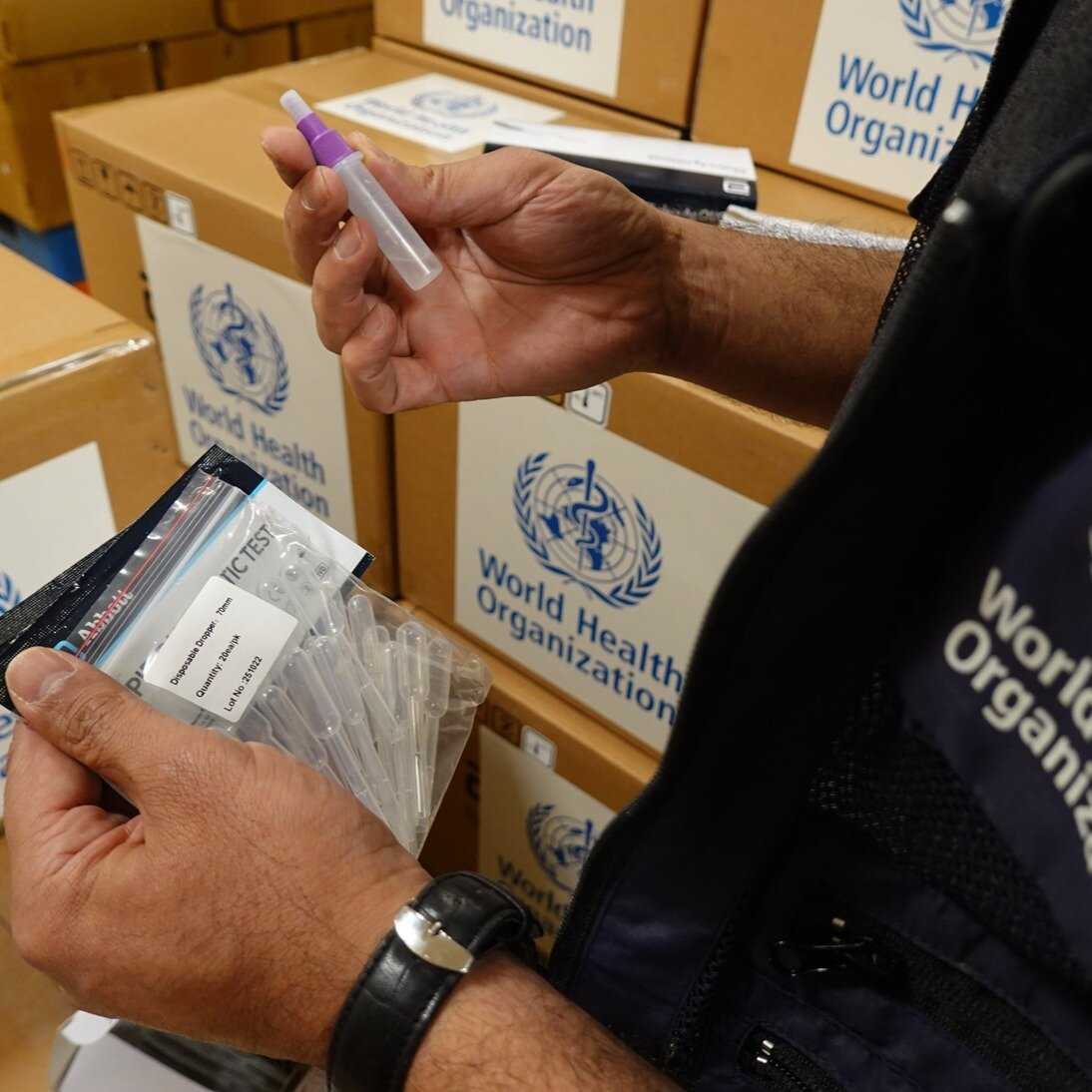
TEHRAN – The World Health Organization (WHO), with support from the Central Emergency Response Fund (CERF), has delivered 10,000 cholera rapid diagnostic tests (RDTs) to Iran’s Ministry of Health and Medical Education to strengthen early detection and help prevent potential outbreaks.
The tests will be distributed to the high-risk provinces of Hormozgan, Kerman, Sistan-Baluchestan, and Khuzestan to enable the rapid identification of cases and support timely public health responses.
“Early detection is our most critical tool in preventing infectious disease outbreaks. By equipping local health systems with these tests, we are empowering frontline workers to respond swiftly and protect vulnerable communities,” said Dr. Jean Jabbour, WHO Representative to Iran.
The broader project aims to benefit more than 112,000 people. Despite logistical challenges affecting air and sea transport, WHO is also working to deliver essential supplies for malaria and dengue fever.
In response to the growing crises affecting public health infrastructures in Iran, the World Health Organization, in cooperation with the Health Ministry, kicked off in May a two-million-dollar project to support urgent health responses in the country.
Supported by the United Nations Central Emergency Response Fund (CERF), the project, titled ‘preventing the spread of diseases and maintaining essential health services during emergencies’, aims to minimize the outbreaks of diseases, stabilize the process of providing health services, and safeguard health system from declining performance across the country, the health ministry’s website reported.
Since the beginning of the imposed US-Israeli war against Iran, on February 28, airstrikes have lowered the country’s capacity to provide vital health services.
The aggressors destroyed 229 health centers, 49 hospitals, 78 pharmaceutical facilities, laboratories, and warehouses.
Moreover, 56 emergency bases were targeted, nine hospitals were evacuated, 47 ambulances and 10 emergency vehicles were severely damaged.
Attacks on pharmaceutical and diagnostic equipment manufacturing facilities and their surrounding areas have disrupted the domestic supply chain of medical equipment and challenged the process of providing critical care to those in need.
Climatic shocks in southern provinces of the country have exacerbated the situation. Irregular, above-normal rainfall, following prolonged periods of drought in 2025-2026, has led to localized flooding and the accumulation of stagnant water.
High-risk provinces, including Sistan-Baluchestan, Hormozgan, Kerman, and Khuzestan, are at greater risk of exposure to contaminated water sources. The situation, coupled with conflicts in water and sanitation infrastructure and disease surveillance, has increased the risks of infectious disease outbreaks and waterborne diseases, particularly cholera, and acute water diarrhea.
According to John Jabbour, WHO Representative, “The ongoing conflicts and severe climatic shocks have placed an unprecedented burden on Iran’s health infrastructure, exposing vulnerable communities to serious hazards.
The allocated funds for emergency response will play a critical role in managing health system challenges. It allows us to take immediate measures to protect essential supply chains and ensure that life-saving care is available to those most affected by crises.
Without urgent action, local transmission of diseases could quickly result in widespread outbreaks and increase the cases and deaths from preventable diseases.”
To accelerate immediate action, the WHO is deploying a set of high-impact interventions. The strategy prioritizes strengthening surveillance and early warning systems, as well as deployment of essential equipment to respond to disease outbreaks, including rapid diagnostic tests for malaria, dengue fever, and cholera, the official noted.
The intervention also includes the distribution of insecticide-treated mosquito nets, insect repellents, larvicide, along with rapid technical assistance to strengthen integrated vector management in high-risk provinces.
Over the next six months, the WHO project will directly serve an estimated 112,500 people by scaling up epidemic management and restoring access to health services. Some 272,550 people will be protected indirectly by strengthening rapid response capacities and reducing the risks of disease outbreaks.
Ultimately, the goal of this comprehensive effort is to manage the outbreak of preventable diseases and maintain essential health services at a time when they are needed more than ever.
Disclaimer : This story is auto aggregated by a computer programme and has not been created or edited by DOWNTHENEWS. Publisher: tehrantimes.com