New Delhi: Driven by surging food prices, fuel costs and stubborn manufacturing inflation, India’s wholesale price (WPI) inflation climbed to 9.87 percent in June from 9.68 per cent in May. The June print is the highest one in more than two years. The increase in inflation, however, reflects the impact of the West Asia war and the effective blockade of the Strait of Hormuz, a key route through which most of India’s crude oil imports arrive, along with the resulting spillover into food prices, the government said on Tuesday.
Meanwhile, the government on Tuesday also released its first-ever monthly sub-sectoral trial index of services production (ISP), showing that India’s services sector recorded robust growth across most segments in April, with retail trade, real estate and administrative services emerging as the top performers. The new data showed that 14 of the 19 services sub-sectors recorded double-digit output growth during April, underscoring broad-based expansion in the formal services economy.
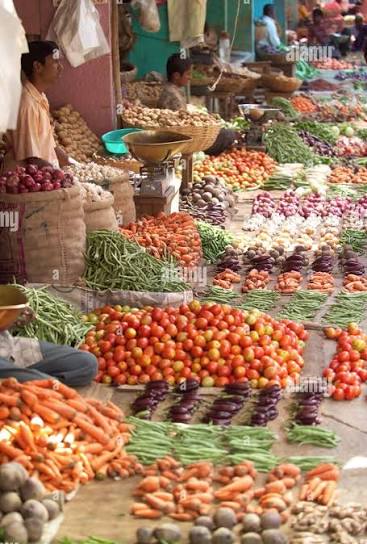
For wholesale inflation, the commerce and industry ministry said that it is the latest WPI data, based on the 2022-23 base year. “Food inflation rose to 5.49 per cent in June, from 3.60 per cent in May, as food prices rose during the month following a rainfall deficit due to the El Nino impact. Also non-food articles WPI inflation was also higher at 11.07 per cent, while in minerals it was 9.45 per cent in June,” the ministry said in a statement.
“Mineral oils (containing petroleum products), food articles, manufacture of basic metals, and manufacture of chemicals and chemical products have been major drivers of WPI inflation in June 2026, while in fuel and power, it was down to 27.41 per cent in June, from a peak of 30.33 per cent in May. In manufactured products, inflation was unchanged at 7.48 per cent as in May,” the ministry said.
For the ISP, it represents an important milestone in strengthening India’s statistical system and improving the measurement of the services sector, which accounts for more than half of the country’s economic activity. “In the ASP data, air transport declined by 13.9 per cent, and railway transport was down by 0.4 per cent in April. Subsequent ISPs will be released on the 29th of every month,” the ministry said in a statement.
Briefing media on the trial ISP release, chief economic advisor V Anantha Nageswaran said that there is work ahead. The index measures volumes, but the data arrives as values. So, everything depends on how we adjust prices. “Building price indices for services is, of course, not an easy task, as it is the case for goods in general, and that is the most valuable investment we can make, and we will continue to make in producing this index of services production,” he said.
The officials also said that coverage will widen, with inclusion of health services, education, and own dwelling businesses sub-sectors that increase coverage to 85 to 90 per cent of the formal services sector activity in the economy. “The work is in progress to compile ISP of the sub-sectors, like health and residential care, education and ownership of dwelling based on administrative data to ensure coverage of more than 80 per cent of the services activities of the economy,” said Dilip Singh, additional general general, MoSPI.
“Top sub-sectors reporting strong growth in April were accommodation and food (37.2 per cent), retail trade (30.8 per cent), administrative and support services (28.7 per cent) and real estate (27.7 per cent). Based on its data sources, namely, GST and administrative data, ISP would cover the formal sector enterprises only. Accordingly, services which are not covered in ISP are those which are either related to core government activities or are dominated by non-market activities and the informal sector,” the ministry said.
Disclaimer : This story is auto aggregated by a computer programme and has not been created or edited by DOWNTHENEWS. Publisher: deccanchronicle.com