I want you to cast your minds back to a time when Donald Trump was still the host of a bikini contest, Netflix was mailing you DVDs, the financial crisis had rendered you borderline unemployable and Instagram hadn’t been invented; a time when we were still poking each other on Facebook, a platform used for hooking up with people, not destabilising democracy.
It might not sound like it, but this was the backdrop to the beginning of the greatest period in travel history: the year 2009.
Of course, it’s a bold claim to say that something is the greatest of anything, unless that something is a beer in Japan. And, while I’m sure people glorify the Before Sunrise romance of travel in the ’90s, or smoking on planes in the ’70s, those planes also got hijacked way more often. And if I hooked up with the love of my life, agreeing to meet them at a train station in Vienna in six months’ time, I’d say that was a wildly impractical way to start a relationship.
This is what made 2009 such an incredible year in the history of travel. Not the lack of plane hijackings (although that certainly helped), but the fact that it had the benefits of technology, before technology got around to killing the benefits of analogue travel.
There was mystery and uncertainty, freedom and flexibility. Even with infinite access to information, it still felt like we were discovering something about the world, as opposed to walking through it in secondhand shoes.
Sign up for the Traveller newsletter
The latest travel news, tips and inspiration delivered to your inbox. Sign up now.
With that in mind, I want you to come with me on a journey back to the halcyon days when guidebooks and online booking platforms coexisted in perfect harmony. To a time when a photograph was a memory, a story was in a book, and travel was as good as it ever was, and better than it ever will be. It might be a vanished era, but with the magic it left behind, you can still relive the joy of travelling like it’s 2009.
Instagram didn’t yet exist
When reaching for this tree, it’s best to start with the lowest-hanging branch; 2009 was the year before Instagram started. I’m not going to say Instagram ruined travel, but it did dramatically expand the audience to our trips.
It became all too easy to share our journeys and reap the delicious dopamine of likes and followers. No longer were we lugging around Kodachrome slides in our rucksacks, nor did we have to waste hours at internet cafes uploading photos on dodgy connections. Phones made it instantaneous, filters made it polished, and what was supposed to be a memory became a piece of content.
Instagram was the grease on a slippery slope, and we’ve been sliding down it ever since. It destroyed our ability to be present in the moment when we travel – we’ve become so concerned with capturing and sharing it, we’ve forgotten how to enjoy the moments themselves.
How to travel like it’s 2009 Ditch social media, even if it’s only for your trip. I did for years, until the Tripologist (aka Michael Gebicki) told me it was career suicide (far be it from me to argue with his wisdom). My time away from social media was blessed. I stopped caring about what other people did or thought and focused only on what was in front of me.
Booking platforms existed but weren’t ubiquitous
I only booked one hotel in 2009, and it took me a solid hour of stumbling around Shinjuku Station to try to find it. At one point, I was so spun out, I pulled up at a konbini, grabbed a beer and a fluffy egg sando, and entertained the thought of camping there for the night.
To compare, when I was travelling around South-East Asia that same year, I didn’t book a single thing and spent many joyful afternoons walking up and down beaches in search of the cheapest guesthouse I could find.
It was a golden age for the romance of spontaneity and the convenience of technology, when you could comfortably book hotels online in Japan (and be fairly certain of how to find them), but didn’t have to book a single thing in places such as Thailand. There were still hundreds of family-run guesthouses that didn’t even have Wi-Fi, let alone a profile on booking.com or Airbnb.
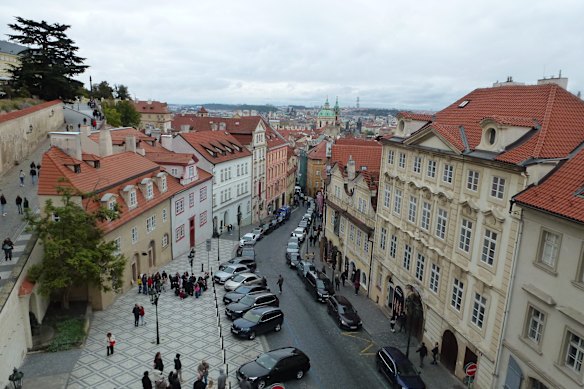
How to travel like it’s 2009 There are still places in Thailand you can turn up to with no plans, and nothing booked. My favourite is Koh Phayam where, despite a growing presence on online booking platforms, a number of bungalows are the kind you find with your feet, not your fingers.
The economy was crap
Applying for jobs in 2009 was wild. Employers would straight-up tell you they were going to pay you next to nothing, treat you like dirt and, if you didn’t want the job, that would be fine, because 10 other people would jump at the opportunity.
In the face of this, travel seemed like a pretty good alternative. And the best bit? Those one-off cash payments, the ones that were meant to stimulate the Australian economy during the Global Financial Crisis. Well, I used mine to stimulate an economy, alright, but it wasn’t the Australian one; I took that money to South-East Asia and stretched it as far as it could go.
But it wasn’t just the free money that made this such a good time to travel. The downturn was global, flights were reduced and it was the worst year for travel numbers this side of the century (COVID excluded). If you were lucky enough – or willing to go into debt – you could experience what it feels like to travel when tourist economies are cheering your arrival, not lamenting your presence.
How to travel like it’s 2009 I’m not in a financial position to cut you a cheque for 900 dollarydoos, but I can suggest avoiding destinations such as Bali and Barcelona, and travelling to places such as Fukushima, where tourists are considered a blessing, not a burden.
Digital connections didn’t come at the expense of physical ones
To save a few bucks, I’ve recently gone back to staying in hostels. Something I’ve noticed when staying in these places is that people have largely stopped talking to each other, and it’s not uncommon to walk into the common room and see a dozen kids glued to their phones.
It’s absolute madness, as I’ve long believed that conversation is a traveller’s greatest commodity. To travel and not talk to strangers is like eating an egg without salt. You can do it, but it lacks the zest that makes it special.
Where this left us in 2009 was with the perfect combination of physical and digital connection. Through the general ether of the internet, all of us were connected, but conversation was still the true currency of the traveller. I learnt about all my favourite places through word of mouth, but I could also meet a fellow traveller in Cambodia, add them on Facebook, and then end up crashing on their couch in London nine months down the track (thanks, Mike).
How to travel like it’s 2009 Talk to strangers and stop using your phone as a crutch. It’s easy to trawl through restaurant reviews or reels, but learning about the world through that tiny screen will never compare to talking to someone and uncovering the real thing.
Oat milk lattes weren’t on every menu
Anywhere digital nomads sniff out a cheap room and decent Wi-Fi, you’ll find oat milk lattes. These people will fly halfway around the world just to have all the comforts of home, all the while celebrating the fact that they’re only paying half as much to enjoy them.
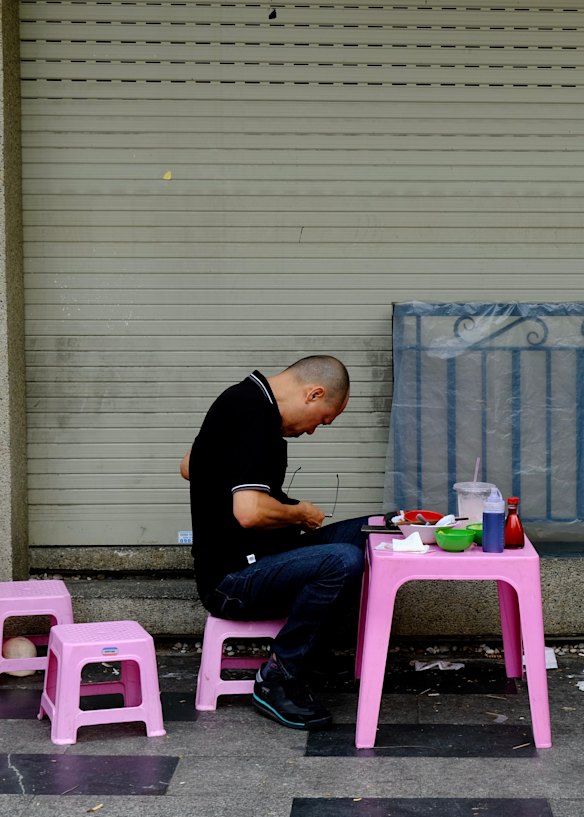
I call out oat milk lattes here, but this isn’t fair to oats or their milk; it could have easily been the acai bowl, or avocado toast, or any menu item with “Buddha” in the name. What we see is, essentially, homogenisation – places that were once hubs for new experiences have become soft landings for anyone with the purchasing power of their country of origin.
Of course, some might say that destinations such as Koh Phangan and Canggu were already ruined in 2009, and that if you really wanted to experience them, you would have had to Eat, Pray, Love your way there 10 years earlier. But at least there was still a semblance of originality, and not the Ctrl-V versions of the destinations we have today.
How to travel like it’s 2009 Drink coffee where the locals do. It might be as black as my heart, or as sweet as condensed milk, but it’s still better than supporting businesses that are made exclusively to cater to travellers who want away to be much the same as home.
Budget airlines were still taking off
As a celebrated stingy traveller, I love a budget airline. I’d rather save a few bucks on a flight than watch the latest season of The White Lotus, and no depressing meal wrapped in foil could ever taste better than arriving in a country with an appetite.
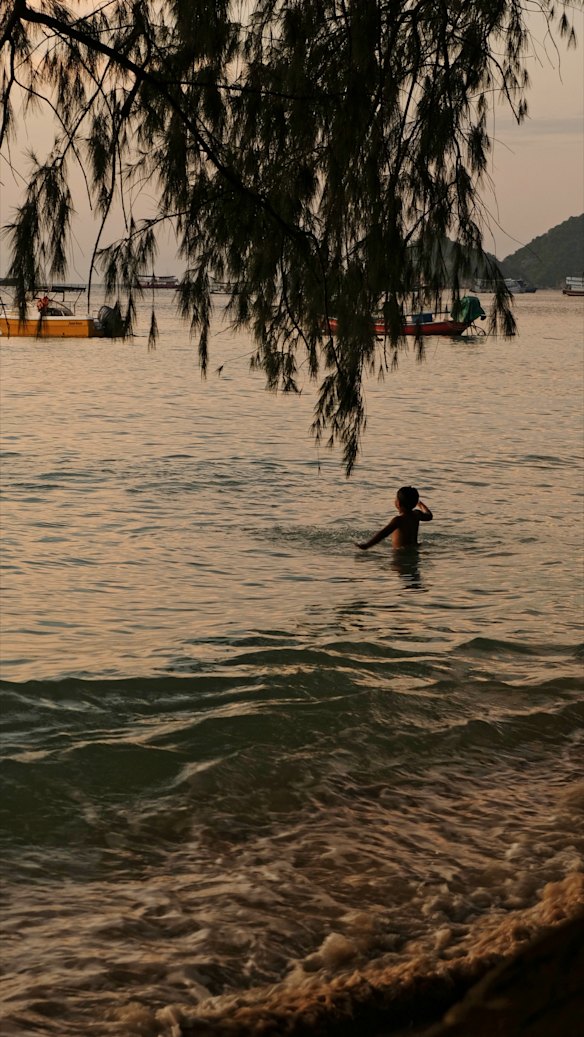
But that doesn’t mean I’m not a massive hypocrite.
And while I love what budget airlines have done for my own wallet, it’s hard to deny their correlation with the rise of overtourism. They’ve made flying cheaper and more accessible, but in doing so, they’re also bending destinations under the weight of their own success, and not all those destinations are happy about it.
It’s not like budget airlines weren’t around in 2009 (my flight to Japan back then was a Jetstar sale for a glorious $500), it was that their market share was still small enough that cheaper access didn’t come at the expense of locals the way it does now.
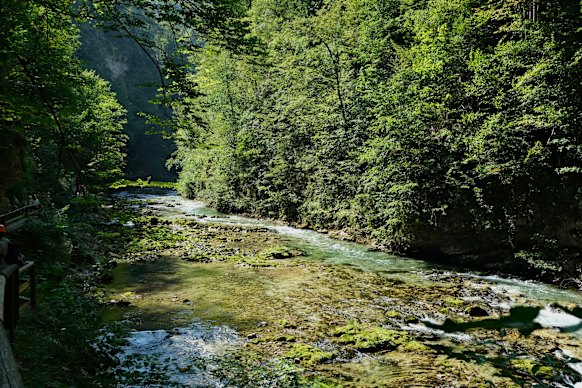
And while overtourism already existed in places such as Venice, you could still discover a place such as Kyoto without the crush of tourists that compounded over the next decade.
How to travel like it’s 2009 I can’t, in all good conscience, tell you not to fly on a budget airline, because I do it all the time. But I can say that once you land somewhere and plan to travel around a bit, take a train or a bus because it’s way more rewarding than flying, as some of the best parts of a destination are the ones we all too often fly over.
The answers existed online, but you had to dig for them
These days, all you have to do is whack a question into Google, and our AI overlords will skim the internet, like I skimmed SparkNotes, to spit out the answer. And, based on the travel planning I’ve done using these tools, they do just about as well as I did in my exams (spoiler: not great).
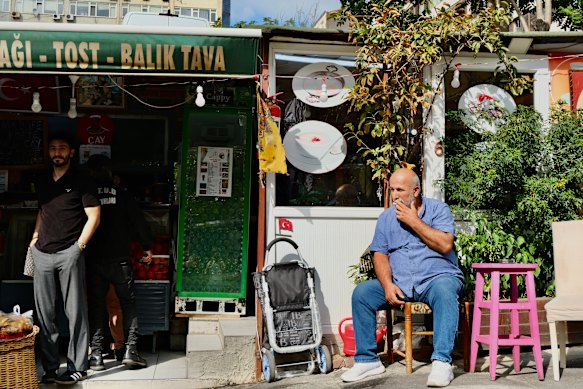
What made 2009 awesome for this was that between blogs, forums and Wikitravel, you could find just about any answer you were searching for, but without having those answers rammed down your throat.
How does one cross the border from northern Thailand to Laos? Well, the good news is some random on the internet has taken the time to write a play-by-play of the experience, making an obscure border crossing slightly more accessible to the wayward traveller.
You had The Man in Seat 61, the guides on Travelfish, and even TripAdvisor, back when it was more of a user-generated forum, and not another excuse to sell tours. It meant that you had enough information to make the unknowable achievable, and still enough mystery to call it an adventure.
How to travel like it’s 2009 Don’t use AI to plan your trips. You can’t trust everything it tells you, and it changes the way our brains retain information. Instead of finding the answers, we’re being given them, and it makes travel planning way less mentally rewarding.
Digital cameras were all the rage
I loved my digital camera. It was a wonderful, waterproof thing that tragically ended up at the bottom of the Mekong, and no matter how many rocks I stuffed in my pockets, I could never quite get deep enough to reach it.
This camera (RIP) represented something that I loved about travel in 2009; not everything was being recorded. Some things could never (and should never) be captured, and taking a camera with you was a conscious choice.
Sometimes, it just wasn’t worth the hassle.
But these digital cameras also saved us from the horrors of camera film and waiting to see your images. After losing my camera, I decided to go full analogue, buying a film camera and using it for the rest of my trip. I lugged around a dozen rolls of film for a whole month. When I finally got home and had them developed, there were photos of elbows, blurry streets and people so overexposed, it looks as though they were being abducted by aliens.
How to travel like it’s 2009 A digital camera is an incredible travel accessory, simply for the separation it puts between you and your phone. Any step that keeps your phone in your pocket (or better yet, in your bag) is another step towards immersion in a trip.

Enough mystery for discovery, enough infrastructure for air-conditioning
Back in 2006, I taught English in Hanoi. I stayed in a guesthouse with a bathroom that flooded whenever I showered, a television that required antenna ballet and a door that didn’t close, no matter how much I tried to jam it into the warped frame. Couple this with the fact that my backpack was full of cash and traveller’s cheques, and you can understand what being one robbery away from total ruin did to my opinion of accessible ATMs.
Fast-forward only a few years to 2009, and it felt like the world was still big enough to discover something new, but the infrastructure was robust enough that you could easily access cash, cold beer and the occasional burst of air-conditioning.
And it’s not just about the cold beer (although that can’t be undersold), but more important things such as adequate medical attention. Even when I dislocated my shoulder in Laos, I could get an X-ray, a poorly translated consultation and some wicked painkillers, as opposed to trying to pop my shoulder back in with nothing but rice whiskey and a solid yank from a mate.
How to travel like it’s 2009 Infrastructure continues to improve, and while the world is getting smaller every day, we should never deny locals access to things for our sense of nostalgia; if they want flat-screen televisions and high-speed internet, then far be it from us to stand in their way.
FIVE THINGS I’LL NEVER LOOK BACK FROM
Ride-sharing apps
As someone who has been robbed in taxis twice, the advent of ride-sharing has been a blessing. No more getting dropped off in the completely wrong part of Phnom Penh (and having to pay to go back to where I asked). I mean, who can be arsed with haggling?
Google Flights
Some people scroll TikTok, some people play Candy Crush, and some people (me) spend their time strategising and hypothesising on Google Flights. It’s a silly little habit, one that recently nabbed me $1400 flights from Auckland to Buenos Aires, an absolute steal in this economy.
Aviation safety
Despite what a bunch of recent stuff-ups at Sydney Airport might suggest, we really are living in the golden age of aviation safety. And if the entertainment is meh, and the food is garbage, the only thing I really care about is whether my plane sticks the landing on the other side.
Maps
There was nothing quite like scribbling down the directions to your hostel in a notebook and then trying to decipher your hieroglyphics at two o’clock in the morning. While I bemoan maps for how they’ve transformed life into something reviewed and rated out of five stars, my terrible sense of direction means I am unable to go back to a life without them.
Text translators
When I was in China, I ordered by pointing at items on the menu and hoping for the best. Now, thanks to text translators such as Google Lens, I’ll never end up with a trough of chillies in front of me again. My brother ate the whole thing. He swore they didn’t burn on the way in, but the whiteness of his face the next morning said they sure as hell burned on the way out.

The art of analogue travel
For Olivia Berry, the 21-year-old photographer whose images are on these pages, travelling like it’s 2009 means resisting the urge to have every experience pre-approved by an algorithm.
Her camera of choice is a Fujifilm X-T30 II, a digital camera with film-inspired settings that she carries everywhere, rather than relying on her phone.
“You can pull out your phone at any time and take photos of anything without thinking twice,” she says. With the Fujifilm, she adjusts the ISO, shutter speed and aperture herself. “There is way more thought behind capturing a photo this way and it’s more enjoyable.”
Her travel bag also contains watercolour paints, a notebook and pen, and whatever flyers or leaflets strangers hand her along the way. She uses the notebook for directions, phone numbers and the occasional diary entry, and sometimes paints a view rather than photographing it.
The same instinct shapes where she goes. Berry asks locals where they eat with their families, wanders rather than searches and has deliberately skipped places because they were everywhere on Instagram.
“When I was in Florence, all my friends and I had been hearing about was the ‘wine window’, a hole from which you order and receive your drink. We ended up walking past it accidentally. It was surrounded by people standing with their phones waiting to record the moment their drink came through the wall.
“There’s nothing wrong with this, it’s just not for me. If I’m visiting a country or place I’m visiting it because I want to feel what it’s like to live there,” she says. “That’s the true experience.”
Disclaimer : This story is auto aggregated by a computer programme and has not been created or edited by DOWNTHENEWS. Publisher: www.smh.com.au