Why are there so many mushrooms around this year?
-
Published
Have you spotted more mushrooms than usual on woodland walks or in your garden this autumn?
The Royal Horticultural Society (RHS) has predicted mushroom sightings across the UK could reach record levels this autumn, saying drought followed by wetter weather could help some species flourish.
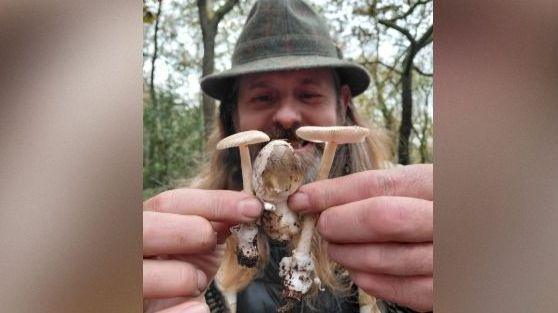
Lancashire forager Colin Unsworth said some species had appeared in “bumper” numbers, although others had been harder to find.
But Unsworth, who leads foraging trips across Lancashire, warned people not to eat wild mushrooms unless they were certain they had identified them correctly, as some poisonous species can closely resemble edible varieties.
Unsworth, who runs Forest Horizons in Adlington, said fly agaric, the distinctive red mushroom with white spots, and blushers had been found in good numbers.
Porcini mushrooms, also known as penny buns or ceps, had been “a bit thin on the ground”, he said. He added there was an EU-wide shortage of the edible fungi, which are prized by chefs for their “lovely, robust flavour”.
However, he warned that some poisonous species, including the brown roll-rim, can be mistaken for edible mushrooms.
“You get look-alike mushrooms,” he said. “They can be really dangerous.”
 Image source, Colin Unsworth
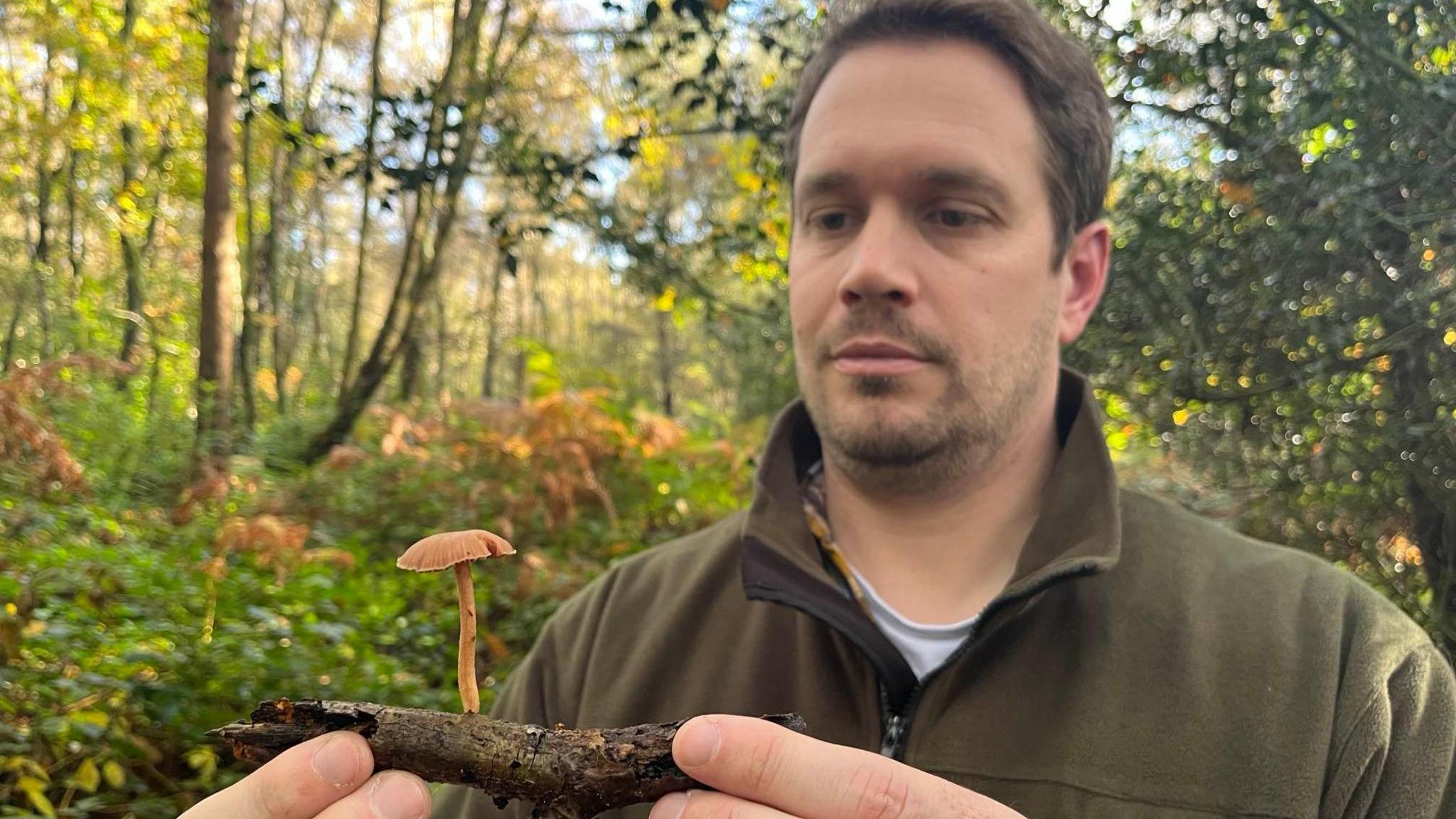
The RHS said prolonged hot weather and drought, followed by a wet autumn, could help some fungi flourish.
Its advice team recorded a 43% rise in inquiries about garden fungi following the 2025 drought, compared with the previous year.
Some species benefit from extra dead plant material left by drought, while others respond to stress in trees by producing more mushrooms.
Jassy Drakulic, RHS senior plant pathologist, said gardeners could notice a “remarkable variety of mushrooms and toadstools” appearing in lawns, borders and around trees this autumn.
She said fungi were mostly a sign of a healthy ecosystem, helping to break down organic matter and support plant health.
‘They’re so beautiful’
For Unsworth, autumn is the highlight of the foraging calendar.
He said understanding mushrooms helped “join the dots” between different parts of the landscape and explain why species were found in particular habitats.
A typical forage at this time of year could produce 20 or 30 edible types of mushroom, he said.
“In the autumn time, mushrooms take centre stage and they’re so beautiful and they’re so varied,” he said.
 Image source, Colin Unsworth
Get in touch
Tell us which stories we should cover in Lancashire
Listen to the best of BBC Radio Lancashire on Sounds and follow BBC Lancashire on Facebook, external, X, external and Instagram, external. You can also send story ideas via Whatsapp to 0808 100 2230.
Related stories
-
-
Published14 hours ago

-
-
-
Published28 September
-
Disclaimer : This story is auto aggregated by a computer programme and has not been created or edited by DOWNTHENEWS. Publisher: newsrss.bbc.co.uk