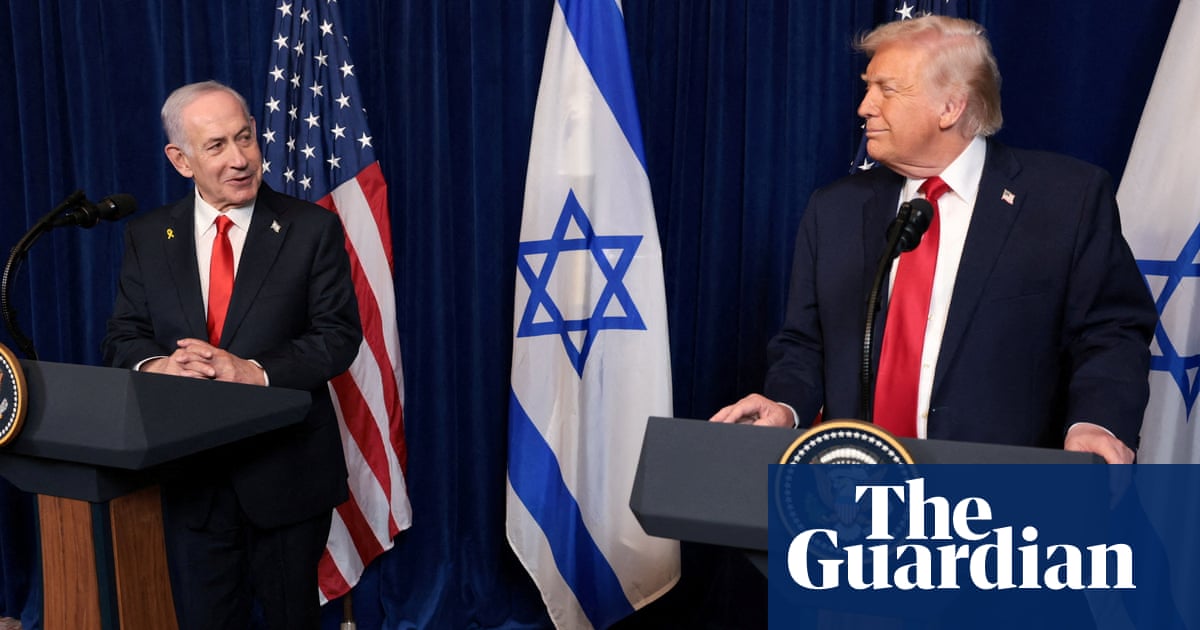
If there is to be a peace deal between United States and Iran, it will have to go through a familiar obstacle: Benjamin Netanyahu. Israel’s military operations in Lebanon have become a sticking point in the talks for a potential opening of the strait of Hormuz – once again testing the volatile alliance between Donald Trump and Netanyahu.
This time, the Israeli prime minister is under exceptional pressure to show that his campaigns against Hamas, Hezbollah and Iran have brought results as he faces elections with his political survival at risk.
The Israeli leader’s threats on Monday to bomb the southern suburbs of Beirut in order to dislodge Hezbollah led Iran to say it would cut off negotiations with the United States until that conflict was frozen. Trump, facing the collapse of talks after he had claimed a deal was imminent, replied: “I think we’ve been talking too much.”
The crisis culminated in a phone call – by one account stormy – between Trump and Netanyahu. “What the fuck are you doing?” Trump said to the Israeli prime minister, one official told Axios, a US outlet that has frequently had inside access to Trump’s frustration with Netanyahu.
“You’d be in prison if it weren’t for me,” another person characterised Trump’s remarks.
That account is disputed. Israel’s Channel 12 said that the focus was a misunderstanding between the two men: “Trump felt Netanyahu implied the war was continuing at full intensity, while Netanyahu felt Trump implied a total ceasefire,” wrote Amit Segal, the channel’s chief political analyst, citing a close aide to Netanyahu.
“There was a little glitch today, but I turned that one around very quickly, as you probably noticed earlier,” Trump later told ABC News.
Netanyahu has seen five US presidents since he first served as Israel’s prime minister in 1996 and has famously gotten under the skin of all of them. (“Who’s the fucking superpower here?” Bill Clinton was said to have exclaimed after their first meeting in 1996.)
But it is a uniquely fraught moment for Netanyahu. On Monday, the Knesset voted 106-0 to pass the first reading of a bill to dissolve Israel’s parliament, and early elections are expected in the autumn. After earlier surges in polling following successful strikes on Iran’s leadership, Netanyahu’s popularity rating has slumped as the war in Iran, as well as conflicts in Gaza and Lebanon, have dragged on.
“He’s got no story going into this election, and so he needs to either somehow achieve victory in Lebanon, or if not victory, at least like tell the story that he’s still fighting,” said Ilan Goldenberg, a former special adviser on the Middle East to vice-president Kamala Harris and previously as the Iran team chief at the Department of Defense. He is now chief policy officer at J Street, a lobbying and advocacy group that calls itself “pro-Israel, pro-peace”.
“He needs this so he can say: I’m still working for total victory,” Goldenberg said. “It’s a much better story for him than: this is done, and, essentially, I’ve failed to actually dislodge any of these threats.”
And hearings also resumed this week in a long-delayed trial in which Netanyahu is charged with fraud and bribery. Netanyahu has regularly used his position as prime minister of a country under threat to delay the trial – potentially linking his freedom to the question of whether he remains in office.
While the Israeli PM was successful in lobbying Trump to strike Iran together, Trump’s own political considerations in the United States may now take precedent.
Despite his public claims that he was not concerned about the midterms, Trump has regularly turned back to economic data – including petrol prices – to claim his administration has been successful. Over the Memorial Day holiday weekend, average prices across the United States were the highest they have been since Covid.
And the timely leak of details of his call to Netanyahu may indicate that the Trump administration wants to be seen as tough on Israel to avoid allegations that Israel’s PM is calling the shots. After the call, Netanyahu confirmed that Israel would not strike Beirut if it was not struck by Hezbollah. At least eight people were killed on Tuesday in Israeli drone strikes, hours after Trump and Netanyahu agreed to dial back the fighting.
The other question remains Iran. The government has maintained a stranglehold on 20% of the global oil trade by shutting the strait of Hormuz, betting that the economic pain would sway the US in negotiations. But a US blockade has also crippled Iran’s economy, threatening the longterm viability of its oil industry and the regime’s own source of funding.
Whether Israel’s ongoing military operations in Lebanon – Netanyahu’s main leverage point on the negotiations – remains a red line for Iran remains to be seen. Other incentives including unfreezing Tehran’s frozen assets could sweeten the deal for Iran. But Trump, who harshly criticised Barack Obama for approving the release of frozen assets under his Iran nuclear deal, is loathe to do the same.
Trump, meanwhile, has continued to say he’s close to inking a deal. “I still have to get a few more points,” he told ABC News. Later he added: “We’re going to get what we need.”
Disclaimer : This story is auto aggregated by a computer programme and has not been created or edited by DOWNTHENEWS. Publisher: theguardian.com