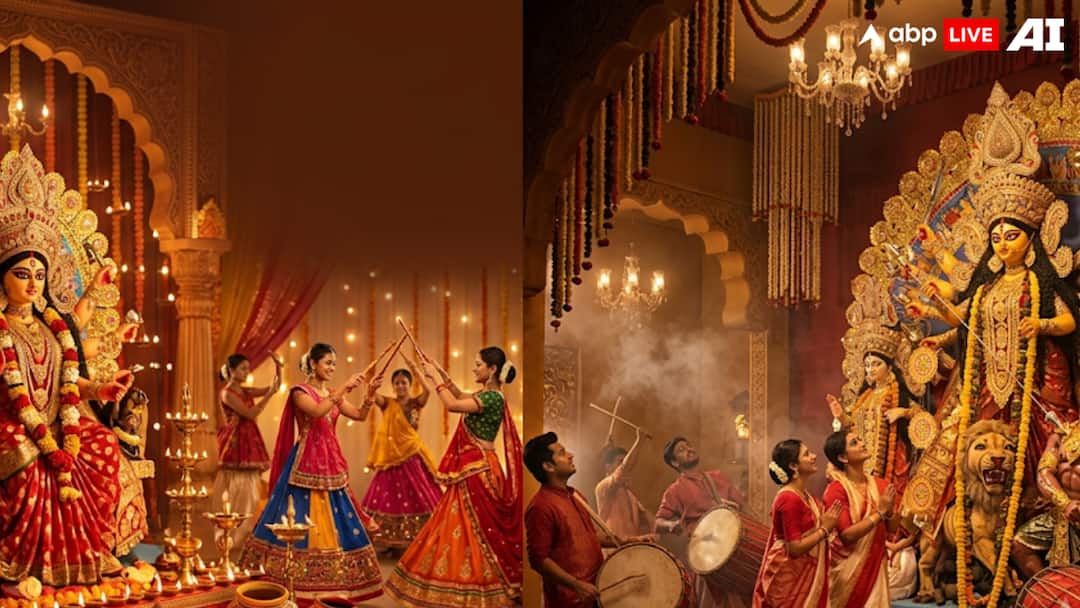
- Navratri and Durga Puja share roots, differing in rituals.
- Navratri is a nine-night pan-Indian Goddess worship tradition.
- Durga Puja is a distinct five-day Bengali regional celebration.
- Kolkata’s Durga Puja gained UNESCO heritage recognition in 2021.
As Sharad Navratri arrives, Goddess Durga is worshipped across India, but the traditions vary significantly from region to region. While Navratri is observed for nine nights, Durga Puja in West Bengal is celebrated most prominently from Shashthi to Dashami. So, are Navratri and Durga Puja the same festival, or are they two different traditions?
The simple answer is that both are rooted in the worship of the Goddess, but their rituals and cultural traditions differ. Sharad Navratri is a nine-night tradition dedicated to Shakti, while Durga Puja represents a distinct regional and cultural form of the same autumnal worship of the Goddess, particularly associated with Bengal and eastern India.
ALSO READ: Shardiya Navratri 2026: No Auspicious Muhurat To Buy A Car Or Bike; Check Vehicle Purchase Dates
What Is The Religious Basis Of Navratri?
The Devi Bhagavata Purana, in its seventh Skandha, describes various observances associated with the worship of the Goddess. It mentions two major Navratris in a year — one during autumn and another in spring — providing the religious foundation for Sharad and Chaitra Navratri traditions.
Navratri is observed from Pratipada to Navami, with devotees worshipping different forms of the Goddess. In northern India, the nine forms of Navdurga, from Shailaputri to Siddhidatri, are traditionally worshipped.
The festival is also associated with Ghatasthapana, fasting, recitation of the Durga Saptashati, and Kanya Pujan on Ashtami or Navami.
Why Is Durga Puja Considered A Five-Day Festival?
In Bengal, the main celebrations of Durga Puja take place across Shashthi, Saptami, Ashtami, Navami and Dashami.
The main rituals begin on Shashthi with the arrival and Bodhan of Goddess Durga. Saptami features Nabapatrika Puja, while Ashtami is marked by Maha Ashtami and Sandhi Puja. Navami is observed as Mahanavami, followed by Vijayadashami and the immersion of the Durga idol.
This is why Durga Puja is commonly described as a five-day festival. However, its religious and cultural preparations begin earlier. UNESCO records Durga Puja as a broader ten-day tradition of worship centred on Goddess Durga, beginning in connection with Mahalaya and concluding with immersion on Dashami.
In 2021, Durga Puja in Kolkata was added to UNESCO’s Intangible Cultural Heritage list.
What Is The Connection Between Durga Saptashati And Navratri?
The Devi Mahatmya, a celebrated section of the Markandeya Purana, is also known as the Durga Saptashati or Chandi Path. It holds an important place in the worship of Goddess Durga.
The text describes the Goddess’s battles and different forms, including her victory over Mahishasura. Recitation of the Durga Saptashati is a traditional practice associated with both Navratri and Durga Puja.
How Did Durga Puja Develop In Bengal?
The tradition of worshipping the Goddess has a long history in Bengal, although the grand public celebration seen today developed over time.
According to historians, elaborate Durga Puja celebrations became prominent among Bengal’s zamindars and wealthy families during the 18th century. These celebrations also became important social occasions. Over time, community-led worship and the tradition of large public pandals grew stronger.
ALSO READ: October 2026: Rare Rajyogs May Bring Wealth And Prosperity To These 4 Zodiac Signs
Navratri And Durga Puja: What Is The Difference?
Navratri and Durga Puja share the same broader foundation of Goddess worship, but they should not be treated as completely identical festivals.
Navratri is a wider nine-night tradition of Shakti worship, with different forms of the Goddess observed through rituals such as fasting, Ghatasthapana and Navdurga worship. Durga Puja, meanwhile, is a distinct regional tradition that developed in Bengal and eastern India, with five days, Shashthi to Dashami, forming the central period of celebration.
So, while the two traditions are closely connected, their rituals, cultural practices and ways of observing the festival give each its own distinct identity.
[Disclaimer: The information provided here is based solely on beliefs and information. It’s important to note that ABPLive.com does not endorse any beliefs or information. Consult a relevant expert before acting on any information or information.]
Disclaimer : This story is auto aggregated by a computer programme and has not been created or edited by DOWNTHENEWS. Publisher: abplive.com