Warning strikes are spreading through Germany’s metal and electrical industries on Monday, while employees at some banks are also expected to stop work.
Workers in Germany’s metal and electrical industries and at several private banks are staging warning strikes on Monday in two separate disputes over pay, job security and changing workplaces.
IG Metall is stepping up nationwide action in collective bargaining covering approximately 3.7 million workers.
Meanwhile, Verdi has called regional strikes at private banks as it seeks higher salaries and greater protection for employees facing AI-driven change.
Here is who is striking, what each side wants and how the action could affect you.
Why factory workers are walking out
The largest dispute involves Germany’s metal and electrical industries, which include automotive manufacturing, mechanical engineering, electronics and metal production.
The negotiations cover approximately 3.7 million workers, although that doesn’t mean they will all strike.
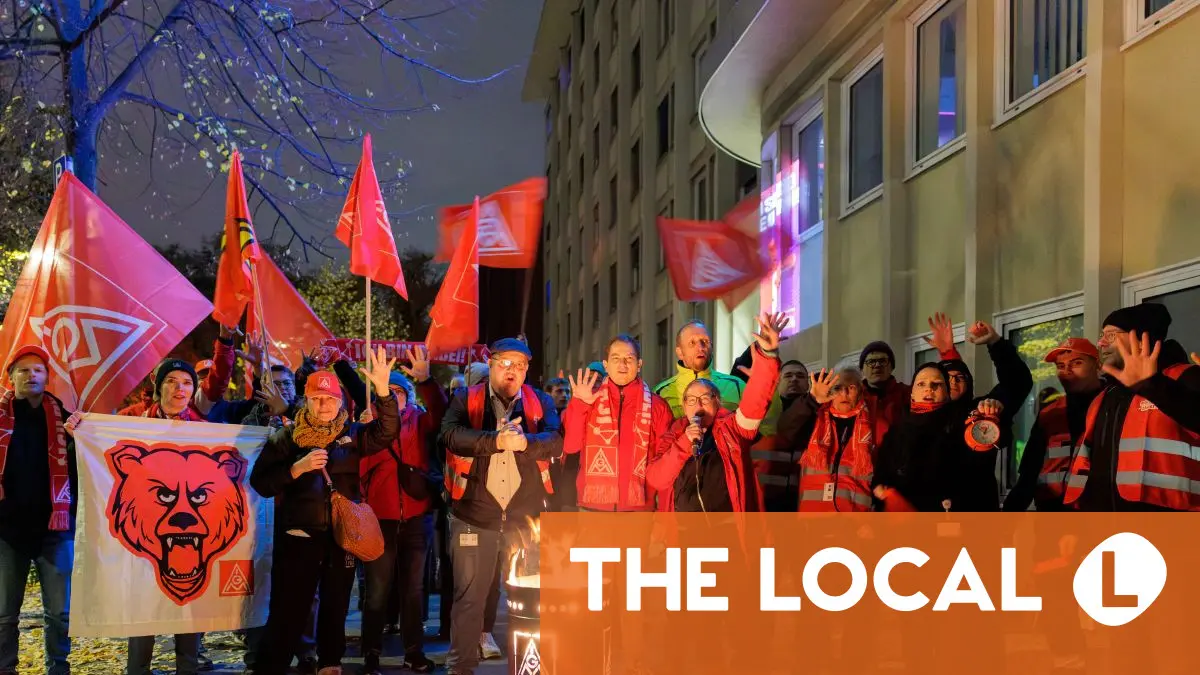
The first stoppages began shortly after midnight on Sunday. Around 300 night-shift workers gathered outside the Thyssenkrupp Rasselstein plant in Andernach, Rhineland-Palatinate, while action also began at the mobile communications supplier RF360 Europe/Qualcomm in Munich.
On Monday, workers were called to take part across several states, including Berlin, Hamburg, Lower Saxony, North Rhine-Westphalia, Brandenburg, Mecklenburg-Western Pomerania and Bavaria. Strikes were expected at 34 companies in Bavaria alone.
IG Metall is seeking a five percent pay rise over 12 months, alongside guarantees covering jobs and industrial sites.
READ ALSO: Everything that changes in Germany in November 2026
According to Die Zeit, employers offered a one-off payment in July 2027 worth one percent of the average annual wage under the collective agreement, followed by a permanent 1.3-percent rise from July 2028.
The distance between the two positions is substantial. The union says workers need their purchasing power protected and greater security over the future of their workplaces.
Employers counter that German industry is under intense pressure from high costs, investment moving abroad and job losses.
What is a warning strike?
The German term Warnstreik describes a temporary work stoppage held during collective bargaining. Its purpose is to put pressure on employers while negotiations continue. It is not the same as an open-ended strike.
In the metal and electrical industries, the action became possible after the “peace obligation” (Friedenspflicht) attached to the previous agreement expired at the end of October.
IG Metall can now call temporary warning strikes without first holding the ballot required under its rules for a longer, indefinite strike.
READ ALSO: Jobs in Germany – The best recruitment fairs and events to attend in November
What’s happening at private banks?
Monday’s banking action is a separate dispute organised by the service-sector union Verdi.
Employees at several private banks – including UniCredit Bank, Commerzbank, ComTS and Deutsche Bank – have been called to join full-day regional strikes. Employees were due to gather for a rally in Leipzig, with another planned near to the negotiations in Frankfurt.
Verdi is demanding a six percent salary increase over 12 months, plus an additional €300 for apprentices and students on dual study programmes. The union says employers failed to make an offer during the opening round of negotiations on October 8th.
Pay is only part of this dispute. Verdi is also seeking stronger job protection and training as artificial intelligence and digitalisation transform banking.
Other demands include permanent full-time roles for successful trainees, the option to exchange part of a salary for additional leave, and up to three calendar days of sick leave without a doctor’s certificate.
Talks resume in Frankfurt on Monday, with another negotiating session scheduled for November 23rd in Berlin.
Will the strikes affect you?
For most residents, the immediate effect should be limited. These are workplace stoppages rather than strikes across major public services.
Production may be interrupted at participating factories, while customers of affected banks could potentially encounter disruption in particular locations.
The broader importance lies in what comes next. Germany’s industrial dispute pits demands for higher pay and secure jobs against employers’ warnings about the sector’s economic condition.
In banking, the dispute also concerns job protection and training as AI and digitalisation change the industry.
Disclaimer : This story is auto aggregated by a computer programme and has not been created or edited by DOWNTHENEWS. Publisher: thelocal.de