Victoria’s decision this week to not impose a cap on firearms is a story of orange shirts, ducks and people who enjoy four-wheel driving at the weekend.
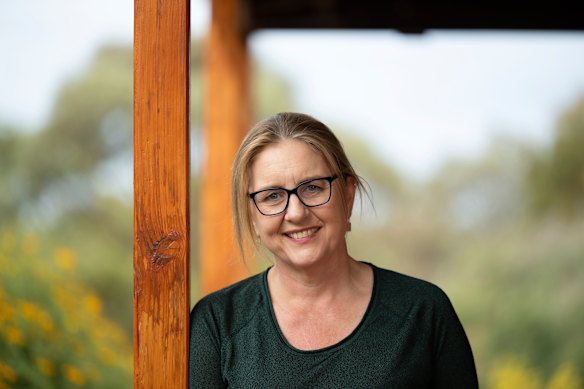
Premier Jacinta Allan’s rejection of the limit on gun ownership has put her in the awkward position of differing from Prime Minister Anthony Albanese, the royal commission into antisemitism, Victoria Police and the recommendation of her own review.
For a government whose public positions are rarely more than a cigarette paper away from the cops, this is a very deliberate choice, and it tells a story about Allan’s risk-averse personality and the November state election.
In his state government-commissioned review released on Monday, former police chief commissioner Ken Lay said there was not enough evidence either way to indicate whether number limits on personal gun ownership would reduce harm.
But he recommended a limit of four, arguing the link between fewer guns and fewer gun-related injuries was strong enough to justify that caps be introduced so long as there was a review of its effectiveness in the first five years.
The essential calculation Lay makes is that the opportunity of introducing the cap, and the evidence it generates, outweighs the risks. From a pure policy perspective, this makes sense.
But, unlike Allan, Lay is not a politician and is not assessing the public fallout of such a move.
The premier says she’s not convinced any cap is necessary. She says her focus is on keeping criminals away from guns and not punishing responsible gun owners.
In rejecting the first and biggest recommendation of Lay’s report, Allan evidently believes that the potential benefits are not worth the anger restrictions would create six months out from polling day. Queensland and South Australia have also ruled out caps.
The numbers that explain Allan’s call were helpfully laid out in Lay’s report.
Out of 974,550 registered firearms in Victoria, more than 650,000 are in regional Victoria. Out of 240,300 firearms licence holders statewide, 166,170 are in regional and rural areas.
Labor is clearly struggling outside Melbourne and its regional centres, where farm front fences are dotted with signs criticising transmission lines, renewable energy projects and the emergency services levy. This is keenly felt by Allan as the member for Bendigo East, a region where the Nationals made significant gains federally last year and the premier must fight off attacks from the Coalition and One Nation. Her electorate has one of the highest proportions of licensed duck hunters of any Labor-held seat.
Another concern is Victorian Labor’s outer-suburban heartland.
Data from the Game Management Authority shows that last financial year the 3064 postcode, including Craigieburn, had the second-highest number of game licences with 814, just below 873 in Traralgon. Also in the top 10 are Sydenham, Werribee, Cranbourne and Hoppers Crossing, which all have more than 500 licences each.
In both the regions and the outer suburbs, any move by the government to curtail recreational hunting risks fuelling a narrative among these voters that they’re in a war to protect their weekend.
For these people, it does not matter that fewer than 20 per cent of the state’s firearm users would be affected by the cap. For them, each firearm serves a distinct purpose, the system is already well regulated and policies to further limit their use are out of touch.
This fear has prompted some of the state’s most influential blue-collar unions to form the Outdoor Recreation Advocacy Group (ORAG), where they use their industrial heft to argue for hunting, access to public land and other activities they perceive to be under threat.
On Monday, the group welcomed Allan’s decision not to cap firearms.
Spearheaded by the Electrical Trades Union, ORAG has its own merch and has not shied away from a fight.
When it looked like Victoria was at risk of banning duck hunting in 2023, hundreds of ETU members walked off the Metro Tunnel project in protest and secretary Troy Gray warned of further action.
Cabinet chose not to ban duck hunting, conflicting with the findings of a parliamentary inquiry. Multiple industry figures, speaking anonymously to avoid repercussions, said this was because Allan put her stamp on the issue.
At the time, Gray said duck hunting was a “canary in the coal mine” that threatened to alienate a chunk of Labor’s working-class base, likening the limiting of these sports to a “woke agenda”.
Polling presented to the government that year, seen by this masthead, quizzed more than 2000 people living in outer suburban and potentially marginal seats, alongside the premier’s electorate.
It indicated that a ban on duck hunting was opposed more than it was supported in seats such as Greenvale, St Albans, Bass and Bendigo East.
In Mill Park, 47 per cent opposed a ban, 34 per cent were neutral and 20 per cent were supportive.
Across all respondents, a fifth said they were likely or very likely to change their vote if there was a ban.
That was 2023, when even Pauline Hanson would have laughed if you told her One Nation would be surging in the polls six months out from a Victorian election and capturing a quarter of the vote in affluent seats such as Nepean.
Hanson, who was once involved in a political scandal over her staffer’s meeting with the influential National Rifle Association, has vowed to repeal “rushed, unfair gun laws pushed through after the Bondi massacre and other incidents” through her party’s policy platform.
A perceived “woke agenda” against outdoor recreation is the sort of message One Nation will use on working-class Labor voters.
The Coalition is also vulnerable. Victorian Nationals leader Danny O’Brien invoked the famous NRA slogan that “guns don’t kill people, people kill people” in criticising a firearm cap on Tuesday as his party seeks to defend rural seats from a rising tide of orange shirts.
In these politically volatile times, the premier has calculated that it is safer to defy the prime minister than anger working-class voters.
Kieran Rooney is a Victorian state political reporter at The Age.
The Opinion newsletter is a weekly wrap of views that will challenge, champion and inform your own. Sign up here.
From our partners
Disclaimer : This story is auto aggregated by a computer programme and has not been created or edited by DOWNTHENEWS. Publisher: www.smh.com.au