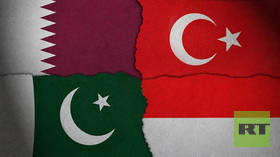
The latest Moscow Format on Afghanistan failed to deliver a joint statement, but the deeper problem is the widening perception gap between Moscow and Islamabad
Russian Foreign Minister Sergey Lavrov, speaking at the Minsk International Conference on Eurasian Security last week, called the Moscow Format consultations on Afghanistan “the most representative platform for developing a region-wide consensus.”
It is hard to argue with the central point of the foreign minister’s remark. The Moscow Format really is broad-based, bringing together not only Afghanistan and the Central Asian states, but also India, Iran, China, and Pakistan, as well as guest delegations such as Belarus and Egypt.
Yet while few doubt the forum’s representative character, the question of whether it can actually produce a region-wide consensus is much more complicated. At its anniversary meeting last month (the format has been in place since 2016) the participants could not even agree on a joint final statement.
Moscow still appears to believe that the platform remains effective. The consultations are held regularly, and there is an exchange of views. As for the communique, in the view of Russian officials, while adoption of a final document is desirable from a protocol standpoint, it is not an absolute requirement for such a format. However one looks at it, the host side can hardly be blamed for the lack of a final communique. The real issues lie deeper.
Disclaimer : This story is auto aggregated by a computer programme and has not been created or edited by DOWNTHENEWS. Publisher: rt.com