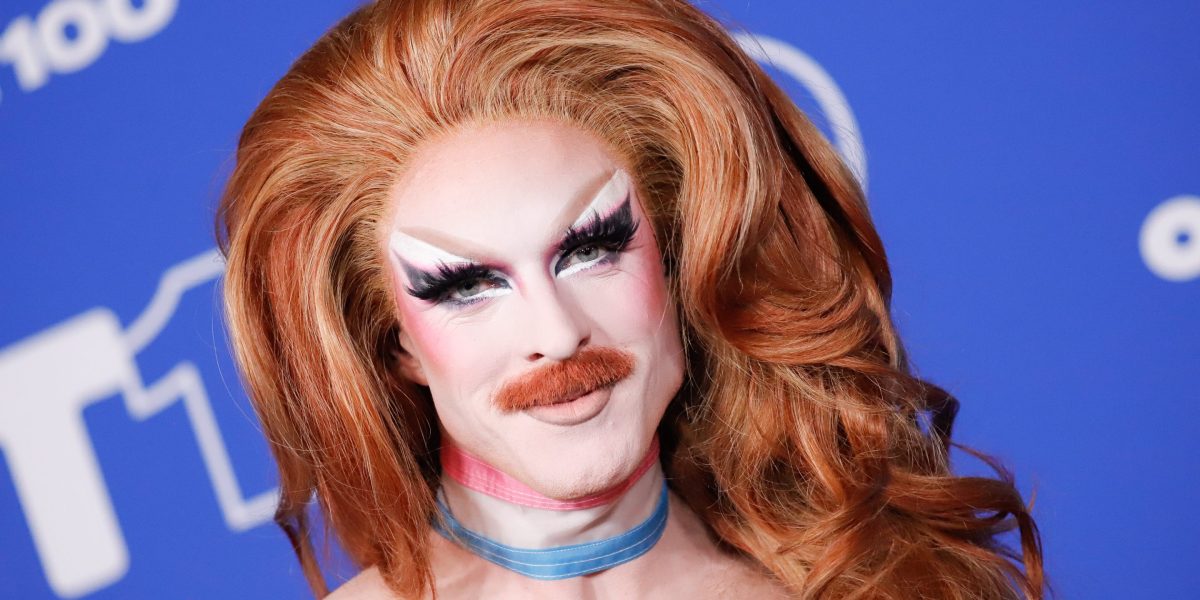
Earlier this year, Patagonia sued a drag queen and environmental activist performing under the name Pattie Gonia in a trademark dispute, and the feud is quickly becoming a PR headache for the eco-friendly apparel brand.
After years of sometimes strained co-existence between the brand and the artist, the controversy gathered steam this month when Pattie Gonia, né Wyn Wiley, broke their silence for the first time since the lawsuit was filed in January.
Taking to Instagram a few days after Patagonia CEO Ryan Gellert gave his company’s side of the fight in late May at a conference, Pattie Gonia accused Patagonia of trying to “erase an activist.”
Many among the drag artist’s 1.8 million followers on Instagram and 900,000 on TikTok left messages of support for the performer—and had harsh criticism for the generally progressive-aligned clothing brand. “What a time to show your true colors @patagonia …. Drop the lawsuit and literally LEARN your demographic. We stand forever with @pattiegonia,” read one typical comment. (To be sure, some commenters came around to the brand’s perspective: “Initially I was on your side, but after doing the research, you’re in the wrong here hun,” wrote one follower of the artist.)
In its suit, Patagonia objected to Pattie Gonia’s trademark application filed last year to produce clothing, saying that it overlapped with its own trademarks and could confuse consumers, What’s more, Patagonia has said, the trademark applications breached a 2022 agreement that had maintained a détente between the parties.
An uncomfortable position for a progressive-aligned brand
On its face, the brand’s complaints seem understandable: some of Pattie Gonia’s designs do play off Patagonia’s widely recognizable logo, showing a mountain range against layers of color. Still, at a time of intense competition in the outdoor wear space—with VF Corporation’s resurgent The North Face, and brands like Arc’teryx and Cotopaxi ascendant—Patagonia can ill-afford the possibility of angering any of its loyal customers.
In recent weeks, there have been countless headlines in the vein of “Patagonia sues drag queen Pattie Gonia” that make Patagonia sound like a humorless $1.5 billion brand bullying a small, independent LGBTQ+ performer. In their Instagram post, Pattie Gonia questioned the timing of the Patagonia lawsuit, noting it came at a time many corporations have dialed back support for DEI initiatives and support for the LBGTQ community, and surmising that the political environment made it easier for Patagonia to sue a drag queen. But it’s worth noting that Patagonia’s aim does not appear to be financially ruining Pattie Gonia: It is suing for damages of $1 and legal fees.
Asked if the potential of harm to Patagonia’s reputation as a progressive company weighs on the minds of its executives, Patagonia’s chief communications and impact officer, Corley Kenna, simply said, ”Every day,” But she took umbrage at any insinuation Patagonia had grown less supportive of diversity or LGBTQ rights.
“We are living in a time of a lot of companies walking back their commitments to people, to justice, to the planet. We are not doing that,” she said, asserting that Patagonia remains a values-based company. Representatives for Pattie Gonia declined to comment.
Indeed, Patagonia has long been highly rated by the Human Rights Campaign, which grades corporations on how they treat LGTBQ people. The company was vocal earlier this year in urging U.S. senators to vote against further funding for Immigrations and Customs Enforcement (ICE). It has famously been outspoken in calling for the protection of public lands, even suing the first Trump administration in 2017 to protect the Bears Ears national monument in Utah.
The company made global headlines in 2022 when its founder, Yvon Chouinard, announced that he was giving the then-$3 billion company away to Holdfast Collective, a nonprofit dedicated to fighting the climate crisis. The organization will use every dollar of profit not reinvested into Patagonia to fund environmental defense.
Patagonia’s fundamental paradox
The question remains: For a brand so dear to progressives, why take the reputational risk, given the relatively tiny size of Pattie Gonia’s apparel business? Especially given that the artist, like Patagonia, is an advocate for enjoying and protecting the outdoors?
Patagonia says not defending a trademark or a patent under the law leaves the door open for another party to claim it or to abuse it with impunity. In the past, Patagonia has taken action against people using names like “Petrogonia” or changing its logo to look like a semi-automatic rifle.
“We can’t pick and choose,” Kenna said. “We can’t just go after the organizations and individuals who are not values-aligned. We have to go after all, because that’s how trademark law works.”
Pattie Gonia first emerged in 2018, when the artist put on a pair of high-heeled shoes on a backpacking trip and took the name in order to evoke the region in South America full of natural beauty. The queen has long advocated for LBGTQ people and people of color to enjoy the outdoors, as well as for environmental protections, in their performances.
In 2022, Pattie Gonia and Patagonia reached an understanding that prevented Pattie Gonia from producing apparel under that name, though it didn’t ban performing and engaging in activism using that persona. Patagonia claims that Pattie Gonia broke that agreement by starting to produce clothes in 2024 and filed for trademarks last year, which the brand says left it no choice but to file a trademark infringement suit. Pattie Gonia has disputed those assertions in online videos, but declined to comment further to Fortune, citing the pending litigation.
Patagonia’s ascent since its founding in 1973 in Ventura, California is a story of paradoxes: It is a company that chafes at many aspects of capitalism, while selling large quantities of its beloved outdoor gear to a well-heeled clientele. It is a brand that has called for less consumption (it famously once put out an ad campaign saying “Don’t buy this jacket”) but depends on growing sales to fund its advocacy.
It is easy to see another paradox in Patagonia’s resorting to the capitalistic tool of a trademark lawsuit to stop a small entrepreneur. But the company does not see it that way, arguing that the financial success of its brand is necessary to carry out its environmental mission.
“We are a for-profit company and we’re in business to save the planet,” says Kenna. “That makes this place complicated.”
Disclaimer : This story is auto aggregated by a computer programme and has not been created or edited by DOWNTHENEWS. Publisher: fortune.com