
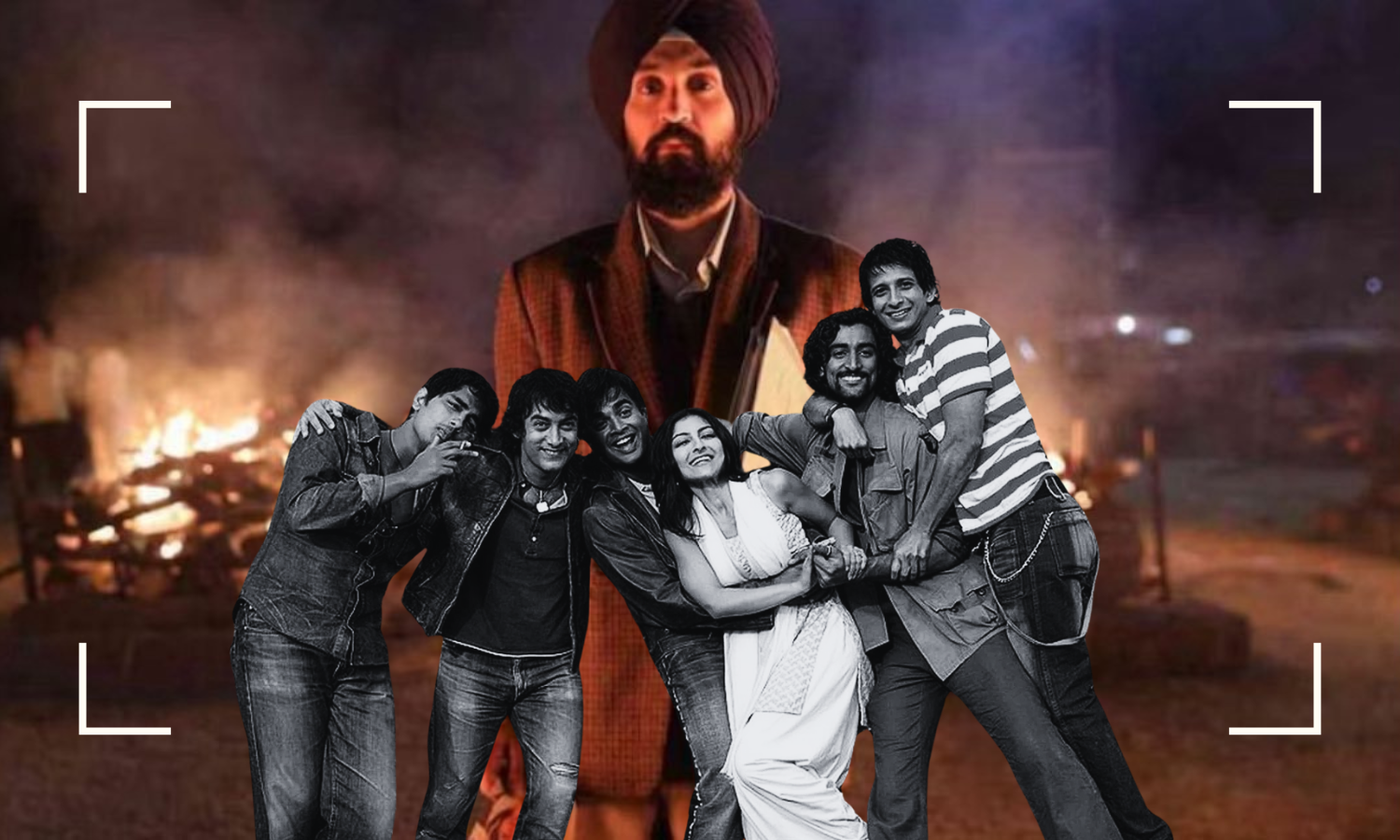
Prasoon Joshi, the writer behind the powerful, rebellious dialogues of Rang De Basanti, is also the CBFC Chairperson under whose tenure Satluj (originally Panjab ’95) was asked to undergo 127 cuts, leading to years of delay before its release. The film was later removed from ZEE5 shortly after premiering.
The irony hasn’t gone unnoticed. Rang De Basanti (2006) remains one of Hindi cinema’s defining statements against institutional apathy and state inertia, its dialogues, written by Joshi, helping turn the film into a cultural touchstone for a generation frustrated with the system. Joshi also wrote the film’s screenplay and lyrics, and the work is widely regarded as the high point of his transition from advertising into cinema.
From lyricist to controversial figure
Joshi’s path to the CBFC was built entirely inside the film and advertising industries, not the bureaucracy. He debuted as a film lyricist with Rajkumar Santoshi’s Lajja, before a run of major Bollywood credits like Hum Tum, Fanaa, Rang De Basanti, Taare Zameen Par, Black, Delhi 6. He won the Filmfare Best Lyricist Award three times (2007, 2008, 2014) and the National Film Award for Best Lyrics twice, for Taare Zameen Par and Chittagong. He also wrote the script for Bhaag Milkha Bhaag (2013). Alongside his film work, he built a parallel career at McCann Worldgroup, eventually becoming its India CEO and APAC chairman.
He was appointed Chairperson of the Central Board of Film Certification on 11 August 2017, succeeding Pahlaj Nihalani, who had his own share of CBFC related controversies.
A tenure defined by cuts, not just Satluj‘s
Satluj is the highest-profile case, but it isn’t isolated. Under Joshi’s watch, the board has run into a string of rows over the past two years: caste-related dialogue was cut from India’s Oscar entry Homebound; Phule, a biopic on anti-caste reformers Jyotirao and Savitribai Phule, was asked to drop specific caste terms after its trailer drew objections; Dhadak 2 went through 16 separate edits before certification; and Janaki vs State of Kerala was stalled over its lead character’s name. Emergency, Kangana Ranaut’s film on the 1975 Emergency, was stuck with the board for months before release.
Satluj itself spent over three years battling the CBFC, which reportedly asked for as many as 127 cuts before it would grant clearance. The makers eventually skipped a theatrical release altogether and put the uncut film directly on ZEE5, only for it to be pulled from the platform within 48 hours.
The board’s own troubles
The controversies have coincided with reporting on dysfunction inside the CBFC itself: the board hasn’t held its legally mandated quarterly meetings since 2019, hasn’t published an annual report since 2016–17, and has been operating years past its members’ official three-year tenure, which technically lapsed in 2020. Since the Film Certification Appellate Tribunal was scrapped in 2021, filmmakers who disagree with a CBFC decision have only the High Courts left to turn to – a slower, costlier route than the tribunal it replaced.
None of this is what Joshi’s own writing predicted for him. The man who gave Aamir Khan’s generation of on-screen rebels their voice against a broken system now sits at the head of the very kind of institutional machinery Rang De Basanti spent two and a half hours railing against — and Satluj, a film about a real man who refused to let the state’s version of history stand unchallenged, is the latest to run into it.
Disclaimer : This story is auto aggregated by a computer programme and has not been created or edited by DOWNTHENEWS. Publisher: deccanchronicle.com




