Why scientists watched grass grow for 170 years
-
Published
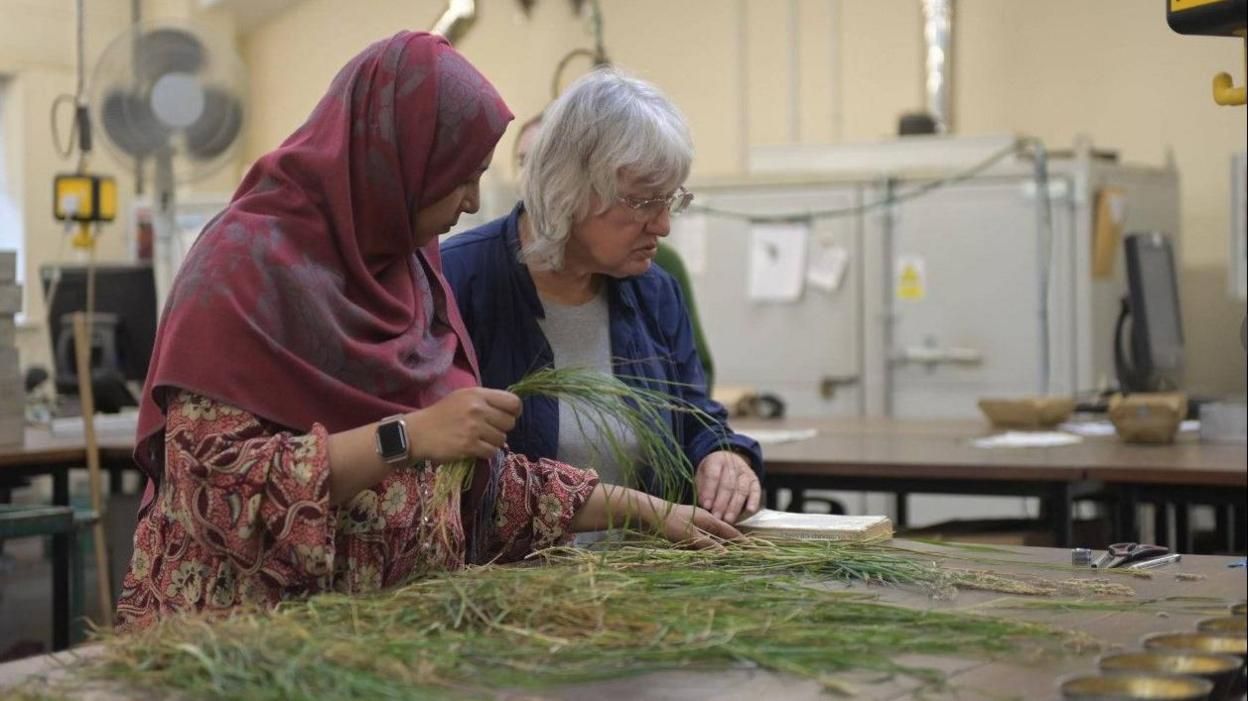
Watching grass grow may not sound like much fun, but scientists in Hertfordshire have been doing it for 170 years.
Queen Victoria was on the throne when Rothamsted Research’s founders, Sir John Bennet Lawes and Joseph Henry Gilbert, began studying a field near Harpenden to find out how fertilisers and manure affected hay yields.
That field became the Park Grass Experiment, now the world’s oldest experiment on permanent grassland.
Covering just under three hectares, it is divided into various plots treated in different ways, so scientists can compare how nutrients affect the growth, soil and diversity of grass.
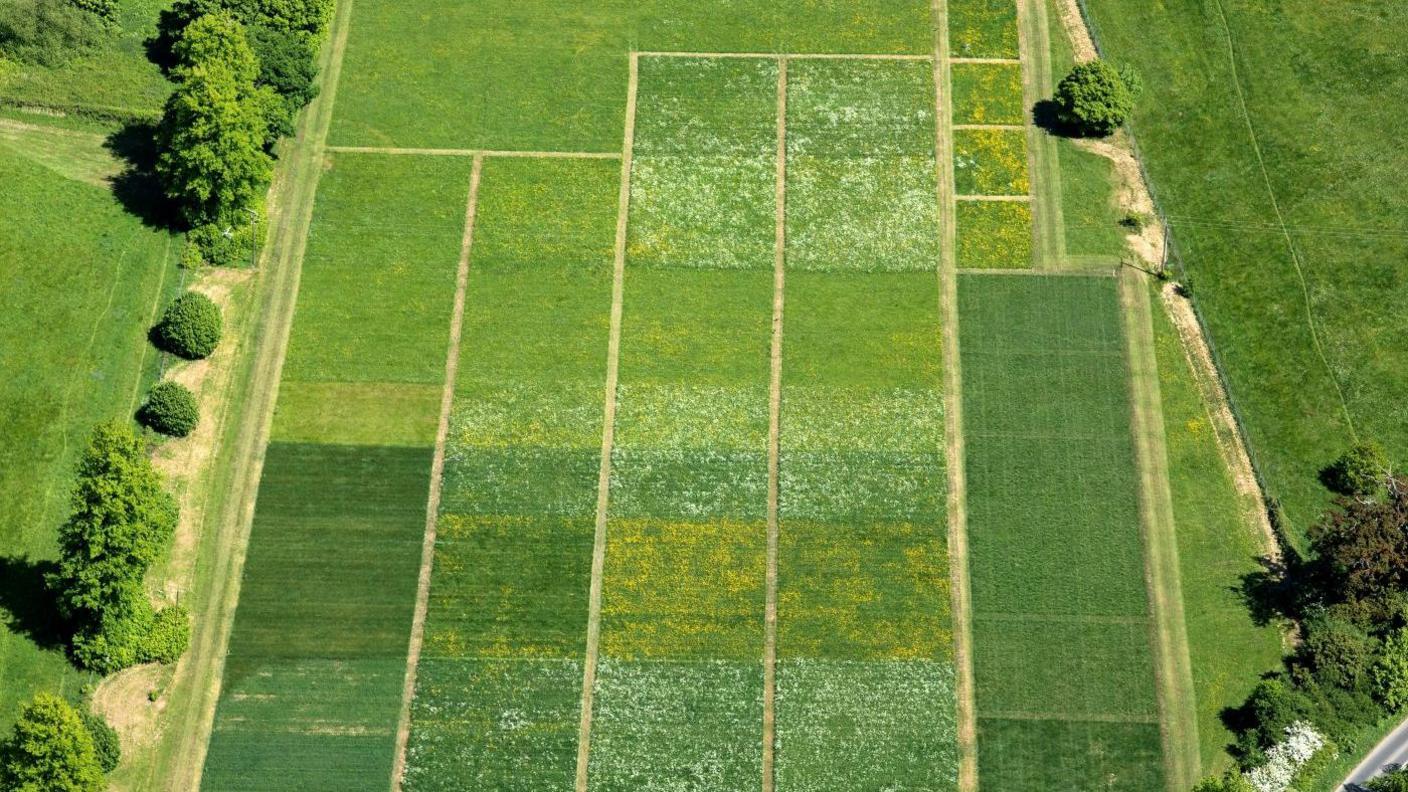 Image source, Rothamsted Research
For soil scientist Andy Gregory, who helps oversee Rothamsted’s long-term experiments, being one of the current custodians of Park Grass is “an incredible privilege”.
“I do pinch myself really that I’m in this position,” he said.
“It’s my duty to do the best I can to retain the experiment, keep it going and keep supporting new science.
“It’s not a museum piece. It still supports cutting edge new scientific research.”
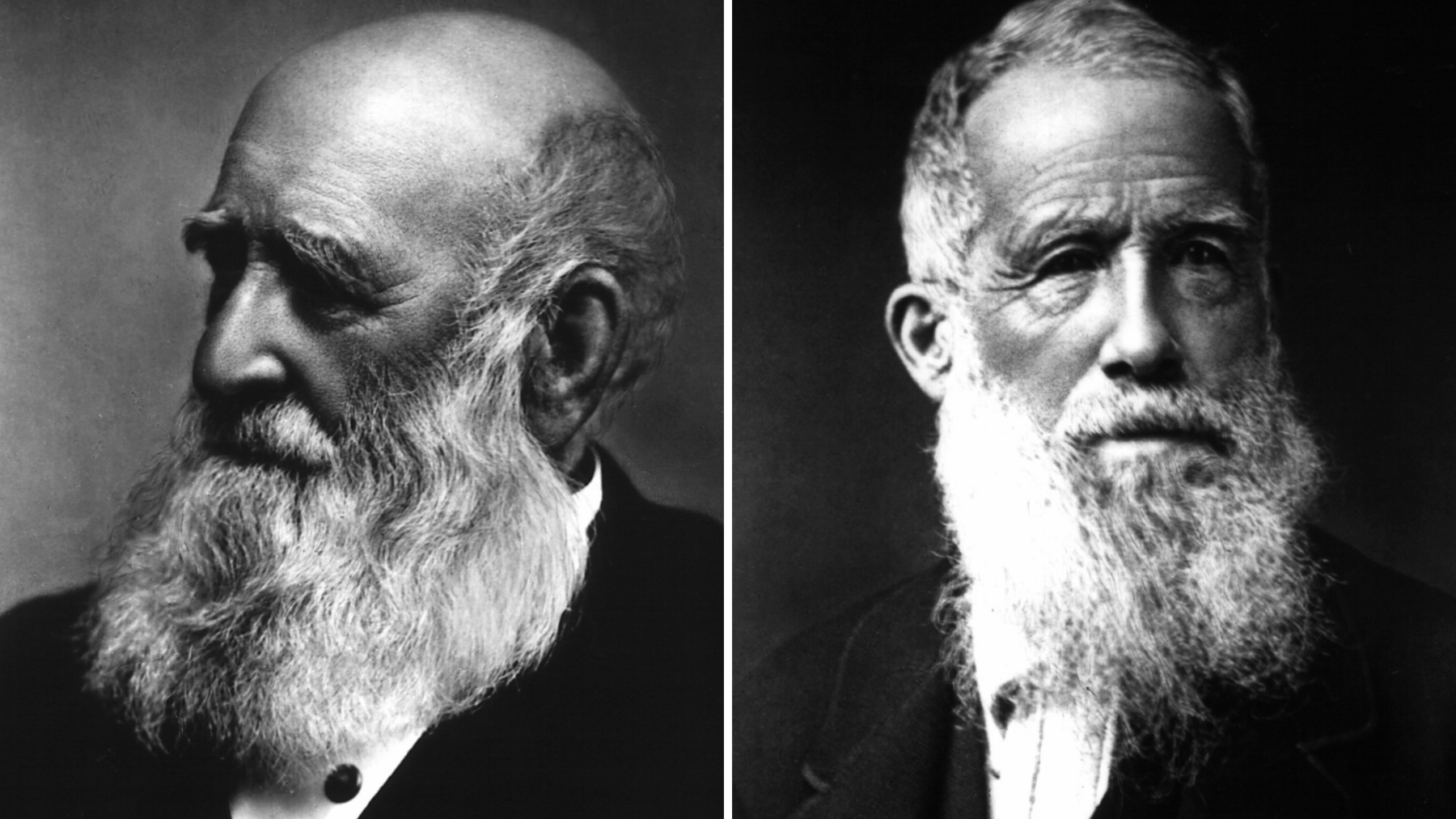 Image source, Rothamsted Research
That work now includes techniques that could never have been imagined when the Victorian experiment began.
Scientists can use DNA analysis to study what has been living in the soil over time.
Gregory said Rothamsted’s founders were “genuinely forward thinking” because they kept crop and soil samples.
This helped create an archive that scientists still use today, complete with grass that is 170 years old.
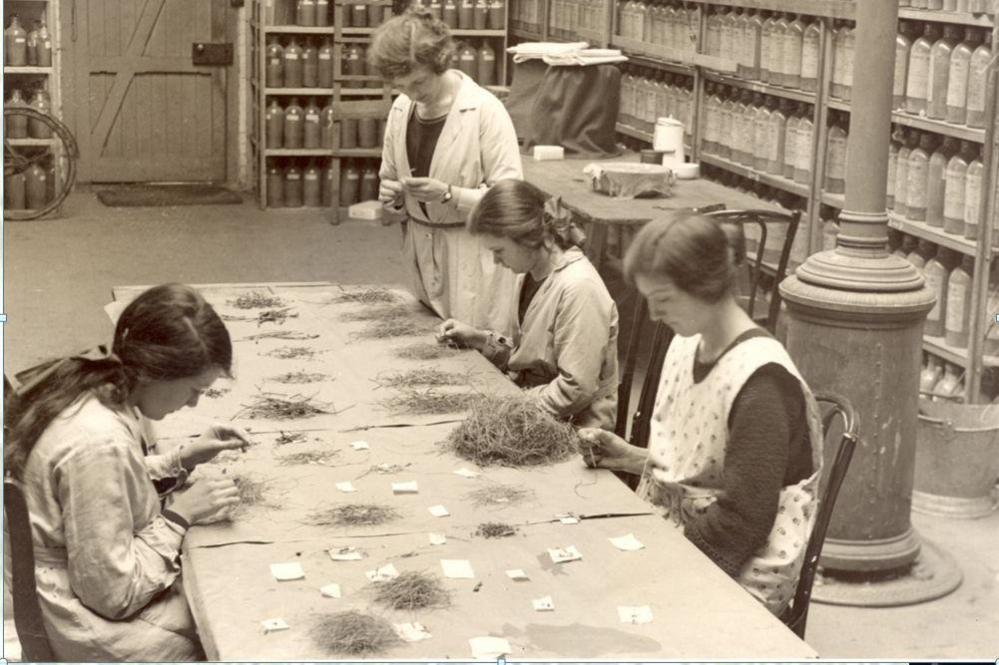 Image source, Rothamsted Research
Together with weather records collected on site, they give researchers a rare long-term view of how the environment has changed.
Gregory noted the experiment had captured the impact of nitrogen and sulphur, which once fell on land across the UK, had effectively fertilised it from the air.
He said: “But in recent decades we generate our power differently, our vehicles are powered differently, and the amount of nitrogen and sulphur that’s been deposited on the land has drastically reduced.
“On this Park Grass Experiment, we can pick that up in changes in the botanical diversity of some of the plots.”
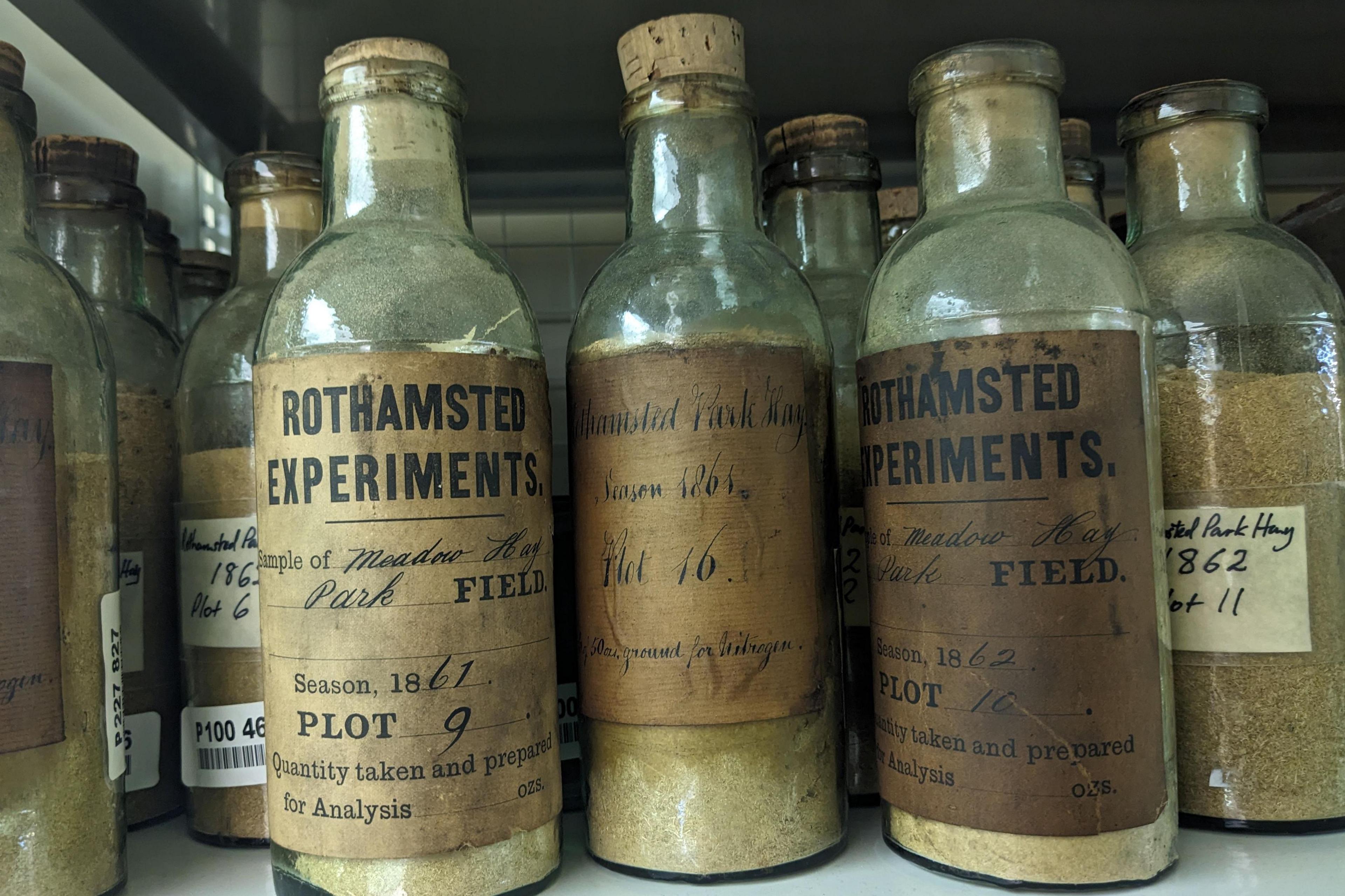 Image source, Rothamsted Research
Dr Sarah Perryman, curator of the Park Grass data, describes the site as “much more than a field experiment – it’s a living record of ecological change”.
She is digitising grass species records collected since 1856 to build a detailed picture of how the land has changed over time.
“Every new survey adds another chapter to a dataset that allows scientists to ask questions across timescales that are almost impossible anywhere else in the world,” she said.
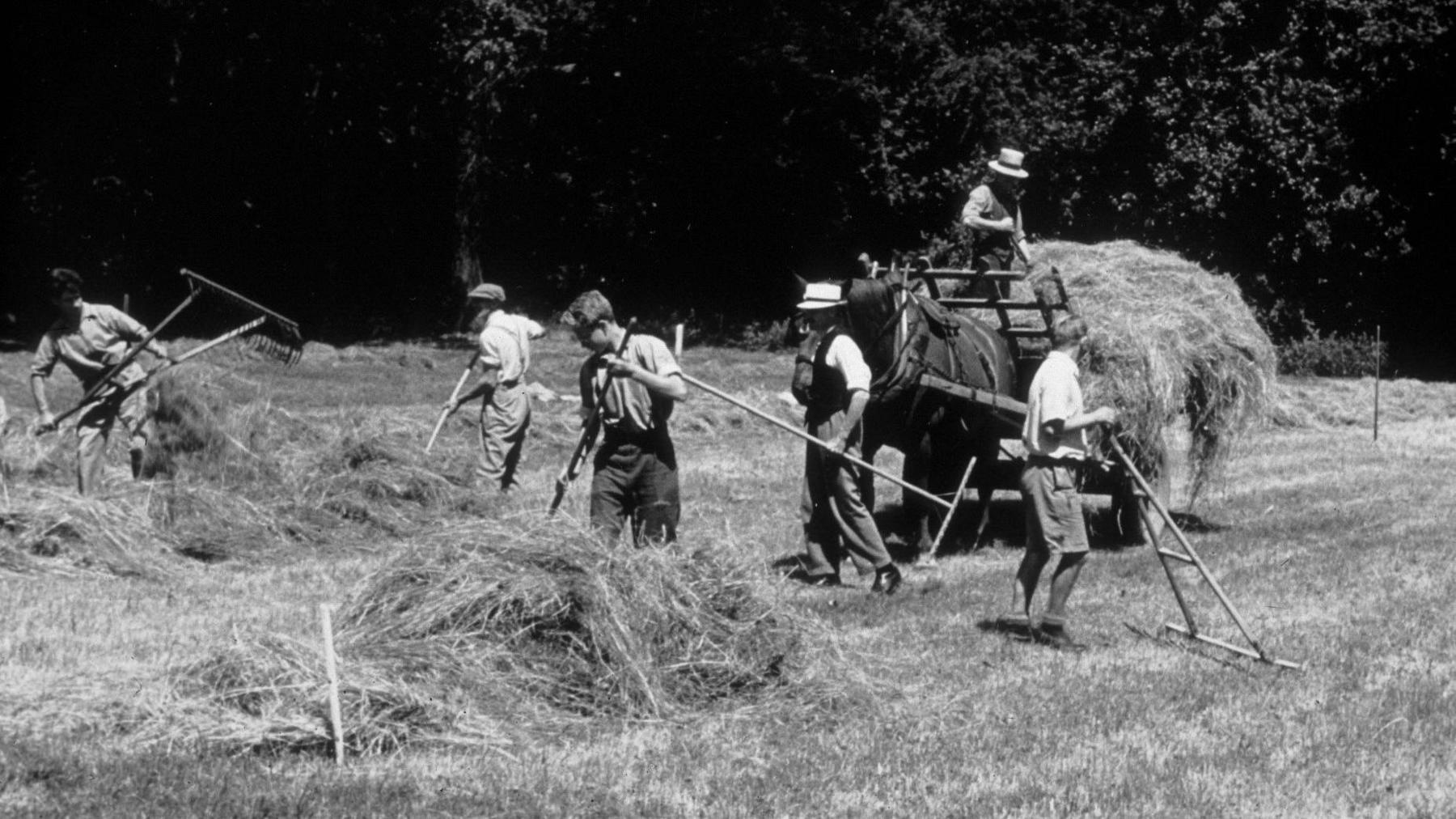 Image source, Rothamsted Research
As the experiment moves into its next century, much of the focus is on climate change.
Looking ahead to the next 170 years, Gregory said: “The most interesting will be the interactions with a changing climate and how the normal patterns of weather are maybe not going to be the case in the future.
Already, researchers can see specific patterns; for instance, drier springs and early summers tend to result in decreased yields.
He said higher levels of carbon dioxide could increase yields, but that benefit may be outweighed by drought.
Samples collected today may also help future scientists answer questions researchers have not yet thought of.
He said: “There’s traits that we don’t yet know, but which might be measured on the samples that we collect this year in decades ahead, I think it’s essentially adding to the history building on this legacy.”
Do you have a story suggestion for Beds, Herts or Bucks? Contact us below.
Get in touch
Your Voice
Follow Beds, Herts and Bucks news on BBC Sounds, Facebook, external, Instagram, external and X, external.
-
-
Published4 November 2025
-
-
-
Published31 March 2025
-
-
-
Published21 September 2012
-
Related internet links
Disclaimer : This story is auto aggregated by a computer programme and has not been created or edited by DOWNTHENEWS. Publisher: newsrss.bbc.co.uk