
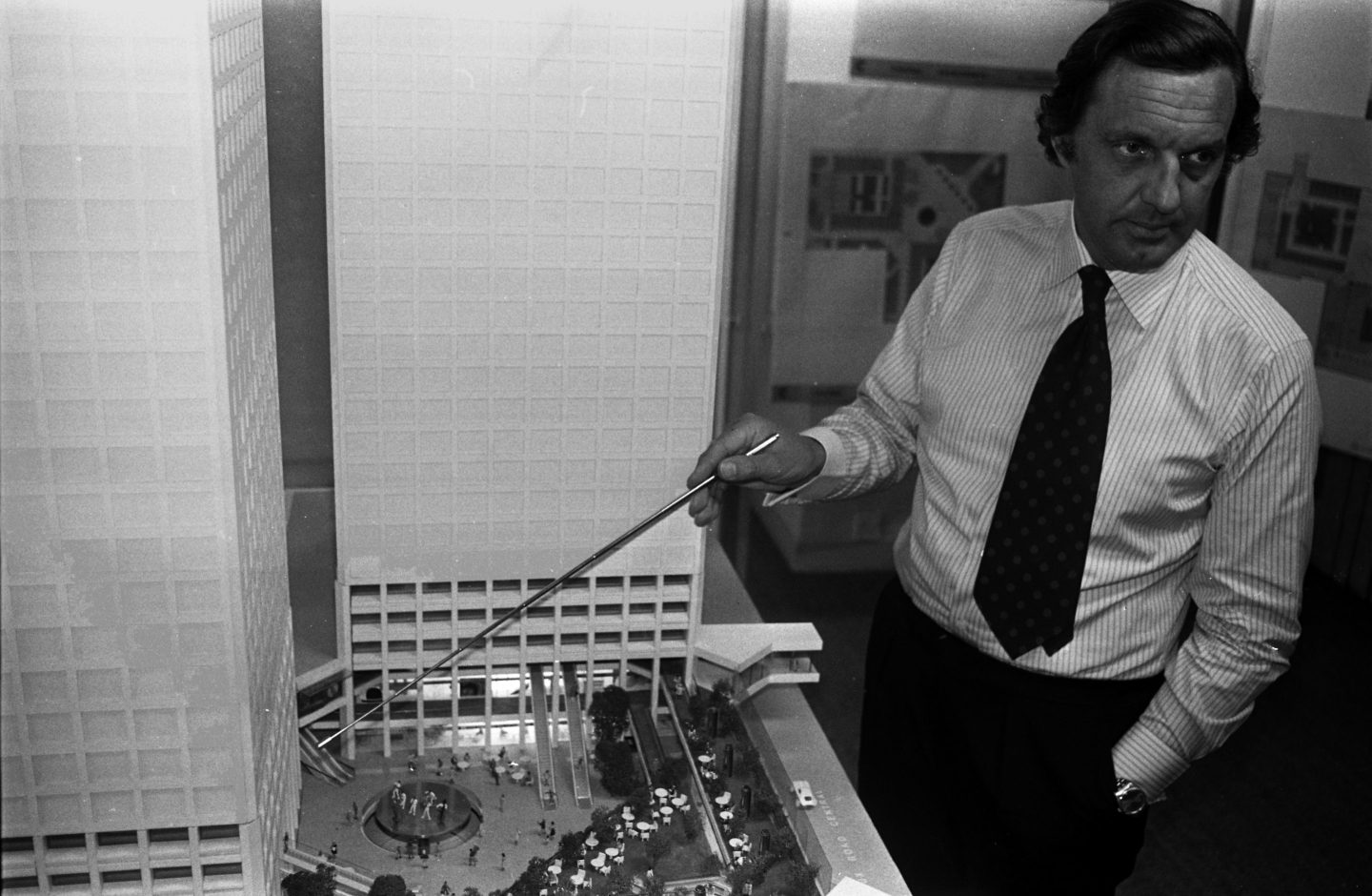
In the mid-1990s, when Percy Weatherall was CEO of Hongkong Land and Michael Smith was a junior property cadet at Jones Lang Wootton, Weatherall offered Smith a job. Smith turned him down as he was already committed to UBS in Sydney. Weatherall, Smith recalls, “wasn’t very happy. I don’t think he had many people say no to him.”
Three decades later, Smith sat in that same corner office, newly installed as the company’s CEO. At his welcome dinner, he tracked down Weatherall and reminded him of the episode. The former boss had forgotten it entirely.
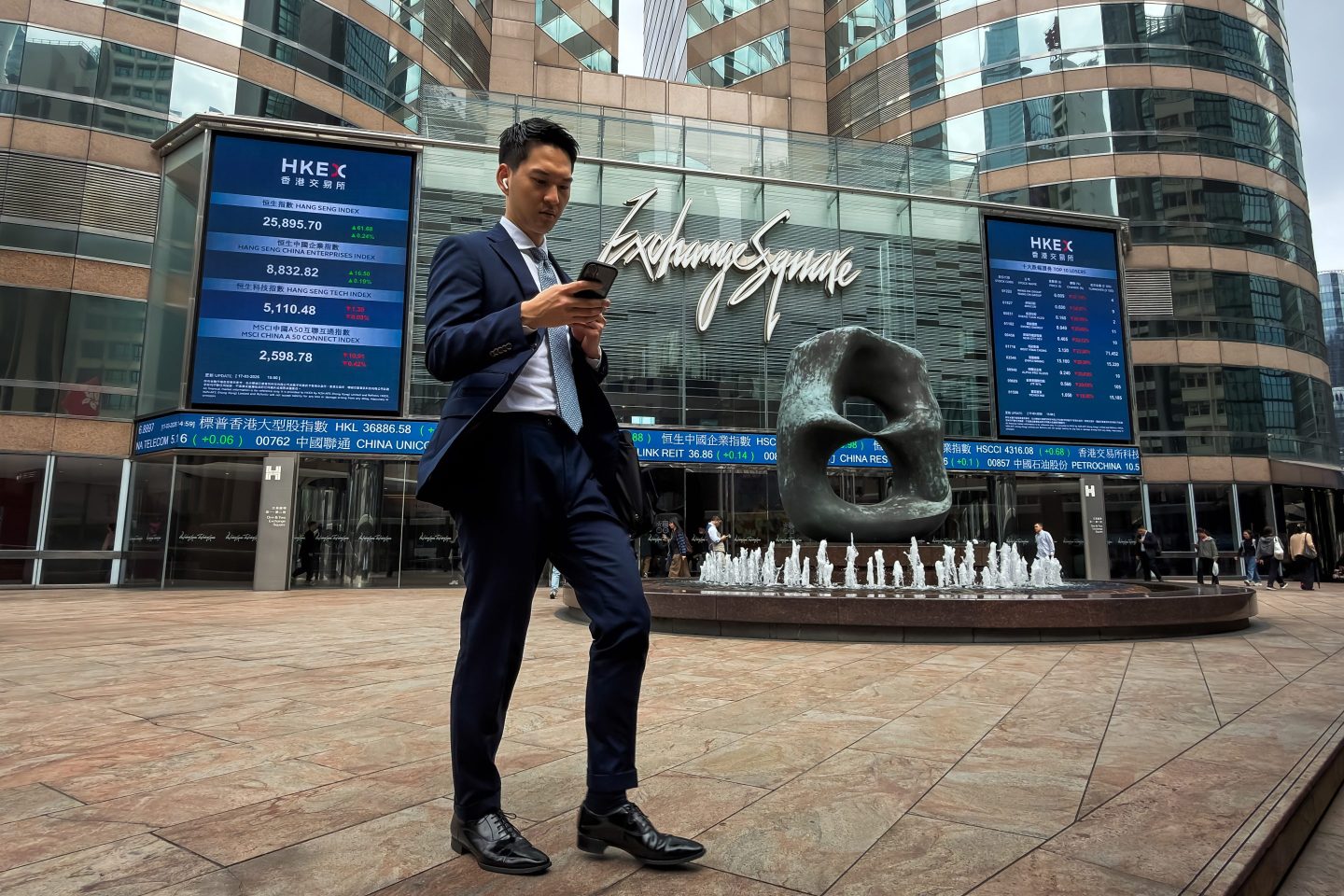
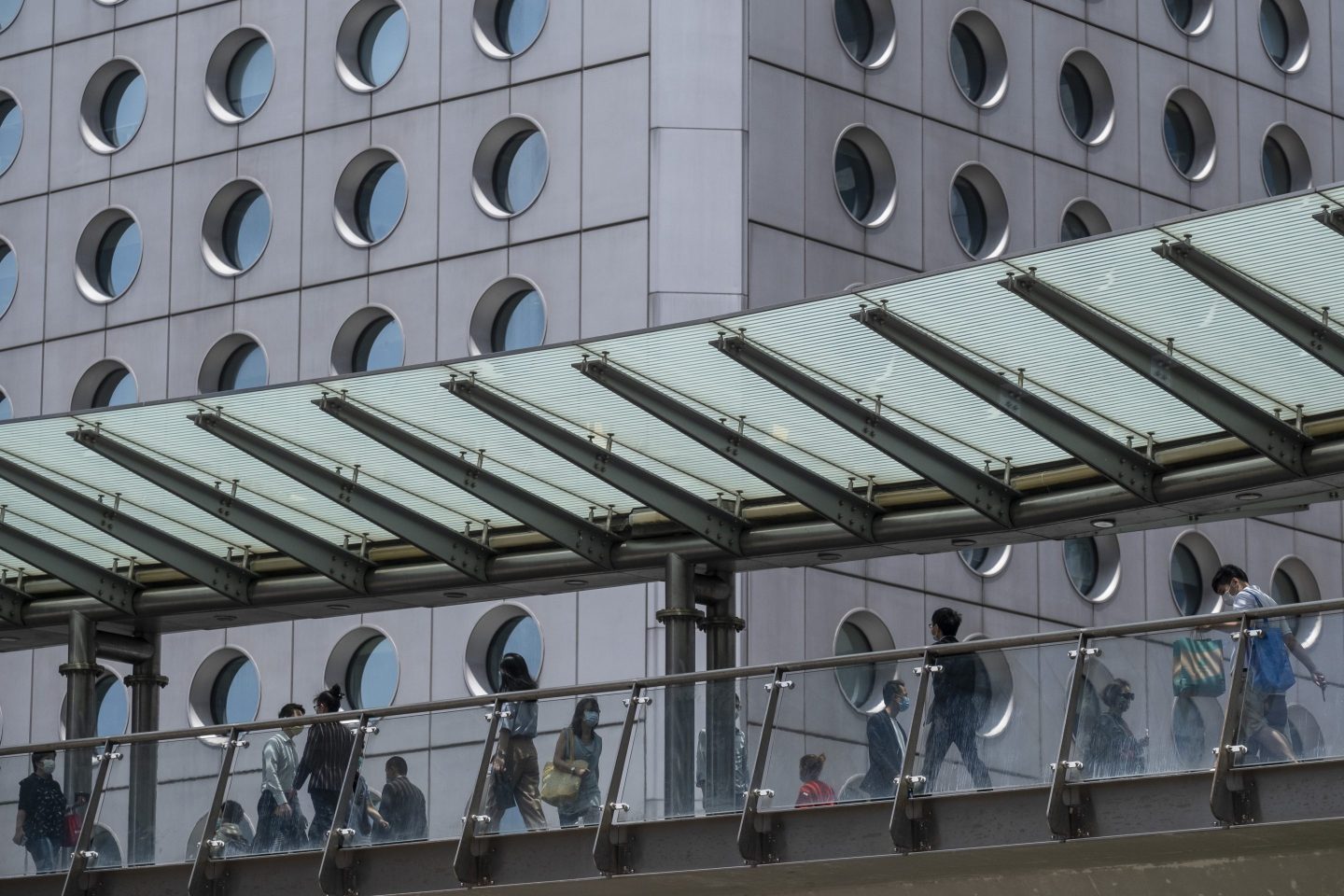
Hongkong Land is one of Hong Kong’s most storied developers. Founded in 1889, it’s the largest commercial landlord in Hong Kong’s Central district, owner of 4.8 million square feet of prime office and retail property in the city’s commercial heart: Exchange Square, home to the stock exchange; Jardine House, with agovernment-protected harbor view; and the Landmark retail complex.
But now, Smith is trying to loosen the ties between Hong Kong and Hongkong Land—a big step for a company that, literally, is named after its home city.
“Hongkong Land has always been a proxy for Hong Kong’s office rents,” Smith tells Fortune in an extended interview at the company’s Central headquarters. “When we looked at historic office rental cycles and our share price, it was like 90% correlated. Everything else we did as a business didn’t matter to investors.”
Smith’s assignment, set by Jardine Matheson, which controls just over 50% of Hongkong Land’s shares and is itself deep into a transition from conglomerate to capital allocator, is to turn the landlord into something closer to a fund manager, bringing in institutional co-investors to expand the company’s footprint across Asia’s gateway cities—and not just Hong Kong.
Transforming a 137-year-old developer
Hongkong Land was founded in 1889 by Catchick Paul Chater, a Calcutta-born British businessman of Armenian descent, and James Johnstone Keswick, the taipan of Jardine Matheson. Six days after the company’s founding, Chater persuaded the colonial government to reclaim 65 acres of new waterfront. Today, Alexandra House and Prince’s Building, as well as the Jardines-owned Mandarin Oriental hotel sit on that reclaimed land.
Chater was also a key figure behind the founding of the Hongkong Electric Company, Dairy Farm, and Wharf, some of the earliest pillars of what became Hong Kong. Several streets and buildings still bear his name.
“Paul Catchick Chater is responsible, more than any other single individual, for dragging Hong Kong into the twentieth century,” says Vaudine England, a journalist-historian and author of Fortune’s Bazaar: The Making of Hong Kong. “Chater shaped Hong Kong, both literally in redrawing the waterfront, and culturally, through his patronage of everything from gardening societies to the University of Hong Kong.”
Hongkong Land is now owned by Jardine Matheson, one of Hong Kong’s largest conglomerates and No. 449 on the Fortune Global 500. Jardines consolidated its control of Hongkong Land in the 1980s, following an era of aggressive expansion that left the developer overextended.
Robin Lam Kit—South China Morning Post via Getty Images
Jardines needed someone to rehaul Hongkong Land, and so it went to Smith, a long-time investment banker with stints at UBS and Goldman Sachs, where he spent years building Asia’s real estate investment trust industry. He later became regional CEO for Europe and the United States at Mapletree Investments, Temasek’s Singapore-based real estate arm.
He sees Singapore’s real estate market a a model of capital discipline that Hong Kong’s developers, including Hongkong Land, largely lacked.
“Hongkong Land was trading at an 80% discount to net asset value,” he points out. “Incredible assets, obviously worth a lot more than 20 cents on the dollar, with a great brand, but potentially not as progressive as some of the Singaporean companies.”
Six months after joining Hongkong Land, he put forward a plan to wind down its residential build-to-sell business; divest non-core assets; and reduce the company’s exposure to any single geography to below 40%.
“When I joined, we had 50 to 60 projects across Asia—many across China, Cebu in the Philippines, Indonesia, all over the place—and we didn’t have scale in any market,” Smith recalls. Residential development, he decided, had to go. “You’re so subject to external factors. We bought land in Singapore just before the government increased the stamp duty from 30% to 60%. That kills your feasibility.”
Earlier this year, Hongkong Land launched the Singapore Central Private Real Estate Fund (SCPREF), with assets under management of 8.2 billion Singapore dollars ($6.3 billion). The fund holds Hongkong Land’s stakes in Marina Bay Financial Centre Towers 1 and 2, One Raffles Quay, One Raffles Link, and Asia Square Tower 1, previously owned by the Qatar Investment Authority. QIA, which could have simply cashed out, instead became a founding investor in the fund alongside Dutch pension giant APG Asset Management and a Southeast Asian sovereign wealth fund, which Smith declined to confirm.
“It surprised people in terms of the size and the speed in which we put that together, for a first-time fund manager,” Smith says.
Hongkong Land is targeting $100 billion in assets under management by 2035, more than double what it has today. Smith has pledged the developer will not issue new equity nor sacrifice its investment-grade rating. “If we hit NAV or a premium, like REITs do, maybe you can raise equity then,” Smith says. “But when you’re at a discount? No.”
A Hong Kong slump…and a partial recovery
Hongkong Land’s shares (which trade, despite the company’s name, in London and Singapore) are up more than 55% over the past 12 months, and passed its previous all-time high in January.
The company swung to a net profit of $1.3 billion in 2025 from a net loss of $1.4 billion in 2024, boosted by an $890 million fair-value gain on investment property revaluations. Underlying profit, which strips out non-trading items, slipped 8% to $458 million.
A deeper dive into Hongkong Land’s rental revenue figures shows diverging paths for the company’s different markets. Rental income from Hong Kong’s offices and retail dropped a combined 7% between 2024 and 2025; Singapore office rents rose 4%; and China retail climbed 27%. Hong Kong still accounts for roughly 60% of Hongkong Land’s total rental income.
Hong Kong is still recovering from the reputational damage from lengthy COVID-zero policies which effectively closed off international travel for years. Several foreign companies, particularly those from the U.S., shifted operations to other cities in the region, particularly Singapore. China’s economic struggles, such as an imploding property sector, a regulatory crackdown on big tech, and sluggish consumption, have also weighed on the city’s role as a link to the larger economy up north.
Some sectors have yet to recover even years after the pandemic. Commercial real estate has been in a lengthy slump, as businesses pulled back on expansion plans given China’s sluggish economy. Retail has also suffered: Foreign tourists have yet to return in pre-COVID numbers, mainland Chinese tourists now want experiences rather than shopping, and Hong Kong residents now shop across the border in neighboring Shenzhen.
Yet even as those headwinds batter parts of Hong Kong’s economy, Smith is bullish on his Central properties, even as he tries to lower Hongkong Land’s exposure to the city. “This is the center of Hong Kong island. Whether it’s high net worth individuals or CEOs of companies, this is the place where people are going to be,” he says.
Cheng Xin—Getty Images
Grade A Central rents rose 3.5% in the first two months of 2026, according to Jones Lang LaSalle. “We felt an inflection point in our portfolio about a year ago. In the very core, super-prime office assets in Hong Kong, it was starting to feel really tight in terms of supply, and vacancies were falling rapidly,” Smith says. “This year, it’s been phenomenal.”
That optimism could be extending to Hong Kong as a whole. The city’s economy expanded 5.9% in the first quarter of 2026, its fastest pace in nearly five years. Retail sales in March jumped 12.8% year-on-year. (Deloitte forecasts Hong Kong’s retail sales this year to rise as much as 8% to around $52 billion.)
The city’s IPO market has been one driver of office demand. Hong Kong raised $37 billion from 119 new listings in 2025, topping global league tables; in the first quarter of 2026 alone, 40 companies raised $14 billion, the strongest first-quarter performance in five years.
Smith also sees a wealth effect building in his retail portfolio. “What we’re seeing now is almost capital markets trickling up,” he says. “A lot of people are making money on IPOs, on trading, on everything else. It’s just a greater degree of confidence.”
He notes that 85% of shoppers at the Landmark are “852 number holders,” referring to the city’s country code, meaning the luxury recovery is being driven by local wealth, not tourist spending. When it comes to high net worth individuals, “behind New York, Hong Kong is number two,” he adds.
A bet on downtowns
Hongkong Land’s success raises the uncomfortable question of whether the broader city is now in a “K-shaped economy,” where high-end consumers keep spending while lower-end consumers are pressured by limited employment options and rising costs.
That means Hongkong Land is doubling down on the segment of the market that looks resilient in both Hong Kong and the region’s other financial hubs.
Smith’s strategy is a bet that the best downtown real estate in Asia’s great cities—office towers where JPMorgan and Goldman Sachs want their bankers, and malls where Louis Vuitton and Hermès want their flagship stores—will grow more valuable as companies compete for talent and capital flows toward quality.
Paul Yeung—Bloomberg via Getty Images
It’s a reversal of how people talked about downtown neighborhoods just a few years ago, when a COVID-era shift to remote work led to deserted urban streets and office buildings. Now, people are returning to downtown areas as companies employ carrots, such as nicer office buildings, and sticks, such as an end to flexible and hybrid-work schedules, to get workers back.
“It’s not just Hong Kong,” Smith notes. “You think about Manhattan: JPMorgan’s finished their headquarters, right in the heart of the city. King’s Cross in London.”
Beyond Hong Kong and Singapore, he’s set his sights on Tokyo, Seoul, and Sydney, replicating the integrated commercial ecosystem that defines Hongkong Land’s Central portfolio.
”What we like are ecosystems in the middle of a city where infrastructure and transportation connect,” he says. “I wouldn’t advocate going to any market and buying just one office building. Makes no sense to me.”
Disclaimer : This story is auto aggregated by a computer programme and has not been created or edited by DOWNTHENEWS. Publisher: fortune.com



