If you have ever looked up at a flock of birds and wondered where they were headed, the answer could be much farther away than you imagined.
Every winter, thousands of birds leave colder regions across Eurasia and Central Asia and travel enormous distances in search of food, water and a place to rest. Some of those journeys end, for a few months at least, at two reservoirs in a corner of Bihar.
At Nagi and Nakti in Jamui district, bar-headed geese gather on the water alongside northern pintails, red-crested pochards, greylag geese and ferruginous ducks. Other winter visitors arrive from regions stretching as far as Russia, northern China and the Arctic Circle.
And here is what makes their choice of destination especially interesting: Nagi and Nakti were never meant to be wildlife habitats.
They were built for us.
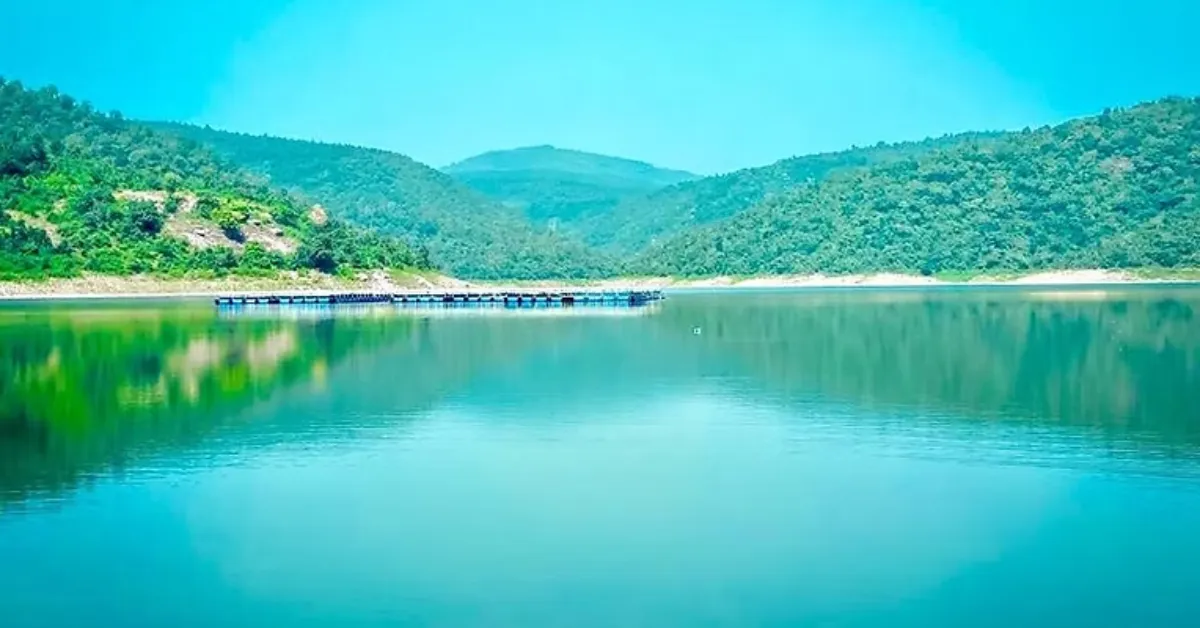
The two man-made reservoirs were created to irrigate agricultural land in the Jhajha forest range. But somewhere along the way, places built to support farms also became places where birds travelling across countries could stop, feed and spend the winter.
Year after year, they kept coming back.
In June 2024, Nagi and Nakti were recognised as Wetlands of International Importance under the Ramsar Convention, becoming India’s 81st and 82nd Ramsar sites at the time.
For a traveller, however, their importance becomes much easier to understand when winter arrives and the water begins to fill with birds.
Why do birds travelling thousands of kilometres stop here?
There is no dramatic wilderness surrounding Nagi and Nakti.
Instead, there is a patchwork many Indians would recognise: water, agricultural fields, dry deciduous forests and rocky hills.
That combination has turned out to be remarkably useful for birds.
The reservoirs provide the water and habitat that migratory species need during the colder months, while the surrounding landscape supports a wider ecosystem. As growing numbers of birds began gathering here every winter, Nagi and Nakti were eventually protected as bird sanctuaries.
/filters:format(webp)/english-betterindia/media/media_files/2026/10/06/glowg-5-2026-10-06-09-04-43.png)
A review of Bihar’s wetlands lists them among the state’s important habitats for migratory ducks, including red-crested pochards, greylag geese, northern shovelers and ferruginous ducks.
But perhaps the clearest way to understand what happens here every winter is simply to count.
What does 7,844 birds at one wetland look like?
During the 2023 Asiatic Waterbird Census, 7,844 birds were recorded at Nakti alone, the highest count among the wetlands surveyed in Bihar that year.
Nagi recorded another 6,938.
Zoom out to the rest of Jamui district and the scale becomes even larger. Surveyors counted 18,480 birds belonging to 87 species, giving Jamui the highest bird count among Bihar’s districts during the survey.
Across the state, 69,935 birds were recorded, of which 29,795 belonged to 73 long-distance migratory species.
The figures are impressive. But imagine what they actually mean on the ground.
Thousands of individual birds have travelled across landscapes most of us will never cross in a lifetime. Then, for a few weeks or months, they share the same stretch of water in Bihar before eventually beginning the journey back.
It also means that what happens at these wetlands matters far beyond Jamui.
The 2023 census looked at threats such as pollution, over-fishing, poaching and the expansion of agriculture. A wetland that offers birds enough food and safe habitat one winter can become less suitable if its water or surroundings change.
For migratory birds, places such as Nagi and Nakti are therefore more than picturesque stops on a map. They are part of a much longer journey.
Some of these winter visitors have crossed countries to reach Bihar
Spend enough time around Nagi and Nakti in winter and the list of visitors begins to read almost like a map.
The Bihar Forest Department records species including the Eurasian marsh harrier, common pochard, ferruginous duck, Eurasian wigeon, northern pintail, bar-headed goose, red-crested pochard, northern shoveler, ruddy shelduck and osprey, along with different sandpipers and wagtails.
Earlier documentation from the Ministry of Tourism notes birds arriving from regions including the Arctic Circle, Russia, Eurasia, Central Asia and northern China.
The bar-headed goose is among the most striking visitors associated with these wetlands. Nagi-Nakti has historically recorded sizeable congregations of the species, and the area was earlier identified as an Important Bird Area.
You do not need to know every species by name to appreciate what is happening here.
A bird on the water in front of you could have crossed national borders and flown thousands of kilometres before reaching this little-known part of Bihar. Seen that way, Nagi and Nakti stop feeling like two isolated reservoirs. For a few months every year, they become one point on a migration route stretching across continents.
So why does protecting two reservoirs in Bihar matter?
The Ramsar recognition in 2024 put an international label on something the birds had been telling us for years: these reservoirs had become ecologically significant far beyond their original purpose.
Under the Ramsar designation, Nakti covers about 333 hectares, while Nagi covers about 206 hectares. Together, they sit within a larger landscape of forests, hills, agricultural fields and water bodies.
And the ecosystem extends beyond the birds that make it spectacular in winter. Ramsar records also note species such as the endangered Indian elephant and vulnerable Wallago catfish in the wider wetland landscape.
Perhaps that is what makes the story of Nagi-Nakti worth paying attention to even if you are not a birdwatcher.
We often imagine important wildlife habitats as places untouched by people: forests, mountains or natural lakes far from everyday life. Nagi and Nakti complicate that picture.
These reservoirs were made to serve farms. Today, they also offer refuge to wildlife arriving from thousands of kilometres away.
Their story is a reminder that the places humans create and use can become valuable to other species too, and that protecting them afterwards becomes a responsibility we share.
If you want to witness it yourself, winter is the time to go
November to February is the best time to visit Nagi-Nakti, when larger numbers of migratory waterbirds arrive from their northern breeding grounds. Resident birds can be seen through the year, but winter is when the wetlands change most dramatically.
And you do not have to be an expert birder with a checklist and a pair of expensive binoculars to find the experience remarkable.
Sometimes, knowing where a bird has come from is enough.
The goose resting on the water may have crossed countries to get there. The duck feeding nearby will eventually leave again. For a brief part of its journey, a reservoir in Bihar gives it somewhere to stay.
Then summer approaches, the visitors move on, and Nagi and Nakti return to being two reservoirs in Jamui.
Until winter brings them back again.
Sources:
India names its 81st and 82nd Wetlands of International Importance on the occasion of World Environment Day: By Ramsar, The Convention on Wetlands
Bihar Government AWC 2023 report
Nagi-Nakti Bird Sanctuary, Jamui, Bihar
Disclaimer : This story is auto aggregated by a computer programme and has not been created or edited by DOWNTHENEWS. Publisher: thebetterindia.com