Monaco is the ideal circuit to showcase the characteristics of the 2026 power units because the principality’s narrow streets make it easy to recharge energy, greatly benefiting the electric side of the powertrain. However, when the battery becomes too full, the opposite problem can arise.
Just two weeks ago, Formula 1 raced in Canada, one of the circuits with the lowest energy recovery limit of the entire season – just 6 MJ per qualifying lap. That scenario is very different from Monaco, where the new cars will be able to demonstrate their capabilities much more clearly.
With so many braking zones and slow corners where the battery can be recharged, energy management will not be a problem in Monaco this weekend.
In fact, the FIA has allowed 9 MJ of harvesting in qualifying, the maximum permitted by the regulations. This is the same value seen in China, but with one major difference: Monaco has no long straights where significant derating could occur or where superclipping would be necessary.
In fact, the situation at Monaco is the exact opposite. To prevent excessively high top speeds – thanks to the effectiveness of electric power when accelerating out of corners – the governing body has decided to limit the cars’ potential: the MGU-K will begin losing power at 200 km/h rather than the 290 km/h threshold used at other circuits.
Lando Norris, McLaren
Photo by: Joe Portlock / Getty Images
All these factors combined will allow teams to exploit some of the best features of the 2026 cars, making full use of the 9 MJ permitted by the FIA. However, one question remains: can having so much energy paradoxically become a problem?
There is indeed a delicate balance to manage, and this could become the real Power Unit challenge during the Monaco weekend.
“There’s a risk that we have too much energy and that could really complicate things as well,” said Racing Bulls’ Liam Lawson ahead of the weekend. “Normally we’re quite energy poor, but on a track like this it’s not just as simple as having your battery charged all the time, that’s a great story, it’s actually not.
“It could cause a lot of other issues that we’ll be having to manage as well. So first lap, start of the race, when everybody’s driving very slowly, we can’t deploy the energy and therefore it can make things quite complicated for us.”
As discussed in a recent technical analysis, even under the previous generation of regulations there were situations where it was not optimal to start a lap with a fully charged battery, and this issue has resurfaced under the current rules. The point is that there are scenarios in which recovering energy too easily can actually become counterproductive.
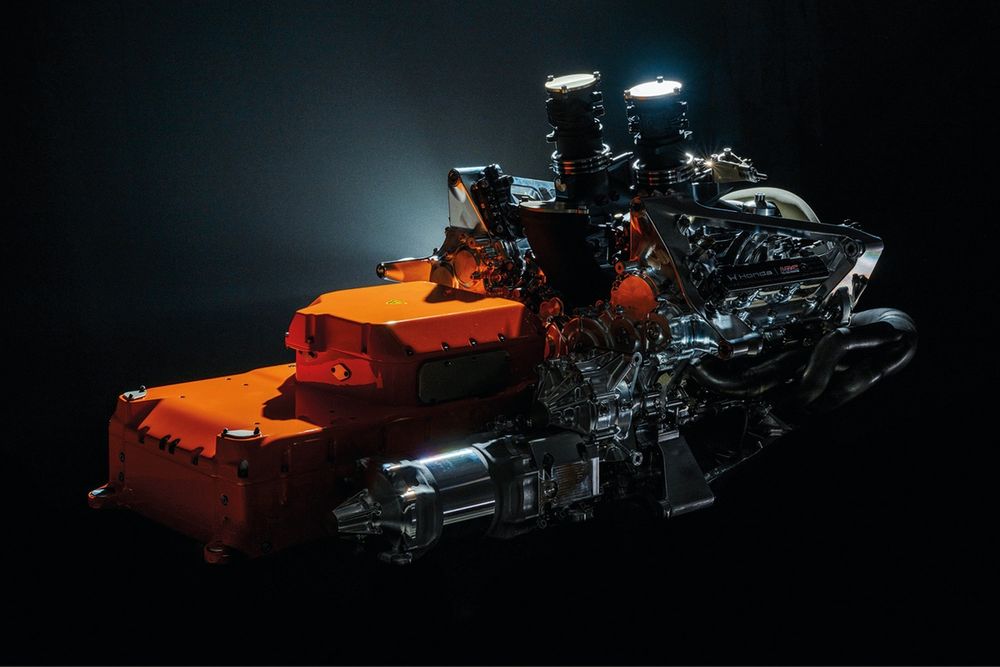
Honda Power Unit
Photo by: Take Itoh
Although teams have 9 MJ available, the risk is that they recharge the battery too quickly in certain sections of the track and reach the recovery limit early, forcing them to alter how the power unit operates. But there is a second scenario – more realistic and more difficult to manage – which concerns turbocharger behaviour.
Without the MGU-H, bringing the turbo into its optimal operating window and reducing turbo lag has become much more complicated. As a result, some power unit strategies depend even more heavily on the electric system, which is now more powerful than before.
For example, burnouts on the starting grid require assistance from the MGU-K. Similarly, before a qualifying lap – especially when accelerating from very low speeds – it can be tricky to manage the throttle and bring the turbo into the correct operating range.
The problem is that on circuits where recharging is easy and the battery quickly reaches its limit, the MGU-K can no longer convert power into stored energy. This means it can no longer help the turbo spin up and reach its proper operating range. The result is increased turbo lag, leading to weaker acceleration out of corners.
Naturally, the turbocharger spins up more effectively when the internal combustion engine is under heavy load. However, when engine load is low – as in the first moments of acceleration out of a slow corner or in the opening meters of a race – less air flows through the engine, making it harder for the turbo to reach its operating speed quickly.

Oscar Piastri, McLaren
Photo by: Andy Hone/ LAT Images via Getty Images
While regulations prohibit the use of electric power at the race start, the MGU-K can assist on corner exit by creating additional load on the engine. This helps the turbo spool up faster and improves throttle response. However, this is only possible if the battery still has capacity to accept energy. If the battery is already full, the MGU-K can no longer generate the artificial load that would help the turbo.
This scenario was also confirmed by Oscar Piastri, who believes it may be one reason why Ferrari – with a smaller turbocharger than its competitors – could benefit from these conditions.
To mitigate the issue, the McLaren driver expects many drivers to use first gear (or very low gears) more frequently, allowing them to generate more torque, maintain higher engine revs, and help the turbo stay responsive.
“We all know these turbos take an incredible amount of time to spool up, some quicker than others,” Piastri explained. “Essentially, sometimes if you’re at full electrical power, when you lose boost pressure, you don’t have the power from the combustion engine, so you lose a lot of power from there, which is definitely one of Ferrari’s strengths – they don’t have to be as critical on managing that, because they lose less power if they lose boost pressure in the turbo.
“So that’s still going to be a thing to manage around here, which shouldn’t be too difficult, because you might see first gear a lot, but I don’t think it will be a huge departure from what it’s been previously.”
We want your opinion!
What would you like to see on Motorsport.com?
– The Motorsport.com Team
Disclaimer : This story is auto aggregated by a computer programme and has not been created or edited by DOWNTHENEWS. Publisher: motorsport.com