
Ninh Binh’s limestone towers rise from Vietnam’s Red River Delta like nature’s skyscrapers, part of the UNESCO World Heritage-listed region known for its rice paddies, lakes, rivers, caves and traditional villages. About 100 kilometres from Hanoi, it’s a favourite weekend getaway for residents of the capital and tourists in the know looking for a laid-back retreat.
There’s no shortage of hostels, resorts and hotels in Ninh Binh, but until April of this year no international hotel brand had a presence here. The Pullman is the first to stake a claim.
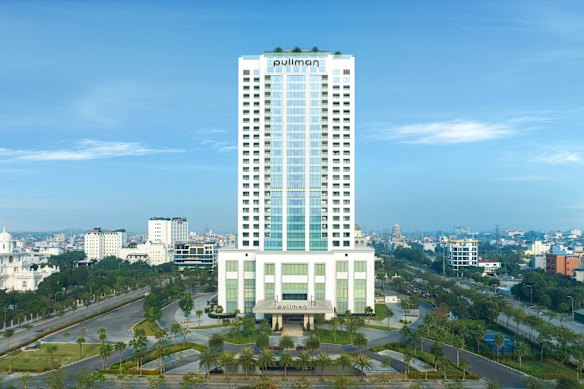
At 29 storeys, it’s the tallest building in the region, rising well above all others in the flat delta landscape. No taxi or ride-share driver is ever going to get lost trying to find their way to the hotel, and you won’t need a map app on your phone to return from a restaurant or the riverside. All you need to do is look up.
Inside are 283 rooms ranging from the 50 square metre superior to the 268 square metre presidential suite, a house-sized offering with views on three sides. Even the smallest category is generous, and every room has a balcony and floor-to-ceiling views in a building originally designed to be a residential apartment tower.
My deluxe suite includes a separate living area, an elegant marble bathroom with a stand-alone bath, powder room, desk area, coffee, tea and bar station and generous storage areas. It’s stylish, restrained and comfortable. Throughout the hotel, contemporary art and subtle furnishings bring the textures and colours of limestone and rice paddies into its spaces.
Sign up for the Traveller Deals newsletter
Get exclusive travel deals delivered straight to your inbox. Sign up now.
The hotel features three swimming pools, a gymnasium, conference and event facilities and a wellbeing centre. On the ground floor, Food ConneXion and Lumi Lounge offer Vietnamese and international dining and there’s a chic executive lounge for suite bookings. Phase two, due to be completed by January 2027, will add a spa, mini-golf course and two further restaurants.
Although general manager David Stanley says the hotel is already up to 90 per cent occupancy on weekends, the week I stay is very quiet and the enormous social spaces feel cavernous. Two months after opening, the staff are still mastering hotel-style service, but bring typically Vietnamese charm and warmth to every interaction.
In my room are a few curious slips, such as no hand towels in the powder room and no hooks for bathrobes or towels in the bathroom, but one small detail makes up for these minor failings – every light switch is clearly labelled, functioning, gently illuminated at night and exactly where it needs to be. I play with the lights longer than I should for the sheer pleasure of it.
Although Accor has guided and managed its creation as a Pullman hotel, the building is owned and built by the man affectionately referred to as Ninh Binh’s “cement king”. Next to the hotel is evidence of his wealth and style – several buildings built to look like mini-replicas of the Vatican, a sight both disorientating and strangely compelling. From the eyrie of my 23rd floor suite, I can’t take my eyes off them.
At ground level, it’s a short walk to the old town, where the riverside night market is an appealing place to drink a beer, eat local specialities such as goat or snails, or take a stroll by the lantern-lit water. The family-run restaurants offer some of the best food I’ve ever eaten in Vietnam.
A UNESCO listing often means that a place is unlikely to change, but the Pullman is one more sign that this once lesser-known destination is destined for bigger and possibly taller things.
DETAILS Ninh Binh is a 90-minute drive from Hanoi (depending on traffic), see ninhbinhtourism.com; the Pullman Ninh Binh has superior rooms from $130, see pullmanninhbinh.com.
The writer travelled as a guest of Pullman Ninh Binh
 Justine Costigan is a Melbourne-based travel and food writer with a soft spot for food markets, mountain villages and the kind of small-town piazza where everyone seems to know everyone. She’s just as happy tracking down Marseille’s best street food as she is cycling through wine country or bathing under at the stars. Follow her on Instagram @justcostigan
From our partners
Disclaimer : This story is auto aggregated by a computer programme and has not been created or edited by DOWNTHENEWS. Publisher: www.smh.com.au