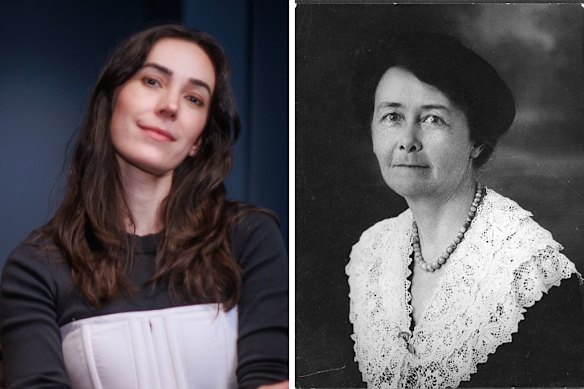
The woman who wrote My Brilliant Career was as “paradoxical as a platypus”.
Stella Franklin might be the most famous Australian you’ve never heard of. Like a Forrest Gump of the early 20th century, she was seemingly involved with every major figure and social upheaval of the times. Henry Lawson and Banjo Paterson were fans, and she rubbed shoulders with suffragettes and politicians, anti-war campaigners and socialites.
Awards named in her honour have helped to fund the work of some of our biggest literary stars, and the writers whose careers she helped launch range from Patrick White to Peter Carey to Alexis Wright. She even appeared on a postage stamp issued in Serbia last year.
“She’s like a Where’s Wally of global events,” says Monique diMattina, the pianist and composer who is about to launch a musical inspired by Franklin’s wild life.
Perhaps the pen name under which Stella published – Miles Franklin – rings a few more bells, but even then, most of us will just mumble something about My Brilliant Career. “Folks love the book,” says diMattina. “There is a raw energy in it, but it’s by no means her best work. It’s the first thing that she dashed off as a teenager.”
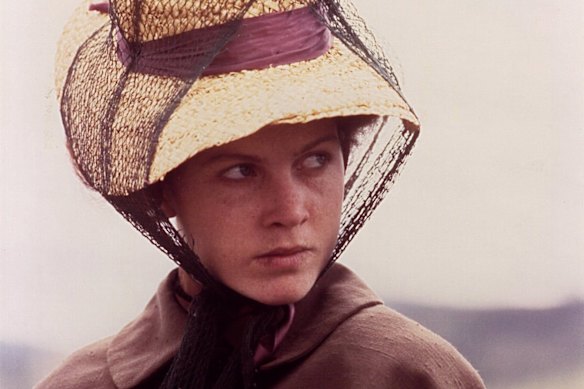
As STELLA makes clear, My Brilliant Career was just the first chapter of a life that saw Franklin living in Sydney, Chicago and London as she developed her writing career. Which, of course, meant working other jobs while scrambling for time at her desk. Miles Franklin might have been a household name, but Stella was surviving via stints as housemaid, cook, nurse and military orderly.
She was in her early 20s when My Brilliant Career became an international sensation, but it was far from smooth sailing from there. Her writing style was so modern that many of her novels were rejected by publishers for being too ahead of their time.
“She’s just got this very fresh, contemporary, present way of expressing things,” says diMattina. “You read a line and it makes you gaze into the distance with misty eyes.”
My Brilliant Career is still a widely cherished work – a musical adaptation recently enjoyed two sell-out MTC seasons and Gillian Armstrong’s 1979 film was voted number 45 on The Age and Sydney Morning Herald’s Top 50 Australian Movies poll. Much of its longevity stems from the feisty, unstoppable energy of its heroine, Sybylla.

Franklin herself was no less full of fire, and the musical’s central figure is rich and ripe with contradictions. She riles at the cult of beauty but wishes she were more attractive, scoffs at those who chase fame while cursing the lack of appreciation her writing has garnered. A close friend of Franklin’s described the writer as “paradoxical as a platypus”, says diMattina.
Stella will be played by Geraldine Hakewill, best known for non-musical roles on stage and screen, including two seasons as the lead in Miss Fisher’s Modern Mysteries. STELLA offers her a chance to flex her musical chops. “I was a singer before I was interested in acting. I feel like I came out of the womb singing. My mom says I sang before I could speak.”

Hakewill relishes the chance to play a character with such a lush emotional landscape, especially given that she embodies Stella from her teenage years until her mid-50s. “What does a tantrum look like when you’re 15 versus … when you’re 55? Both are present in this show,” she says.
“There’s love scenes, there’s tender moments with her sister, there’s hard conversations with both parents, and then there’s so much self-doubt, as well as an ego that allows her to send out a manuscript to every publisher in the country. A strength of will that allows her to keep writing for 30 years and never be published.”
Those fallow decades seem unfathomable today, but many of Franklin’s novels, including some of her most interesting, only saw the light of day long after they were written. She often resorted to submitting work under other names such as Vern Acular or An Old Bachelor. A whole series of popular novels were written as “Brent of Bin Bin”, the eager reading public debating which great author was behind them.
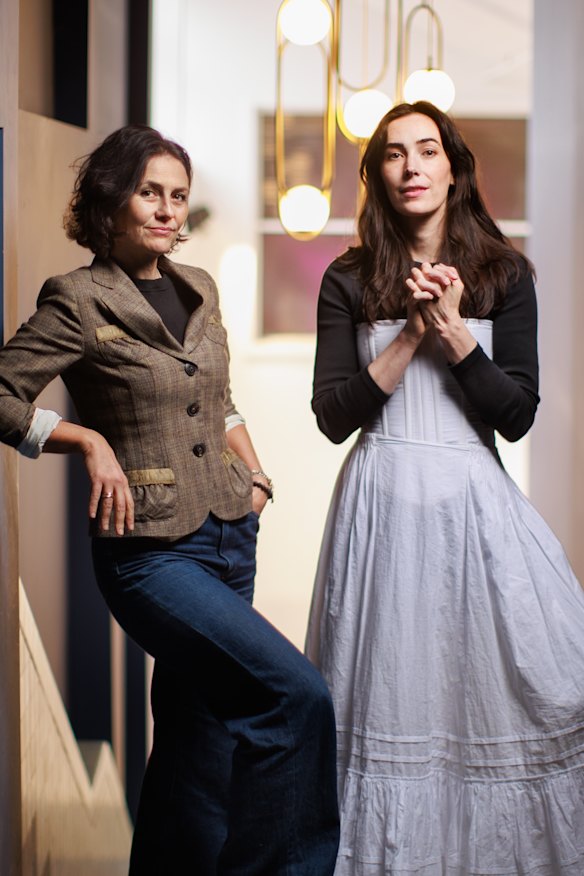
The musical explores the tension between pursuing your art and fulfilling the demands of the people in your life, says Hakewill. “How can you hold both? Particularly at a time when women weren’t expected to or encouraged to, and there wasn’t a lot of space for them to do that. It was so radical for someone to choose that. But then also, what do you lose by doing that?”
Franklin certainly lost a lot. My Brilliant Career put her on the literary map but also roused anger back in the NSW home town whose locals saw themselves in the novel; she had the book pulled from print in 1910. “She stipulated in her will that it needed to remain out of print for 10 years after her death,” says diMattina. “Did she hate the book? She certainly hated the backlash in her personal life.”
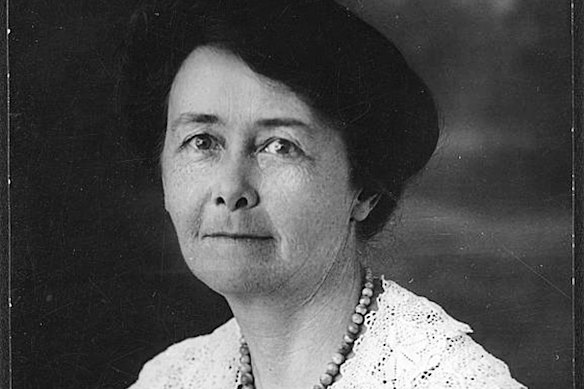
Franklin’s deep desire for independence meant she kept her many suitors at arm’s length, and her own family often came second to her career. At the same time, she was a passionate figure whose opinions sometimes took her to extremes. A close friend once delivered a lecture about her literary merits, which Franklin attended in secret; she severed communication for the next 10 years.
While in London, she was famously resentful of Henry Handel Richardson, another Australian writer who had adopted a man’s name to be published. While Franklin had holes in her shoes, says diMattina, Richardson “was married to a guy with money who, in Miles’ words, put pens in her hand. She was so supported by this husband who really believed in her writing, and Miles didn’t like her at all.”
Franklin’s life is so stuffed with juicy details that the hardest part of writing STELLA was deciding what to leave out. “Chopping nine things out of 10 has been the story of the last four years,” says diMattina. “We’ve got dead darlings all over the floor.”
The composer jumped at the opportunity to pen a musical as stylistically wide-ranging as its subject. “We’ve got neoclassical stylings, filmic themes, bush ballads. We’ve got some punk rock in there, tango and salsa.”
How else would you tackle a woman who refused to be boxed in?
“The best thing about her is her need to experience things,” says Hakewill. “That almost childlike quality. Even looking at photos of her, you see that in her face. That bright-eyed forwardness: ‘I’m going to embrace the world and whatever it is, I want to experience as much as possible.’”
STELLA: A New Australian Musical is at Monash University’s Alexander Theatre from June 13.
Disclaimer : This story is auto aggregated by a computer programme and has not been created or edited by DOWNTHENEWS. Publisher: www.smh.com.au