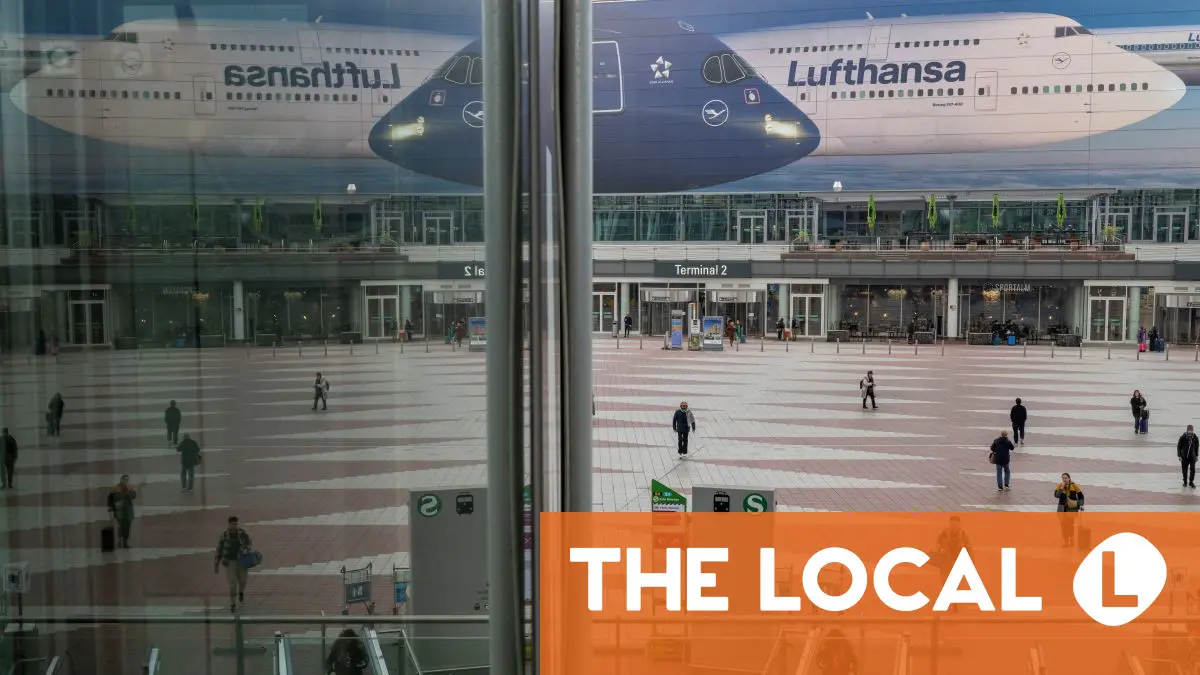
Germany is moving to lower air travel taxes from July of this year. The move could trim a few euros off ticket prices, but will travellers actually notice the difference?
Germany’s Bundestag voted Thursday to reduce the country’s air travel tax, approving a government bill backed by the federal coalition of the conservative CDU/CSU and centre-left SPD parties.
The measure, which still requires approval from the Bundesrat, will take effect from July 1st and reverses a tax increase introduced by the last government in May 2024.
In practical terms, the tax levied per passenger will fall by between €2.50 and €11.40, depending on the flight distance.
Government estimates also suggest the move will cost Germany around €330 million in lost tax revenue.
The decision is partly aimed at responding to long-standing complaints from airlines about high taxes in Germany, which industry representatives say have already led to aircraft being moved abroad.
But while supporters hope the tax cut could help restore capacity, experts suggest that any increase in flights or routes is likely to be modest.
Dr. Sven Maertens from the Institute of Air Transport told a Bundestag Finance Committee hearing that the tax cut would lead to around one percent traffic growth “at most”.
Recently, Ryanair pushed ahead with plans to dramatically cut flights from Berlin, despite the government’s plans to reduce the air travel tax.
READ ALSO: Eurowings to take over routes from Berlin as Ryanair pulls out
Will passengers see lower prices on flights?
It remains unclear how much of the savings will be passed on to travellers.
The headline change is simple: from July 1st, the air travel tax on each ticket will be lower – assuming the Bundesrat signs off on the legislation.
The exact reduction depends on distance. The air travel tax on short-haul flights will drop to €13.03, mid-haul journeys to €33.01 and long-haul flights to €59.43 per ticket.
That could translate to modest savings for travellers – at best just over €11 on a long-haul ticket.
But whether travellers will actually feel these savings is another question.
Ticket prices have risen sharply in recent months, partly due to higher kerosene prices linked to the war in Iran. Given these increases, the impact of the tax cut could be “practically negligible”, according to state broadcaster ARD.
Taxation politics
Politically, the vote followed clear lines. The CDU/CSU and SPD coalition parties supported the measure, joined by the AfD, while the Greens and The Left voted against it.
Notably, the government would have had enough votes for the bill to pass without AfD support.
READ ALSO: LISTED – The major airlines in Germany cancelling flights and adding extra charges
The air travel tax reduction had already been agreed in principle as part of the federal coalition agreement, reflecting the government’s stated aim of strengthening Germany as a business location and aviation hub.
The aviation industry had long argued that operating in Germany comes with comparatively high costs.
Ryanair, the world’s third most profitable airline in 2024 according to AeroTime, has been one of the most vocal critics of taxes in Germany and elsewhere, suggesting that they are driving airlines and passengers to other countries.
How has the decision been received?
Supporters of the reform argue that it sends an important economic signal. At a Bundestag Finance Committee hearing on Monday, industry groups backing the reduction called for the tax to be abolished entirely.
Thomas Gehringer from the German Trade Union Federation highlighted the importance of aviation for jobs and tourism.
But critics have raised concerns about fairness and environmental impacts.
Carolin Schenuit of the Forum for Ecological-Social Market Economy warned that the measure could increase demand for fossil fuels and mainly benefits frequent flyers.He noted that “a significant portion of the population does not benefit from [cutting the cost of] air travel”.
Alfred Schreiber of the German Transport Club argued the reduction sends “completely the wrong signal” in the context of climate change and the energy crisis.
Environmental campaigners have gone further, with Greenpeace calling the move “climate policy madness”.
READ ALSO: Lufthansa cuts 20,000 flights as fuel crisis bites in Germany
Disclaimer : This story is auto aggregated by a computer programme and has not been created or edited by DOWNTHENEWS. Publisher: thelocal.de