Camilo Lara, the former record label executive turned groove master, describes it as “the collision of two trains at full speed.”
After what took years of convincing, Lara — who makes music under the moniker Mexican Institute of Sound — finally recorded a collaborative album with a longtime friend: Colombia’s Eblis Álvarez, leader of the neo-tropical outfit Meridian Brothers.
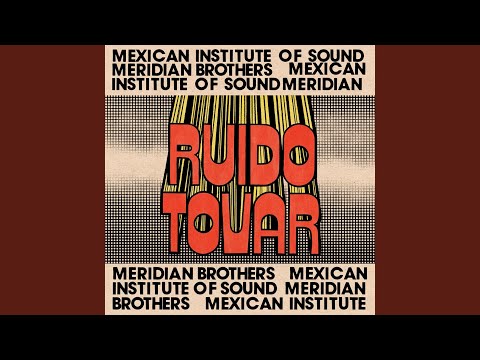
Released in May and titled “Ruido Tovar,” a nod to Mexico’s cumbia icon Rigo Tovar, the record explores — with religious fervor and a wicked sense of humor — the transformation of late ‘70s to early ‘80s cumbia into a loopy, occasionally psychedelic rhythm machine.
The project sums up the fixation of both Mexican Institute of Sound and Meridian Brothers with analogue archaeology. The duo studied dusty LPs from Mexico and Colombia and employed a panoply of vintage keyboards to re-create the ghostly sounds of a Latin America that ceased to exist decades ago. Beck even dropped in for a couple of tracks, including the anthemic “Cumbia Beckiana.”

Lara and Álvarez will present the album live on Wednesday at the Regent. The show will include sets by both M.I.S. and Meridian, with the bands coming together to perform “Ruido Tovar.”
From his recording studio in Mexico City, Lara, 50, spoke to De Los about getting an unexpected call from Beck years ago, as well as his recent move to L.A. and the bittersweet streak of Mexican existentialism that informs everything he does.
This interview has been lightly edited for length and clarity.
I remember listening to your debut album, “Méjico Máxico,” when it came out 20 years ago. The track “Mirando a Las Muchachas” signaled a before-and-after moment for me. I still love its blend of retro innocence and joyful futurism.
That song is a clear illustration of the clumsiness that was part of my music back then — and it still is, to some degree. At the time, I was really taken with De La Soul and A Tribe Called Quest, and I wanted to make electronic music. I imagined that my efforts would sound like Kraftwerk or Can, but because I used tropical samples to begin with, everything I did ended up sounding like música tropical. Later, I was able to reconcile myself with the notion that Mexican music and the records that I listened to as a child are a big part of my identity. Sure, I have delved into hip-hop, punk rock and Balearic music, but my own culture is naturally embedded into my records.

So many people of our generation are stuck in the sounds of the past. What motivated you to embrace samples and sequencers with so much passion?
It’s true: I live surrounded by people who keep receding into the music of the past. Now, they’re obsessed with the ‘50s and ‘60s; soon enough, they’ll be dancing the Charleston [laughs]. I was always clear about the fact that Mexican music is very much alive. It always finds a way to reinvent itself — to become more daring, to fuse and bastardize. I’m not nostalgic at all. It’s true that I love the ‘80s and new wave. That’s the music that I listened to when I was a kid. But I cherish the future. I don’t pine for the past — if anything, the older my own albums are, the less I like them.
How did the idea of collaborating with Meridian Brothers come about?
I believe Eblis Álvarez is the best musician in Latin America right now. I tried to convince him to make an album together for the longest time, and he always gave me these really bad excuses. Eventually I gave up, but years later he fell in love with a Mexican woman and started spending a lot of time here. One day, he told me he had been listening to cumbia records from the ‘70s and ‘80s, and he suggested that specific sound as the departure point for an album. We started getting together for a year and made a record in situ, which is a rarity these days. I feel it’s a really balanced album — we each contributed 50% to it.

I love how organic it sounds. Almost like it was played live in the studio.
All the instruments were real. I have a virtual synthesizer lab in my Mexico City studio. We picked the kind of synths that cumbia musicians from that era had access to, so there’s a lot of Prophets, Moogs, Junos and Jupiters. We had a station, almost like a [Yes keyboardist] Rick Wakeman thing, with all the synths lying side by side. And we were methodical about building up the album piece by piece: “Today we’ll do a boogaloo. Tomorrow, a digital danzón. Next up, a cumbia.”
Would your keyboard technique be good enough to play in one of those old tropical bands like Afrosound or Wganda Kenya?
Eblis is definitely the virtuoso component of this marriage. I play enough to convey my musical ideas. I don’t read sheet music or anything like that. If you put me in a jam session at a musician’s party, that would be my worst nightmare. I definitely place more weight on ideas versus the discipline of playing an instrument. When you see a really good player, that’s a rara avis — an enlightened individual.
My favorite track is “Ira (IA).” I love the dreamy, spiraling melody.
That’s a disturbing little melody, isn’t it? It never resolves itself. It’s a spiteful song about technology — against modernity. We used that half-spoken singing style that you find in old love songs by Los Ángeles Negros, El Puma or Raphael.
The album shines on its own strength, but having Beck on two tracks was a brilliant idea.
About five years ago, I got a random text from Beck telling me he was two blocks away from my studio. He came to visit, and from then on his visits became frequent. We started working on a few songs — the sound of Meridian Brothers became a reference point. When I told him I was making a full album with Eblis, he asked to be part of it. We went to his L.A. studio, and the moment he started to sing “Ritmo Babilonia,” it became a Beck song. Both Eblis and I have been huge fans of his since our formative years. A great guy and a good friend.
When I listen to your music, it sounds so sunny and playful, but there’s always a subterranean current of profound sadness. Am I onto something?
You just blew up the Death Star [laughs]. There’s no way around it, my DNA betrays me. Mexico is such a melodramatic country, from telenovelas to Juan Gabriel and our love for all things Morrissey. I know it’s a bit of a stereotype, but we harbor a passion for the bittersweet tones of the chamoy, and we do laugh at death quite a bit. Our collective lives are like a tapestry of the adorable and the dreadful thrown together, and there’s no way to untangle the two. There’s so much joy in our daily life, but that same joy is coupled with violence and corruption. I’m definitely not alone there, as many other musicians have the same duality, like Café Tacvba.
You’re now living part of the year in L.A. How do you like it?
I love the quality of life here. We’re in the Outpost Estates neighborhood, near Hollywood, and I had never been in a city with such close proximity to nature. I’ve always been a Mexico City guy.
You’re so close to the Magic Castle. Have you been?
No, caray. I need to buy a suit, and then get a magician to invite me. It’s definitely on my bucket list.
More to Read
Disclaimer : This story is auto aggregated by a computer programme and has not been created or edited by DOWNTHENEWS. Publisher: latimes.com