
- Government introduces bills for women’s reservation and delimitation.
- Delimitation bill proposes increasing Lok Sabha seats to 850.
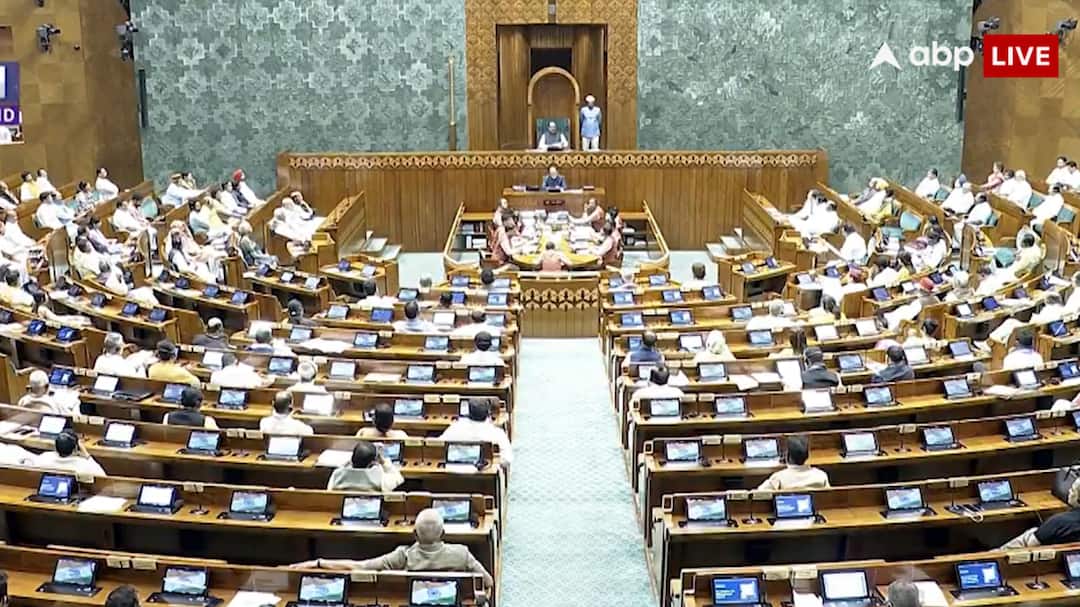
The Bharatiya Janata Party-led government tabled three bills in the House, including the Women’s Reservation Bill and the Delimitation Bill. These bills were introduced in a special session of Parliament. The chaos erupted in the Lok Sabha after the Bill was tabled as the opposition stood on the left side and said that it will favour only BJP, attack on federalism and willl help yto rule in Sourth.
The Delimitation Bill, 2026 proposes a fresh exercise to redraw constituencies based on updated population data. This is expected to substantially increase the strength of the Lok Sabha from 543 to around 850 seats, accommodating demographic changes and enabling reservation provisions. And the Union Territories Laws (Amendment) Bill, 2026, aims to align legal and administrative frameworks with the proposed changes. It will address seat allocation for Union Territories and establish mechanisms to implement reservations within the revised constituency structure.
Voting to pass the Bills is scheduled in the Lok Sabha on Friday at 4 pm. If passed, they will be implemented in 2029. The government’s goal behind introducing this bill is to provide 33 percent reservation in the House to women, who constitute half of the country’s population.
Can NDA Pass Bill Without Opposition Support?
The Lok Sabha currently has 540 members, and passing the bill would require the support of 360 MPs. The opposition holds around 233–234 seats, with key parties such as the Samajwadi Party, Trinamool Congress (TMC), and DMK accounting for a combined 185 MPs.
Opposition parties argue that the proposed bill could increase representation for more populous northern states, potentially disadvantaging southern states. The Rajya Sabha is expected to take up the legislation only after it is cleared by the Lok Sabha.
The government does not command a two-thirds majority on its own. The NDA has 293 MPs (around 54% of the House), while the opposition has over 230. A small number of independents and MPs from parties such as the YSRCP, AIMIM, and Shiromani Akali Dal have yet to declare their position.
To reach the required 360 votes, the government will need backing from other parties or benefit from abstentions. In practical terms, this means that at least two among the Samajwadi Party (37 MPs), TMC (28 MPs), or DMK (22 MPs) would need to abstain or extend support. The Congress, with 98 MPs, remains a key player, while the BJP has 240 MPs, alongside allies such as the TDP (16) and JD(U) (12).
In the Rajya Sabha, the NDA holds 141 seats (about 58%), compared to the opposition’s 83. Around 20 MPs from other parties and independents could prove निर्णायक in shaping the outcome.
If all 540 Lok Sabha members are present and vote, a two-thirds majority would indeed require 360 votes.
Related Video
Breaking: Europe leaders push back on Trump policies as Meloni shifts stance, says analysts
Disclaimer : This story is auto aggregated by a computer programme and has not been created or edited by DOWNTHENEWS. Publisher: abplive.com



