
World Heart Day: Born With a Heart Defect, Dead at 23, and a Brother Who Has Lost Hope
Every year on 29 September, World Heart Day brings a flood of advice: walk more, eat less salt, know the signs of a heart attack. Hospitals run screening camps and cardiologists appear on television. Far less is said about what a family can do when heart treatment itself ends in tragedy. In India, a family alleging medical negligence usually starts at a state medical council, a body made up largely of doctors. It must prove its case using the hospital’s own records, often without an independent expert on its side. If it loses, the National Medical Commission (NMC) says the family has no right to appeal.
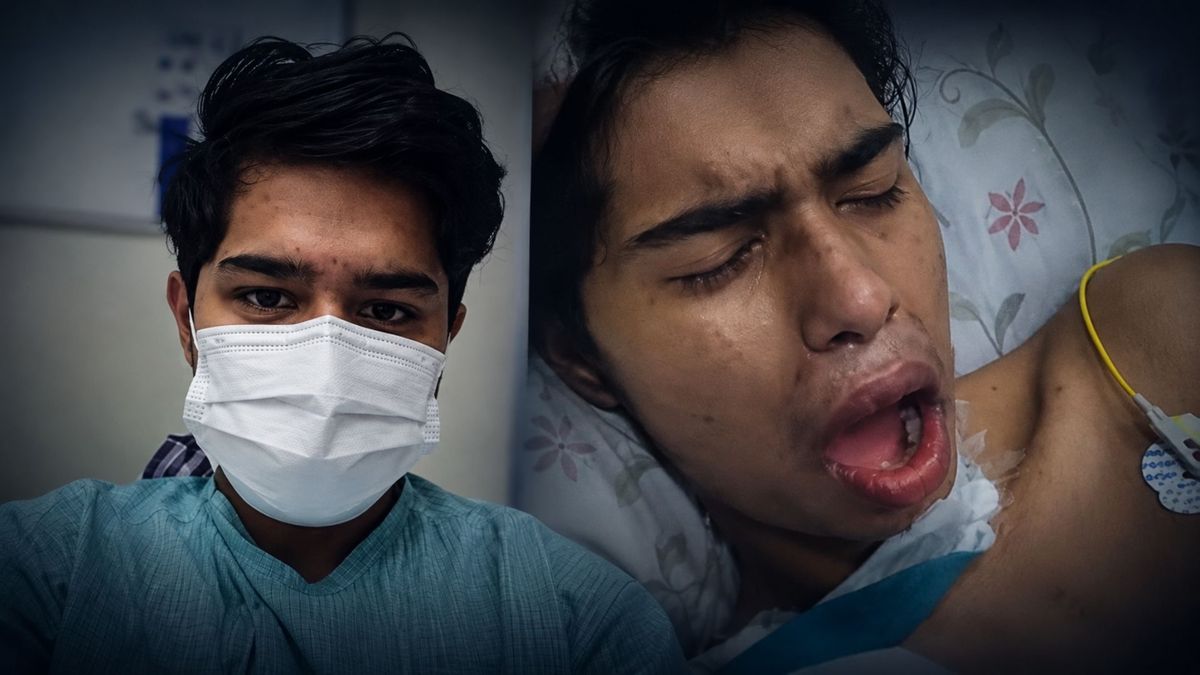
Arka Chakraborty has been through every step of that process. His younger brother Arnab, born with congenital heart disease, died in Bengaluru on 27 April 2022, aged 23, less than five months after open-heart surgery.
“On World Heart Day, my struggle and my fight continue to get justice for my brother,” Arka told The Probe. “The system is not designed to support patients or their families. There should also be awareness about the systemic problems heart patients face.”
Also Watch: Arnab’s Family Gears Up For Protracted Legal Battle, Alleges Medical Negligence
World Heart Day and the Global Report on Congenital Heart Disease
This year’s World Heart Day follows the World Heart Federation’s (WHF) annual World Heart Report 2026, which is devoted to congenital heart disease. The WHF leads the global observance. The report estimates that 2.3 million children were born with the condition in 2023, and that 16 million people worldwide were living with it.
Several of its findings could mirror what happened with Arnab. The report notes that in low- and middle-income countries, many patients reach adulthood with heart defects that were never repaired, or were repaired late. It says late presentation, sepsis and limited intensive care capacity sharply raise the risk of death. It argues that the quality of care now drives excess deaths more than access alone, and calls for regular reviews of deaths and complications to build “a culture of learning and accountability.” One of its six recommendations is to amplify the voices of patients and their families.
Arnab’s family says it has spent four years trying to be heard.
A Lifetime With Congenital Heart Disease
Arnab was born with Tetralogy of Fallot, a form of congenital heart disease that reduces the oxygen reaching the body. In 1999, in infancy, he underwent a shunt operation, which improves blood flow to the lungs without correcting the defect. His family says he went on to lead a normal life.
In November 2021, Arka took his brother to Narayana Hrudayalaya in Bengaluru, one of India’s best-known cardiac hospitals, for evaluation. According to the family’s complaint to the Karnataka Medical Council (KMC), Arnab had no neurological problems at the time. On 10 November, cardiac surgeon Dr Sudesh Prabhu advised immediate surgery. The family alleges it was not adequately told of the risks or the alternatives. A second consultation on 19 November reaffirmed the need for surgery, and the family, relying on the doctors’ assurances, agreed. Arnab was admitted on 26 November and underwent open-heart surgery on 6 December 2021.
Dr Prabhu disputes the family’s account. He told the KMC that Arnab arrived coughing up blood, with a failing shunt and severely low oxygen levels, and that the risks were explained in detail. His handwritten prescription, dated 10 November 2021 and filed by the family itself, records a 20 per cent risk to life. He also says the family delayed admission to seek a second opinion.
Also Read: Indraprastha Apollo Hospital: A Daughter’s 15-Year-Long Fight
From Heart Surgery to Brain Injury
The family says the doctors declared the surgery a success. Arnab regained consciousness and was moved to the general ward on 11 December. On 14 December, heavy bleeding was noticed from his surgical wound during dressing. He was taken back to the ICU for pericardial drainage, a procedure to remove fluid from around the heart. Arka says his brother was conscious and stable for the next two days.
On 17 December, Arka found Arnab drowsy and unable to respond properly during an ICU visit. He alleges he alerted the duty doctor, but no timely action was taken. Arnab then suffered multiple seizures and was put on a ventilator, and the family alleges the hospital did not promptly tell them how serious his condition was. After an MRI on 18 December, Arka says, doctors assured him there was no serious issue and that his brother would recover. An MRI on 23 December showed bleeding around the brain. When attempts to wean Arnab off the ventilator failed, doctors performed a tracheostomy on 27 December. Another MRI, on 10 January 2022, confirmed severe hypoxic brain injury, damage caused by a lack of oxygen to the brain. The family says it was never given a satisfactory explanation of how such a catastrophic injury followed a surgery declared successful.
The hospital’s account differs. Dr Prabhu told the KMC that the fluid around the heart was picked up on a routine echocardiogram before discharge and was drained according to protocol. The ICU chart cited by the KMC records Arnab’s first seizure at 10 am on 18 December, and Dr Prabhu contended that the family had wrongly placed it on the 17th. He also said an MRI showed older damage to the brain that predated the surgery, and that the family was kept informed at every stage.
The Second Hospital and the Final Surgery
After nearly three months at Narayana Hrudayalaya, which the family says brought no visible improvement, Arnab was discharged on 23 February 2022 and moved to Bhagwan Mahaveer Jain Hospital for neuro-rehabilitation. There, the family says, he began to recover. According to Arka’s affidavit, his brother was responding reasonably well to therapy despite occasional seizures, and doctors planned to remove his tubes and discharge him within weeks.
In mid-March, swelling appeared at his chest wound. The family says it was told that removing the sternal wires, which hold the breastbone together after heart surgery, would be a minor, low-risk procedure, and alleges it was pressured to consent and to pay deposits in advance. The surgery took place on the morning of 26 April. By that evening, Arnab’s blood pressure was falling. By night, he could no longer open his eyes or respond. He died at 9.27 am the next day. His death certificate recorded the cause as multi-organ failure due to septicaemia in shock.
The hospitals see it differently. Narayana Hrudayalaya recorded Arnab’s transfer as a discharge against medical advice. Cardiothoracic surgeon Dr Satish Kini told the KMC that when Arnab was referred to him on 21 March, he was in an extremely poor condition, with sepsis, bed sores and neurological unresponsiveness. Dr Kini said he recommended the procedure repeatedly from March, that the family initially refused, and that he operated as a life-saving measure once the infection worsened.
What the Karnataka Medical Council Decided
Arka filed complaints against doctors at both hospitals on 18 August 2022. In March 2023, the KMC registered them as prima facie cases of medical negligence.
On 16 May 2026, nearly four years after he first complained, the KMC dismissed both. The council held that Arka had failed to establish medical negligence or professional misconduct against any of the doctors.
“I am very sorry to tell you that I have completely lost hope,” Arka told The Probe. “I was harassed so much by KMC. There were about 12 to 13 hearings. For all the hearings I travelled from Kolkata to Karnataka, and then finally what did they do? They dismissed my case.”
In the Narayana Hrudayalaya case, the council framed the central question as whether Arnab’s seizures and brain injury resulted from a procedural breach, or were “a consequence of prolonged untreated cyanotic congenital heart disease.” It ruled in Dr Prabhu’s favour. The council held that a brain lesion seen on the 18 December MRI was “more than six weeks old and therefore pre-existing,” and noted that Arnab’s haemoglobin of 23.8 g/dl, far above the normal range, pointed to a defect left untreated for years.
In the Bhagwan Mahaveer Jain case, the council found no deviation in the sternal wire procedure. It rejected the family’s claim that consent was given under pressure, noting there was “ample time” between the advice and the surgery.
Both orders turn on one further point. The KMC recorded that Arka’s cross-examination of the doctors was marked “Nil” because of his “continued absence”, and that he filed no written arguments, so the doctors’ evidence went unchallenged. In the Bhagwan Mahaveer Jain case, it added that he had produced no expert opinion. On 21 March 2025, the council had rejected an application from Dr Kunal Saha of People for Better Treatment, a patient rights group, to represent Arka in the proceedings.
A Cardiac Arrest Missing From the Records
The orders leave one question unresolved. Both doctors at Bhagwan Mahaveer Jain Hospital told the KMC that Arnab had suffered a cardiac arrest in the ICU at Narayana Hrudayalaya a few days after his surgery. Dr Kini described an “intra-ICU cardiac arrest leading to severe hypoxic brain damage and coma.” The council recorded that Dr Sharan Srinivasan, who oversaw Arnab’s rehabilitation, gave the same account.
The council did not examine the claim further. It observed only that the records the doctors themselves filed, including a discharge summary and their hospital’s initial assessment of Arnab, make no mention of such an arrest. The order in the Narayana Hrudayalaya case, which attributes Arnab’s brain injury to pre-existing disease, does not refer to a cardiac arrest.
If Arnab’s heart did stop in the ICU after surgery, it would bear directly on the question the council set out to answer: what caused his brain injury. Neither order resolves it.
An Appeal the NMC Would Not Hear
On 29 July 2026, Arka appealed the KMC’s decision to the National Medical Commission (NMC). On 13 August, the NMC’s Ethics and Medical Registration Board returned the appeal, along with his demand draft, “as not maintainable.” Its letter states that under Section 30(3) of the NMC Act, 2019, only medical practitioners may appeal a state council’s decision. The Probe has reported on this provision before, and on how it leaves families alleging medical negligence with no route of appeal. We will examine it in detail in a separate story.
“See how unjust the system is,” Arka said.
In June 2024, Arka filed a complaint before the District Consumer Disputes Redressal Commission in Hooghly, West Bengal.
This World Heart Day, the World Heart Federation is asking the world not to miss the warning signs of heart disease. Arka says he saw them in December 2021, standing beside his brother’s ICU bed, when Arnab could barely respond to him. Nearly five years, two dismissals and one returned appeal later, he says he is still waiting for someone to explain what went wrong after a surgery that was meant to give his brother a longer life.
Disclaimer : This story is auto aggregated by a computer programme and has not been created or edited by DOWNTHENEWS. Publisher: theprobe.in




