TEHRAN – More than seven months have passed since the United States, together with Israel, launched its war against Iran. What was meant to be a swift campaign to topple the Islamic Republic has instead left American bases across the region in ruins, the Strait of Hormuz still closed, and Washington without an answer to the energy crisis it helped create. With the Islamabad Memorandum of Understanding in tatters and American midterm elections approaching, the question now is whether the US will risk another escalation — or accept defeat.
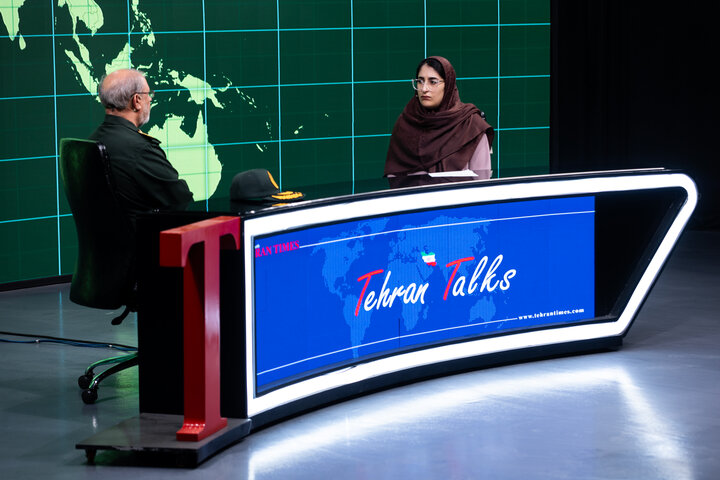
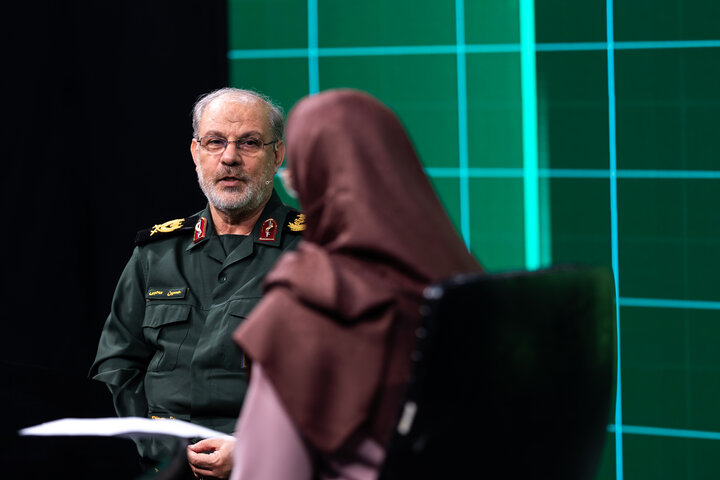
In an exclusive interview with the Tehran Times, IRGC spokesman General Hossein Mohebbi discussed the course of military operations over the past months and what may lie ahead. He also assessed the current state of Iran’s armed forces, and spoke personally about succeeding his assassinated predecessor, Martyr General Ali-Mohammad Naeini — and about duty and loss within the faith that sustains Iran’s forces on the front lines.
Below is the full text of the interview:
A question that’s on a lot of people’s minds these days — both in Iran and around the world — is whether the United States and Israel are once again heading toward an escalation of war and conflict, or not. How would you respond to this?
As military forces, we consider every scenario in this regard possible, and from where we stand, no possibility is off the table. That said, based on our assessments, America is definitely not in a position to want to start a new conflict in order to gain some fresh achievement from it. In the past, America came in with everything it had — it had well-equipped bases and vast amounts of equipment at its disposal, it brought fresh, ready-to-fight forces into the field, it pulled out all the stops and drew on every capacity it had — and yet it still couldn’t achieve a single one of its declared or undeclared objectives. Not only did it fail, it suffered numerous strategic defeats, the least of which was the closure of the Strait of Hormuz. Despite everything America has done so far, it still hasn’t been able to reopen that strait, and on top of that, it’s suffered enormously significant strategic defeats.
So at this point, America no longer has those capabilities, and it can’t use those bases the way it once did. Most of those bases have been shut down, their equipment has been destroyed, and the countries that were most cooperative with America back then no longer offer that same cooperation. American forces today are tired, worn-out forces, and they’ve pulled back hundreds of kilometers from us. Before the war started, there were at least thirty to forty warships inside the Persian Gulf; but today, not only do they have no ships inside the Persian Gulf, they’ve also withdrawn roughly seven hundred kilometers away from the Strait of Hormuz. The forces that were stationed at those regional bases have now been moved to distant bases, and even at those distant bases — like Al-Azraq and Al-Tanf in Jordan and Syria — they’re no longer safe, because those locations too are within our crosshairs.
So from a military capability standpoint and from a technical perspective, America doesn’t have what it takes to carry out a new operation or conflict. But there is a possibility that, with the American elections coming up, it might want to manufacture some kind of achievement — for example, carrying out a limited action so it can exploit the results for the elections. That possibility exists, and since we don’t dismiss any possibility, we’re ready to respond to any action. Our response this time will be far more severe and will land America in far bigger trouble, and will confront the world with even bigger challenges too. In any case, if America takes a new action — even a limited one — the world will face a serious energy crisis. What’s happened so far, in our view, hasn’t yet reached the stage of a crisis, and we haven’t yet brought all our capacity to bear on fully closing the strait. If America wants to make a new move, it will definitely be facing a massive crisis, and it will also confront the world with a new energy crisis.
With the cold season coming up in Europe, and with America itself and many countries needing energy for heating and daily life, the world will face a new crisis, and a global consensus will form against America — a country that creates problems for the whole world by starting fires. Global public opinion is already against America, and if there’s any new move, that opposition will only grow, and America will pay a very heavy price. In our view, rationality dictates that they shouldn’t do such a thing; but if one day, based on some illusion or delusion of gaining a new achievement, they want to take action, they’ll pay a very heavy price. We haven’t yet linked up the Strait of Hormuz, the Bab al-Mandab Strait, and the Suez Canal, and we haven’t yet used all the capacities of our region — our material and spiritual potential, our popular strength, the capacity of the resistance front, and the other tools that could create a major challenge for America.
So if we look at the story from America’s point of view, this scenario seems unlikely, but it’s still possible, and it’s precisely on the basis of that possibility that we’ve prepared our scenarios.
That said, when it comes to the Zionist regime, the matter is different. The Zionist regime is, in any case, looking to take advantage of America’s companionship and to act even more aggressively. This possibility is worth thinking about from that angle, and this is where the American people need to think. The letter we wrote to the American people has, in part, this very dimension: Are the American people willing, for the sake of following Zionist policies and helping them reach their vile ambitions, to create massive troubles and enormous challenges — like an energy crisis and even a food crisis — for their own country and for the world? I doubt the American people would be willing to accept such a thing, and we pointed to this in that letter as well.
So if I wanted to sum up my words in one sentence, the answer to your question is that the possibility of any operation — even a limited one — is not entirely ruled out, but our assessments show that they simply don’t have the capability needed to carry out an effective operation and achieve their goals. Their capability has become so weakened and scattered that they certainly won’t get the results they want, and they’ll only box themselves into bigger constraints. They might one day take action for the sake of a limited, tactical gain on the eve of the elections, but they’ll certainly run into bigger defeats and constraints, global public opinion will mobilize against them, and there are plenty of options available to deter America. The best path and the best proposal for America is to accept Iran’s conditions and declare its defeat by accepting those conditions; that would be the best path for the United States.
The enemy is trying to make it seem as though it was Iran that, by attacking several oil tankers in the Strait of Hormuz, caused the Islamabad MoU to fall apart. They even claimed that a few rogue forces acted without coordination on July 7. Can you tell us what exactly happened that day?
America is doing a forward escape and resorting to sophistry, when in fact the main violator of this agreement was the United States itself. This breach of promise first happened when, right after the meeting where the memorandum of understanding was concluded and sessions were held to implement its provisions, the US Secretary of State took a trip to the region and issued a statement with the leaders of regional countries that was clearly at odds with the provisions of the memorandum. On the other hand, under Article Five of the memorandum, it had been stipulated that the passage of ships would be conducted according to Iranian arrangements, but America, by threatening certain regional countries, opened a new illegal route through the southern part of the strait and along the coast of Oman in order to effectively nullify that article. Not only did they open a new passage, they also forced ships to pass through it and ignored the Iranian arrangements.
This behavior showed that America had once again broken its word — an approach that had precedent. They once carried out the attack of June 13, 2025 during the negotiations, another time they carried out the attack of February 28 in the middle of the negotiation process, and for a third time — not during the talks but after the Islamabad memorandum was concluded and at the stage of implementing it — they violated the agreement. What should the logical response to such a blatant breach of promise be? A logical, powerful, and fitting response. Any fair and reasonable person, if they look at this sequence, will acknowledge that in the face of America’s repeated violations, we were compelled to show our decisiveness and strength — something that, praise God, was achieved.
As was seen, during the 17-day clashes, the greatest losses were inflicted on America. In an interview with the Tasnim News Agency, I announced the exact figures for human casualties, destroyed equipment, and demolished bases, because heavy blows were dealt to them as a result of their latest breach of promise. The claim that the actions taken by our forces were rogue is absolutely untrue. In military structures around the world, discipline and adherence to the organizational chain of command is the first principle, and no one can take unilateral action on a sensitive matter like war without coordinating with the higher levels. So our response was carried out with full coordination and as a decisive reaction to America’s breach of promise.
The world needs to know that breach of promise is rooted in the very nature of the United States’ statecraft, and that this country doesn’t adhere to its signatures and commitments. The America that trampled the JCPOA despite the signature of its then-president and five other countries; the America that, during negotiations, assassinated senior commanders, national leaders, and scientists, and massacred thousands of innocent people — has once again proven that violating agreements is part of the fixed procedures of this country’s governance. Breach of promise and disrupting agreements have, as it were, become part of the unwritten doctrine of America’s ruling establishment.
On this basis, I declare with certainty that our response to the United States’ breach of promise — whether in connection to the JCPOA or the recent agreements — was a strong, powerful, fully appropriate, and timely response. If time were to turn back to the 16th of Tir [July 7] we would do exactly the same thing again, and if such actions are repeated by the other side, our response will be even more crushing than before.
Let’s talk a bit more about the events of July 7. Some domestic and foreign experts, attempting to corroborate the United States’ claim that the attacks that day were rogue, argue that — given Iran’s mosaic defense structure, in which commanders of each unit can act without coordinating with higher authorities if necessary — the occurrence of such an incident is not far-fetched. How would you respond to this analysis?
These two matters are completely different from each other. When we talk about a rogue action, we mean an individual acting without orders and without coordinating with higher bodies, and in conflict with standing directives — something that has absolutely no place in the armed forces. But the matter of mosaic defense and delegating authority to commanders in conditions of severed communications or the martyrdom of a senior commander is a defined doctrine and system, not disorder. In this structure, the chain of succession is precisely specified; that is, if the first commander is martyred or organizational communications are cut off through radio, telephone, or communication networks, the next commanders make decisions based on the requirements of the battlefield and a precise assessment of the enemy’s situation. This approach is a military measure, and it isn’t called rogue action.
Such measures are even rooted in our epistemic and religious foundations; just as in historical military traditions, specific successors were appointed for conditions in which commanders’ communications were severed. So a distinction has to be made between the word “rogue action” and “wartime measure.” The enemy raising such claims is part of psychological operations aimed at creating a rift between the body of the armed forces and the country’s senior officials, or at suggesting a disagreement between the government and military institutions. They’ve repeatedly raised these rumors to suggest that the decision-making structure in Iran is unclear, but such atmospherics are merely media tricks whose nature is completely clear to experts, and others too have come to understand this reality well over recent months.
You probably meet with field commanders and also visit military headquarters. What’s your assessment of the morale of Iranian forces after more than seven months of war?
Honestly, whatever I say about this might seem unbelievable to you, your colleagues, and your listeners, but the reality is that the morale of our combatants — from commanders to operating forces and equipment crews — is at the highest level; to the point that when we go to visit them, we feel weak and ashamed before their will and character. They’re present in difficult conditions, despite certain shortages, in hot and humid weather above fifty degrees and in an insecure environment with minimal welfare facilities, with exemplary morale, and they don’t utter a single word of complaint or grievance. We, who have ourselves lived through the era of the Sacred Defense [Iran-Iraq war] and have been in this system for years, feel small before the greatness of their morale, and this situation is truly indescribable. We’re ready to arrange the preliminaries for a trip so that you and your respected colleagues can go to those areas in person, talk with them, conduct interviews, and tell their stories to the people. Anyone who’s gone to these areas has been astonished by their will, their morale, and their interesting and creative initiatives in the areas of defense and offense. Even foreign journalists who are sometimes sent to visit are deeply amazed by this level of sacrifice, patriotism, love for the people, and idealism.
What’s your assessment of Iran’s missile, drone, and air defense capabilities compared to the beginning of the war?
Our capability has undoubtedly increased greatly, both quantitatively and qualitatively. Just this morning I was in a meeting where they were reporting that our capability has increased at least one and a half times compared to the past; because we never halted our production — never. The enemy, in its foolish imagination, comes and targets some of our centers and facilities and claims, “I destroyed their air force, their navy, and their missile industries,” but that’s not the case, and the enemy’s imagination is foolish. We never stopped producing missiles, drones, and whatever else we needed in this war and will need in the future; not only did we not stop, we expanded it. Today we’ve brought many other centers into our organization for producing more weapons, creating greater precision in targeting, increasing destructive power, extending the range of weapons, and producing entirely new armaments. We’ve brought all our capacity to bear, and praise God, we’ve succeeded very well.

A very important point that I think many people have experienced is that in special conditions, talents emerge. What we’ve witnessed and experienced firsthand in this war is that in special conditions we achieve things that might be unbelievable even to ourselves, and are certainly unbelievable to others. This is divine grace, and it’s due to the sincerity our forces have — those who have come to the field with all their being and selflessly, and have brought their strong will against the enemy. They fight with will, they fight with sincerity, and naturally divine grace helps too. God Almighty says that whoever strives in Our path, We will surely show him the way. God Almighty has shown and continues to show our combatants ways that are unbelievable — ways a person might not have even imagined before. In bottlenecks, in special conditions, in emergency conditions, and in conditions of connection to the infinite divine source, ways, paths, initiatives, and innovations are found that are wonder-making, and if the war continues or escalates again, these wonder-makers will certainly reveal themselves, God willing.
So, given all this, can we conclude that we possess weapons that we have not yet used?
Yes. Naturally, no country reveals all its weapons in the very first stages of battle. To this day, we have also long used weapons that were produced decades ago, and what has been employed during this period has mainly been older reserves and productions. We never use a weapon that should be reserved for more special conditions in less special conditions; naturally, that is how it will be.
Why do some regional countries, even knowing that American bases on their soil will be targeted if used against Iran, still grant the US this permission?
The first and most important point is that these countries have realized that the bases that were supposed to help their security have not helped at all — they have actually endangered their security. That is, what has the existence of a base, for example in Kuwait or Bahrain or any of them, done for that country so far? Nothing! That base has not even been able to defend itself. For example, what benefit has the so-called American naval headquarters and its Fifth Fleet stationed in Bahrain brought to Bahrain so far? No benefit at all — it has actually been to their detriment. They themselves have realized that these bases cannot provide their security, and beyond that, they have understood that America also cannot provide their security; even America cannot provide security for its own forces, and they have come to this truth.
But your question is: now that they have reached this conclusion, why do they not cut off their relations and abandon them? Naturally, they have contracts with them and have given commitments to America — perhaps as reciprocal commitments — and maybe in the back of their minds they still have some hopes regarding America that stop them from acting quickly; but they will do it, and they will do it gradually. What was the first step in this regard? The Mecca Pact. This pact was concluded among three countries — Saudi Arabia, Turkey, and Pakistan — without foreign interference; this itself shows that they have become disappointed with pacts with foreign countries like America and have seen that they are of no use to them, and so they have turned to a regional pact.
Such regional pacts, and the possible desire of other countries to join them or even to conclude new pacts, stem from the fact that they have concluded that a foreign country thousands of kilometers away cannot provide their security. So, to answer you specifically: they have concluded that they must gradually separate from America and have these bases removed from their countries; but because of their commitments, their not-so-great hopes regarding America, and the limitations they currently have, they cannot do this quickly — but they will gradually bring it about. If the current generation does not do it — which in my view it certainly will — the next generation will one hundred percent accomplish it.
This is a logical, rational, and experienced process. Based on this understanding, new decisions must certainly be made and we must turn to the regional countries themselves. We too, truly, based on the guidelines of the martyred Imam and the esteemed Leader of the Islamic Revolution, have always wanted to be friends, allies, and to have exchanges with these countries. We have many commonalities in this region — generational, religious, cultural, historical commonalities, historical exchanges, and in some cases a shared destiny.
Now, for example, suppose this region becomes insecure for Iran — will security be created for those countries? Never! There will be absolutely no security in this region without Iran’s security, and it will not come about. No security pact will take shape in this region without creating security for Iran; this is a logical matter, and empirical processes have proven it.
So we once again declare to the regional countries — we have fifteen neighbors, apart from those somewhat farther away — that these countries must themselves come together, resolve minor differences, and provide their own security. We too are ready to conclude joint pacts with every single country in which American bases are located, and to provide security regionally and locally, and we certainly have this capability.
Recently, the IRGC published a detailed letter addressed to the American people. What was the purpose behind publishing this letter?
In the first place, our goal was to enlighten and inform the American people. We feel that the American people are unaware of many realities; and the reason for this unawareness is that their leaders and ruling establishment lie to them and do not tell them the truth. Their media too are heavily controlled and subservient to the ruling establishment and cannot express other truths contrary to their views. We have numerous examples of this; even in the case of this very letter’s publication, many [Western] media outlets boycotted and opposed it, and this shows that they do not allow the facts to reach the ears of the American people. So we wanted through this letter to clarify part of the realities and explain that the American people themselves are also oppressed by their ruling establishment.
That is, the actions America takes, the aggressions it commits against various countries, the massacres it carries out, the numerous bases it has around the world, and the enormous costs it spends to run these bases and forces and equipment — all of it is paid from the pockets of the American people; but the benefit does not reach the American people — rather, it goes into the pockets of the ruling establishment and the main capitalists of America. In other words, the American people today are in the service of American capitalists and Zionist thinking, and we are certain that a large portion of the American people are unaware of this reality.
By the way, what war or enmity do the American people have with the people of Iraq, that a million human beings should be killed over a lie? What enmity do the American people really have with the people of Iran — or conversely, what enmity could the people of Iran possibly have with the American people — that from thousands of kilometers away, they should martyr our leaders, commanders, and scientists, threaten our country with disintegration, plunder our underground resources, threaten to occupy our islands, and target our missile capability? We truly consider it unlikely that these are the wishes of the American people. What real enmity can our two nations have with each other? These actions are in fact carried out by the leaders and ruling establishment of America, and because of their many lies and their concealment of realities from their own people. Our primary goal was in fact to enlighten, inform, and raise awareness among the American people.
You became the successor to General Ali-Mohammad Naeini, who was assassinated by the US and Israel during the 40-day war. Did this cause any doubt for you, or any opposition from your family, regarding accepting this responsibility?
For me personally, such doubt has never existed and doesn’t exist; because we’ve concluded in our school, religion, Quranic teachings, and religious knowledge that we must carry out whatever duty is created for us. When this matter was proposed to me and I felt it was my duty, I didn’t hesitate at all and I said to myself: right now this is my duty and I must carry it out. If, on the path of carrying out this duty, God Almighty grants us martyrdom, that’s a great triumph; meaning I’ve lost nothing — rather, I’ve attained eternal felicity.
So, based on that well-known teaching in our religious knowledge — “one of the two best outcomes” (one of two good things, both of which are good) — if I can carry out my duty well at this juncture, I’ve attained one of those good things, and blessed be I; and if I’m martyred on this path, I’ve attained the second good thing, and again blessed be I. That is, in both cases I’ve lost nothing and in both cases I’ve gained something; carrying out one’s duty well is one felicity, and martyrdom on its path is another felicity, and whichever befalls me is one of those two good things.
Truly, for my family too there was no doubt whatsoever; because my family is far more revolutionary, stronger, and more spirited than I am myself, and in fact, in many of these arenas, they’ve been our encouragers from the very beginning until now. So martyrdom for me is felicity, and if it befalls me I’ll be very happy; and I advise the survivors too to be happy and to take pride.
Disclaimer : This story is auto aggregated by a computer programme and has not been created or edited by DOWNTHENEWS. Publisher: tehrantimes.com