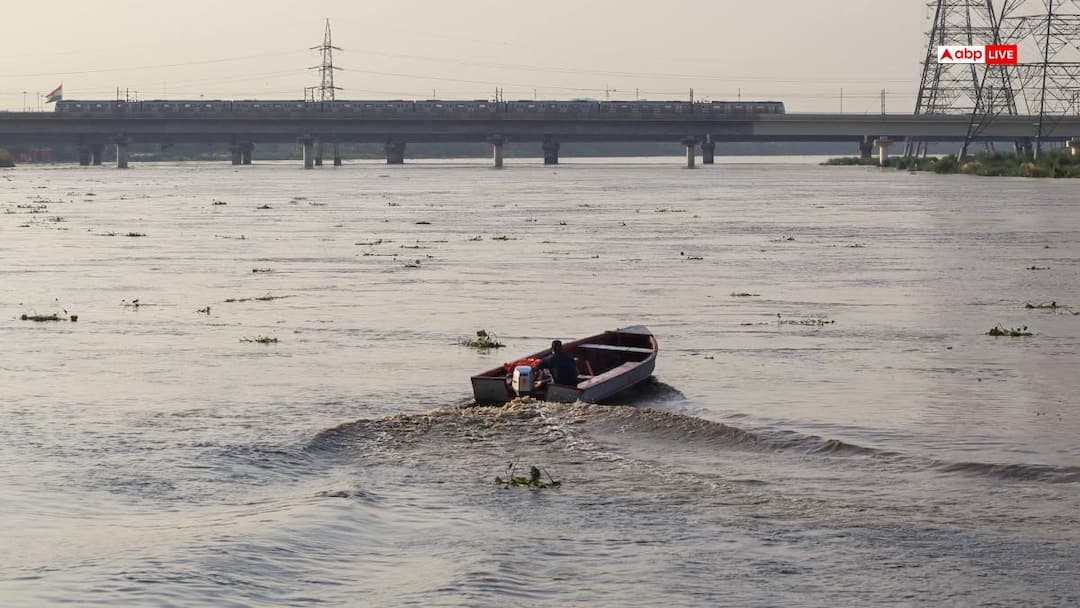
Cleaning the Yamuna remains a major issue in Delhi. Delhi minister Parvesh Verma, who is part of Chief Minister Rekha Gupta’s government, has claimed that the river will be clean by the next elections.
Speaking about the Yamuna clean-up drive, Verma said a cleanliness campaign was organised under the ‘Yamuna Chalo Abhiyan’ to remove waste accumulated along the river’s ghats. The Delhi Jal Board is carrying out cleaning work inside the river, he added.
Verma said around 20,000 people and NGOs participated in the campaign, along with 22,200 BJP workers. Students from 27 colleges also took part in the initiative.
He alleged that Arvind Kejriwal and his government had not been seen cleaning the Yamuna during their 11 years in power.
Verma said the government would launch a programme called ‘Birthday With Yamuna’. Under the initiative, Delhi residents will be encouraged to visit the riverbank on their birthdays, cut cakes and celebrate by participating in cleanliness drives alongside the Yamuna.
Special arrangements will be made for the programme, he added.
Special Event Scheduled For October 22
According to Verma, an event will be held near UER-2 in the Matiala-Najafgarh area at 11 am on October 22. Chief Minister Rekha Gupta will also attend the programme.
Work will be undertaken to clean 22 drains that discharge into the Yamuna to prevent untreated wastewater from flowing directly into the river.
On October 22, Union Home Minister Amit Shah will lay the foundation stones for projects worth around Rs 8,941 crore. Delhi Lieutenant Governor Taranjit Singh Sandhu will also be present. Additionally, 43 projects will be inaugurated during the event.
Verma said the projects include water treatment plants, decentralised sewage treatment plants (DSTPs), sewerage systems and pumping stations. Once completed, these projects will help prevent wastewater from flowing into drains without treatment.
Work is also underway to provide sewer connections to 240 newly identified colonies in Delhi, including areas that were previously unauthorised, he said.
The minister added that a Yamuna riverfront would be developed along the lines of the Sabarmati Riverfront in Gujarat. The file for a memorandum of understanding (MoU) with the concerned authorities has been moved forward, he said.
Yamuna Riverfront To Be Developed In Two Phases
Verma said the Yamuna riverfront project would be developed in two phases. The first phase will cover the stretch from Palla to Wazirabad, while the second will extend from Wazirabad to Kalindi Kunj.
He said the government would present a model of the Yamuna riverfront to Delhi residents before the next elections.
Verma also claimed that few had imagined the government would make such progress within 18 months, adding that the idea of developing a Yamuna riverfront had not been considered earlier.
‘Water Will Be Clean Only After Sewage Treatment Plants Are Ready’
Verma said the Yamuna’s water quality would improve only after all sewage treatment plants (STPs) were completed and sewer connections were provided to 14 lakh households.
Under the proposed system, wastewater from homes will flow through sewer lines to STPs, where it will be treated before being discharged into the Yamuna.
“When you make noise, assume that our government is working,” Verma said.
Verma reiterated his claim that the Yamuna would be clean before the next elections. He said residents would begin noticing changes within the next six months to a year.
The river’s water quality would improve to some extent within 18 months, with further progress expected over the next two-and-a-half years, he said.
Verma stressed that treating 100 per cent of sewage was essential to cleaning the Yamuna.
‘Previous Governments Made No Arrangements For Chhath’
Verma alleged that the previous government had not made adequate arrangements at the ghats for Chhath celebrations. He said his government would ensure that clean water was available at the riverbanks for devotees.
He added that 28 of Delhi’s existing 37 sewage treatment plants had been upgraded.
According to the minister, there is a gap of 250 million gallons per day (MGD) in sewage treatment capacity that needs to be addressed to prevent untreated wastewater from entering the Yamuna.
Disclaimer : This story is auto aggregated by a computer programme and has not been created or edited by DOWNTHENEWS. Publisher: abplive.com