
The truce between Iran and the U.S. that has been fraying over the last four weeks finally showed its first real tears on Monday.
President Donald Trump said Sunday that the U.S. would help ships get out of the Strait of Hormuz in an effort he called Project Freedom, challenging Iran’s control over the waterway.
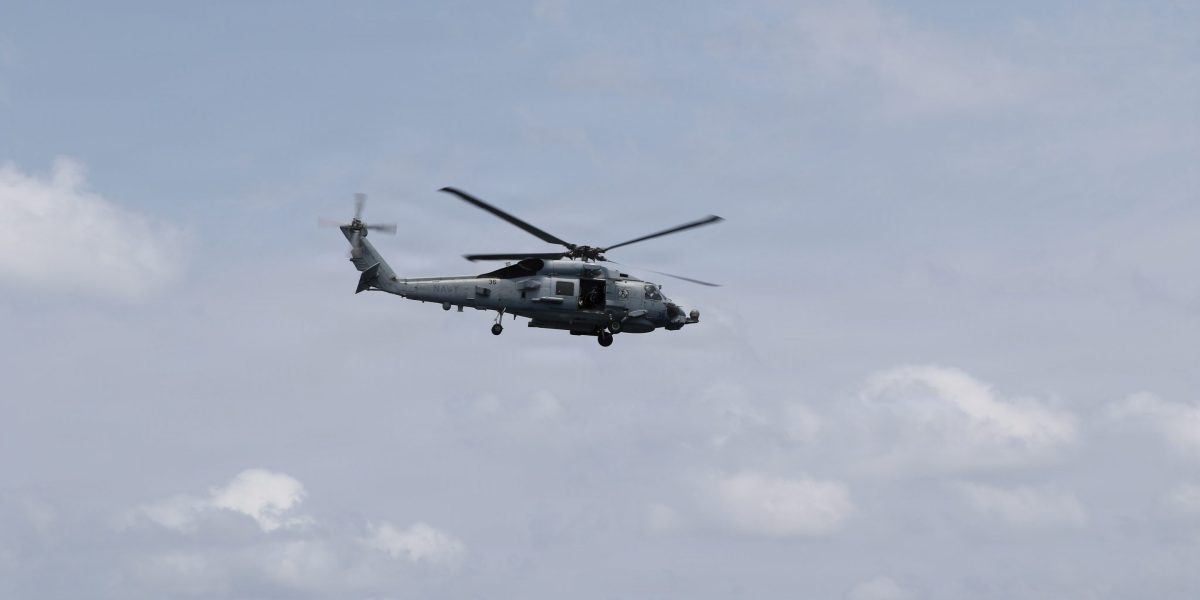
On Monday morning, U.S. Central Command said it helped two American-flagged commercial vessels through the strait, with two destroyers also crossing over and operating inside the Persian Gulf.
That’s when the shooting started. Central Command Chief Admiral Brad Cooper said the U.S. shot down Iranian drones and missiles while also destroying seven Iranian fast boats.
Iranian drones also hit Fujairah, one of the UAE’s most important fueling hubs. The UAE said it intercepted three Iranian “loitering munitions” over its territorial waters. And in a Fox News interview, Trump warned that Iranian forces would be “blown off the face of the earth” if they hit a ship in the strait.
Asked by Bloomberg if the ceasefire had been broken, Cooper declined to answer. U.S. Ambassador to the UN Mike Waltz also passed, calling it “a fluid situation.”
And for the first time in weeks, markets took the uncertainty as a warning. The Dow shed nearly 560 points, or 1.1%. Brent crude surged nearly 6% to settle above $114 a barrel; WTI rose more than 4% to close above $106, and the VIX spiked again.
“You could say the ceasefire has ceased,” oil analyst Rory Johnston wrote on X.
For markets that have largely tuned out the war to deliver all-time highs on the back of strong earnings and AI announcements, the problem with pricing it back in is that the fog of war is still very foggy.
Iran has said it won’t reopen the strait until the U.S. lifts its naval blockade on Iranian ports—something the U.S. has shown no signs of doing.
And even if the strait reopens tomorrow, Chevron CEO Mike Wirth said at the Milken Institute Monday that normalization will take months as seas must be cleared of mines, hundreds of stranded ships need to exit the Gulf to be redeployed, and insurance companies must actually feel comfortable enough betting on tankers’ safety.
Traders on prediction market Kalshi now give only a 56% chance that traffic returns to normal by August, a month after the last consensus bet.
Meanwhile, New York Fed President John Williams said Monday afternoon that Middle East–driven supply disruptions are likely to keep inflation pinned around 3% for the rest of the year. That means inflation will stay above the Fed’s 2% target for at least another several months, after five straight years of breaching that threshold.
“We don’t anticipate the war being resolved quickly,” Jay Hatfield, founder and CEO at Infrastructure Capital Advisors, told CNBC. “We don’t think Iran is going to have an epiphany and get rid of their nuclear capabilities, and so that’s probably going to have to happen by force, and that’s not going to be well received by the market.”
Disclaimer : This story is auto aggregated by a computer programme and has not been created or edited by DOWNTHENEWS. Publisher: fortune.com



