The musicians who kept it alive
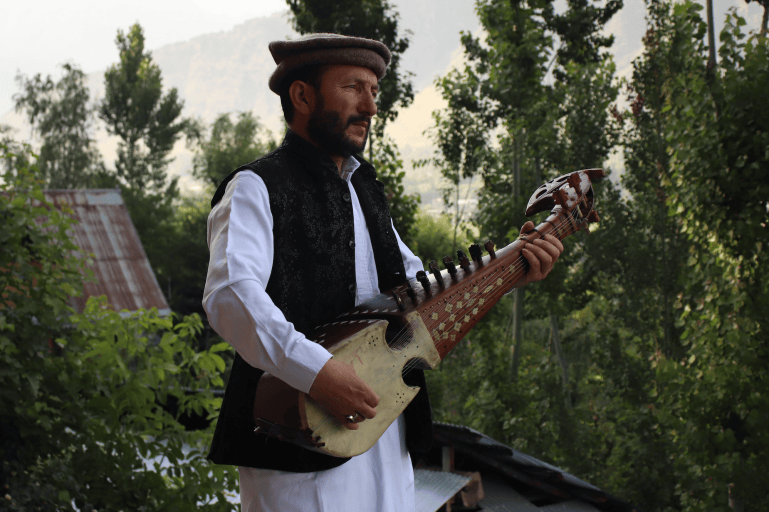
In Kangan, in central Kashmir, 53-year-old singer Yousuf Naseem has spent three decades preserving Shina through music.
Sitting on his veranda, he plays a six-stringed rabab. His songs carry memories of migration, loss and the home he left behind.
Born in Dangithal, near the Line of Control in Gurez Valley, Naseem remembers long winters, family storytelling and songs passed along by older relatives.
“The elders in our house were our library,” he says. “Whatever they hummed, we sang.”
During the 1999 Kargil conflict, his family was among those forced to leave Gurez. They resettled in Kangan.
“We lost everything,” he says. “But the songs travelled with us.”
Naseem began taking Shina music to new listeners in Srinagar. In Bohri Kadal, a historic market in the old city where many Dard families work as wazas, or chefs, he gave a shopkeeper a copy of his first cassette, Dardistan, and asked him to play it every morning.
His voice began travelling through the market.
“People would ask what language it was,” Naseem says. “It was Shina. For many, it was the first time they had heard it.”
While Naseem carried Shina music beyond Gurez, Fareed Ahmed Kaloo worked to preserve it within the valley.
At the Shina Cultural Centre near Dawar, young musicians gather as Kaloo, 67, adjusts his harmonium and begins to sing. He wears a traditional shoka and white pakol cap.
“Gilgit, Kargil, Gurez, Drass – our pride, our own,
This is our Golden Garden: Dardistan, our home.”
Kaloo leads the Habba Khatoon Dramatic Club, a cultural group founded in 1976 to preserve Shina folklore in Gurez.
“After Partition, our culture faded,” he says. “Kashmiri music dominated, and our Dardic roots went silent.”
For years, he travelled between villages on foot, carrying a harmonium and a tumbak naari, a clay percussion instrument. He performed at weddings, fairs and local gatherings, accepting food, a place to sleep or a small honorarium as payment.
“We didn’t do it for money,” he says. “We did it because someone had to, and no one else would.”
Some of the club’s earliest members have died. Others left amid cross-border shelling and never returned. Kaloo stayed, teaching folk songs to younger generations.
He now listens to new tracks on his phone and admires how musicians in Gilgit have developed their sound while retaining elements of traditional Shina music.
“They’ve gone far ahead of us,” he says with a smile. “As they should. Our songs must evolve, but never lose their roots.”
Disclaimer : This story is auto aggregated by a computer programme and has not been created or edited by DOWNTHENEWS. Publisher: aljazeera.com