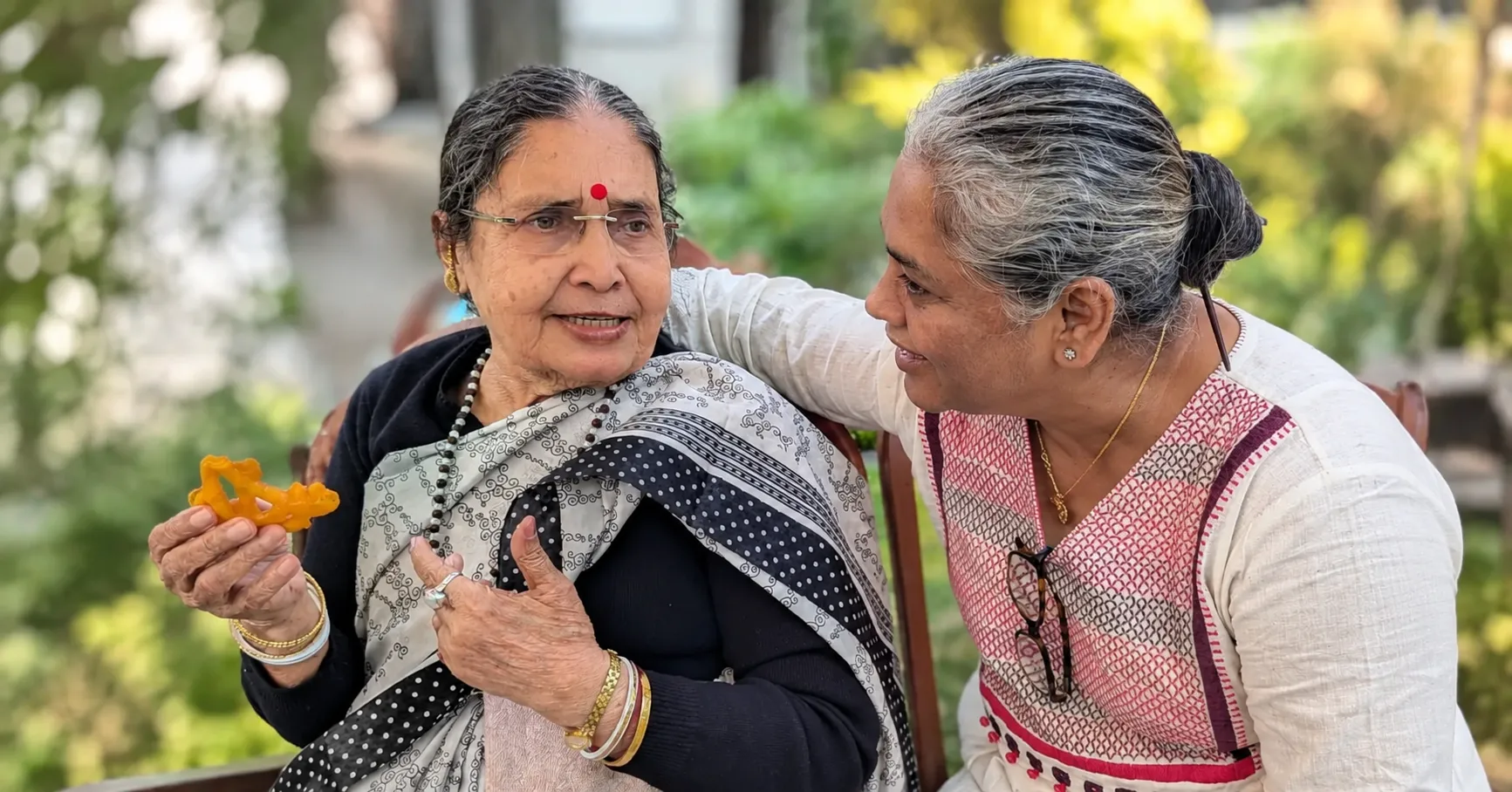
There’s a specific kind of moment a lot of us are living through right now. You’re on a video call with your parents, half scrolling, when your mother tells you a story. The same one she told you last Sunday. You smile, don’t mention it.
Later that week, your father misplaces his glasses for the third time this month, and it becomes a joke in the family group chat.
Then there’s the pause. The one where your mum is mid-sentence, reaching for a word, and it just doesn’t come. She laughs, says her memory isn’t what it used to be, and moves on. So do you.
We’re trained to read all of this as nothing, just what happens when people get older. And to be fair, most of the time, that’s exactly what it is.
Brains slow down with age the same way knees get creakier and eyesight gets weaker; a repeated story or a misplaced pair of glasses isn’t a diagnosis, and it doesn’t mean Alzheimer’s is waiting around the corner.
But doctors who specialise in ageing brains say there’s a real difference between this ordinary, everyday forgetfulness and the kind that actually signals something more serious. And not knowing where that line is, is exactly what costs families the years when help would have mattered most.
So what actually is Alzheimer’s?
To answer that, it helps to know what Alzheimer’s actually is, and how it’s different from your parents just having an off day.
Alzheimer’s is the most common form of dementia, a broader term for a decline in memory, thinking and reasoning severe enough to disrupt daily life.
It happens when abnormal protein deposits build up in the brain and gradually damage the connections between nerve cells, usually starting with short-term memory before affecting language, judgement and, eventually, basic daily tasks.
It isn’t a normal part of ageing, and it isn’t the same as the occasional forgetfulness everyone experiences. It’s a progressive disease, which is precisely why catching it early changes what families can do about it.
This 21 September, World Alzheimer’s Day 2026 falls on a Sunday, within World Alzheimer’s Month, a global observance running since 1994 and backed annually by the WHO. Over 55 million people worldwide live with dementia. In India, that’s over 8.8 million people, roughly 7.4% of everyone above 60, a number expected to more than double by 2050. Only about 1 in 10 Indians with dementia ever gets diagnosed.
If you’re managing your parents’ lives from another city, mostly through a WhatsApp group and a weekend visit, this day is really about one useful question: what can you do this week to help a parent’s brain stay sharp for longer?
Turns out, quite a lot
Dr Harjit Singh, a geriatrician at Delhi’s Sitaram Bhartia Institute, treats memory decline as something you can delay, not something inevitable. “Healthy ageing requires intention, support and opportunity,” he says.
/filters:format(webp)/english-betterindia/media/media_files/2026/09/18/3-2026-09-18-17-06-37.jpg)
His advice: “Eat together when you can, push for real exercise including strength training, nudge parents toward learning something new, and help them build an actual social circle rather than assuming living with family is company enough.
His most millennial-coded tip: teach digital literacy through your own kids, since navigating an app gives an ageing brain a workout passive TV never will.
Professor Prasun Chatterjee, who leads geriatric medicine at Apollo Hospitals after heading it at AIIMS Delhi, pushes this further in his book Health and Well-Being in Late Life, arguing old age deserves purpose, not just care.
He built India’s first Intergenerational Learning Model, where elderly volunteers teach underprivileged schoolchildren, giving retirees a real reason to think and show up daily.
It’s why structured volunteering or a community of older travellers does more for the brain than isolation. WHO guidelines agree, pointing to managing hypertension and diabetes, staying active, quitting smoking, eating well, and staying social as the most reliable ways to lower risk.
It’s bigger than sugar and blood pressure
Dr Pranav Mehta, a neurologist at Apex Group of Hospitals, Mumbai, notes neurological disorders now affect over 30 million Indians and aren’t just an “old people problem,” with pollution and poor sleep playing a role too. His warning is the one to remember: “The brain often whispers before it screams,” he says, listing slurred speech, sudden imbalance, vision changes or an unusual headache as signs never to brush off.
/filters:format(webp)/english-betterindia/media/media_files/2026/09/18/4-2026-09-18-17-11-04.jpg)
Researchers also point to low formal education as a risk factor, meaning puzzles, reading and learning aren’t a nice-to-have; they’re real protection.
The balance nobody warns you about
None of this needs a medical degree. It needs attention, the kind that clocks when mom stops calling old friends, or a hobby quietly disappears. Geriatricians also warn against overprotection, which strips parents of the independence that keeps them active in the first place.
Keep encouraging them to learn, move and connect, and stay alert enough to know when it’s time for a doctor’s opinion, not just another joke in the group chat.
This World Alzheimer’s Day, the best thing you can give your parents isn’t a check-up booked and forgotten. It’s making sure their days still have reasons to think, remember, and stay curious.
Sources:
‘Doctors See All Shades Of Elder Care As Children Bring Ageing Parents’: by Outlook Healthcare Desk for Outlook India, Published on 24 July, 2026
‘World Brain Day 2026: More Than 30 Million Indians Live with Neurological Disorders‘: by Medi News Desk for The Indian Practitioner, Published on 22 July, 2026
‘World Alzheimer’s Day 2026: Awareness and Prevention‘: by PSRI Editorial Team for PSRI Hospital, Published on 3 August, 2026
Disclaimer : This story is auto aggregated by a computer programme and has not been created or edited by DOWNTHENEWS. Publisher: thebetterindia.com