Opinion

You’re 55 or 60, you’ve spent decades building up your super, and you’re wondering whether you’ve saved enough. Then you come across an ad that promises to tell you if you’re on track for retirement. So you click.
You answer a few questions, leave your phone number or email, and wait to hear back.
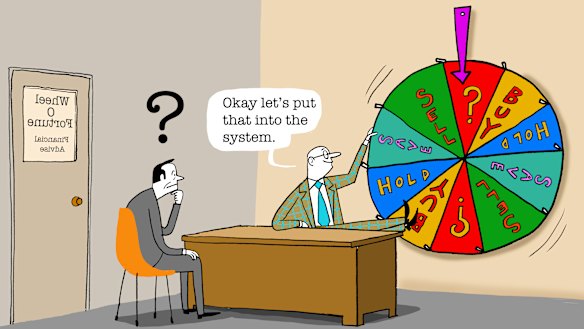
What you might not realise is that you just entered a sales funnel. Your details could be passed on to a business whose job is to turn your curiosity and fear of not having enough into an appointment with a financial adviser. And that appointment could ultimately lead to a recommendation that you move your savings out of a conventional super fund into a much higher risk investment approach.
Welcome to the world of financial services lead generation. It’s a business model that most Australians don’t know anything about, and shouldn’t have to. Yet they’re being drawn into it, hook, line and sinker, often without understanding who’s behind the offer, who’s making money from their inquiry, or what the business ultimately wants them to do with their retirement savings.
After reading ASIC’s latest investigation into the worst of these practices, I think it’s time we banned the kind of lead generation that financially rewards businesses for funnelling Australians towards financial advice, financial products and super switching, whether directly or through a chain of intermediaries.
There really is a world of difference between helping someone understand their real retirement options and helping them make good decisions, and making money from steering them towards a financial decision that might not be in their best interests.
To understand the problem, all we need to do is follow the money. ASIC’s latest investigation shows just how lucrative this business model has become.
The corporate regulator examined 15 financial advice licensees using lead generators between January 2025 and June 2026. During that period these businesses acquired 7639 new clients through lead generation arrangements, or about 35 per cent of new clients.
And here’s where it gets really juicy. ASIC found that some lead generators were being paid between 80 and 100 per cent of the upfront advice fee when they successfully turned someone into a client.
That’s a lot of money. Thousands and thousands of dollars. And that’s going to the business responsible for getting everyday Australians through the door of these advice businesses. And that upfront advice fee could be deducted entirely from your superannuation savings.
Some were telling people their funds weren’t performing well enough, or frightening them about what could happen if the market crashed.
So why would a financial advice business be willing to sign on for a deal like that? You have to wonder just how much money they expect to make from a customer over the years ahead.
Once the customer signs up, the advice business can collect ongoing fees potentially for years. And if the customer is persuaded to switch their super, substantial sums can flow into investment management and platforms potentially generating even more revenue for the businesses involved in the arrangements.
Across the 15 licensees – the businesses legally responsible for the financial advice provided under their licence – clients paid $9.8 million in upfront advice fees and agreed to another $4.5 million in annual ongoing fees.
From that you can see why getting someone to click on a free super check can be such a valuable business. And we’re not talking about small amounts of money changing hands here.
ASIC found that more than $678 million was switched or invested after referrals from lead generators across these 15 businesses alone. And about 90 per cent of that money came from superannuation savings.
Now, that $678 million isn’t money that’s been lost. But it’s an enormous amount of retirement savings being moved around because of introductions by businesses that are being financially rewarded for delivering new customers to advisers.
That makes my blood boil. We’re talking about money people have spent 30 or 40 years accumulating, potentially being redirected into investments they may not fully understand, through a process they might not even realise is designed to sell them something.
The problem starts long before someone sits down with a financial adviser.
ASIC’s report shows just how far some of these businesses will go to get people to move their super, too. Some were telling people their funds weren’t performing well enough, or frightening them with warnings about what could happen to their savings if the sharemarket crashed.
And some of the people making these claims weren’t even qualified to give financial advice – they’re effectively salespeople, flogging fear to get people through the door.
I’ve been writing about these problems for years, and this week I sat down with ASIC commissioner Alan Kirkland to discuss them on the Prime Time podcast, too.
I have to say it: I’ve had enough. We’ve seen far too many examples of Australians being frightened, pressured and persuaded into making decisions about their life savings that might not be in their best interests.
It really is time for the government to step up and make illegal all forms of financial lead generation that steer someone into switching their super. Free courses, free super checks, free retirement assessments, online quizzes, calculators, lead generation forms with incentives, or even ‘paid mates who refer unknowing consumers’.
I don’t care what the bait looks like. If the real purpose is to funnel people towards advisers who plan to switch their super, and someone is being financially rewarded for getting them there, it’s time for it to stop.
Consumers don’t understand that it’s happening. And I don’t think burying the details of these financial arrangements in disclosure documents that nobody reads makes them more acceptable. Telling someone in the fine print that you’re being paid to steer them towards an adviser doesn’t make the practice right. It shouldn’t be happening in the first place.
I’m not the only one calling for a ban. Super Members Council chief executive Misha Schubert says these practices have no place in the financial services industry. She’s also warning that the government’s proposed restrictions on unlicensed lead generators don’t go far enough. Dodgy businesses will just find another way.
As Schubert puts it, parliament needs to “shut and bolt the door on this harmful practice – not leave it ajar to continuing harm”.
That doesn’t mean banning genuine financial education, or making it harder for people to find good advice from an adviser they arrive at by genuine referral where no money changes hands.
It means drawing a clear line between helping people understand their options and using a helpful-looking offer to sell them something they might not actually need.
Meanwhile, while the government faffs about on this, Australians need to be a lot more wary about what they are clicking on in the financial services world. If you see an ad offering a free super check, or retirement assessment, ask yourself who’s behind it and what they want from you. Before handing over your phone number or email to be connected into an advice referral, find out whether anyone is being paid to refer you.
Then ask yourself if there’s a better way to get the help you need. There almost always is.
And if someone starts telling you your super isn’t performing, or that you need to move your money urgently, please be careful. Don’t let these very slick salespeople frighten you into deciding about savings you’ve spent decades building. Good financial advice should help you understand your options, not scare you into taking action.
I believe wholeheartedly that people should be able to find an adviser without someone else making money from steering them through the door. There’s plenty of demand out there for good advice and plenty of good advisers.
So why can’t we just let good advice win?
Bec Wilson, bestselling author of How to Have an Epic Retirement, is a retirement educator and founder of the Epic Retirement Institute. She writes a weekly newsletter about modern retirement at au.epicretirement.net. She has various commercial arrangements with a range of organisations, including superannuation funds.
- Advice given in this article is general in nature and is not intended to influence readers’ decisions about investing or financial products. They should always seek their own professional advice that takes into account their own personal circumstances before making any financial decisions.
Expert tips on how to save, invest and make the most of your money delivered to your inbox every Sunday. Sign up for our Real Money newsletter.
 Bec Wilson is the bestselling author of How to Have an Epic Retirement, a retirement educator and founder of the Epic Retirement Institute. She writes a weekly newsletter about modern retirement at au.epicretirement.net. Bec has various commercial arrangements with a range of organisations, including superannuation funds.
From our partners
Disclaimer : This story is auto aggregated by a computer programme and has not been created or edited by DOWNTHENEWS. Publisher: www.smh.com.au