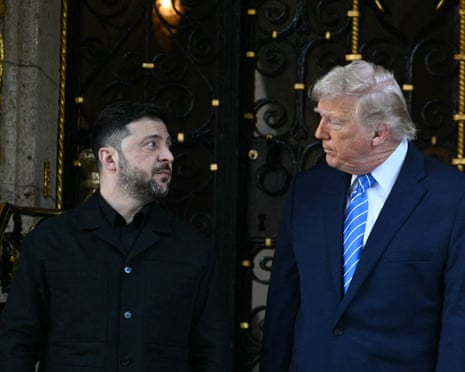
Meanwhile, Ukrainian president Volodymyr Zelenskyy has asked the United States for more ammunition for its Patriot air defence systems to counter Russian ballistic missiles, according to a letter reviewed by AFP.
In the letter, dated 26 May and addressed to US president Donald Trump, Zelensky asked the US to “help us secure this vital tool of protection against Russian terror – Patriot missiles PAC-3 and additional systems – to stop Russian ballistic missiles and other Russian missile attacks.”
Reuters said the letter, directed also to the US Congress, calls for help addressing the critical lack of air defence missiles in Ukraine, which is particularly acute as Russia threatens more strikes on the country.
European community affairs correspondent
Meanwhile, lawmakers in Hungary have voted overwhelmingly for the country to remain a member of the international criminal court, reversing a decision made by the previous government of Viktor Orbán.
Wednesday’s vote came days before the country was poised to become the only EU member state not to recognise the jurisdiction of the global tribunal, which aims to prosecute those accused of war crimes, genocide and crimes against humanity.
In April last year, Orbán announced that Hungary would begin the process of pulling out of what he decried as a “political court”. He made the comments while hosting his Israeli counterpart, Benjamin Netanyahu, a longtime ally and the subject of an ICC arrest warrant, in Budapest.
After Péter Magyar was elected as prime minister in a landslide victory last month, the new leader repeatedly vowed that his government would reverse the withdrawal before it took effect on 2 June.
On Monday, Magyar’s government submitted a bill to the parliament, setting in motion a fast-tracked procedure that resulted in 133 of the 199 lawmakers voting to back the bill.
The legislation must now be signed into law by the president, Tamás Sulyok, an Orbán-era appointee whom Magyar has repeatedly called on to resign.
Earlier this week, the ICC’s legislative body hailed Hungary’s plan to reverse the withdrawal, describing it as “essential” to ensuring accountability for the world’s gravest crimes.
Back to the heatwaves hitting large parts of Europe, our Europe environment correspondent Ajit Niranjan spoke with experts who warned of ‘new reality’ of heat extremes that claim three times more lives than car crashes and 16 times as many as murderers.
Just pause for a second on these numbers.
Ajit writes:
“The dark side of a gloriously hot European summer, excess mortality data compiled by experts … shows, is an almost unfathomably large death toll – one that society rarely treats as a crisis.
In 2024, summer heat in the EU claimed roughly three times more lives than car crashes, 16 times more than murderers, and more than 10,000 times more than terrorists.
This year, summer highs are striking before spring is even over. It may herald worse heat to come as parts of Europe brace for yet another torrid season of punishing extremes.
Gulp.
Read Ajit’s full story here:
Meanwhile over in London, Britain’s prime minister Keir Starmer and his Polish counterpart Donald Tusk have just signed a Polish-British defence and security treaty, which seeks to strengthen the links between the two countries amid growing threats from Russia.
After a brief signing ceremony at the Battle of Britain Bunker in west London – a nod to the Polish contribution to the Royal Air Force during the second world war – Starmer hailed the deal as a “generational uplift” in the UK’s defence relationship with Poland, saying it strengthened the relationship between the two countries “as we face the challenges of today.”
In particular, he referenced the continuing threat from Russia, which he said “we see that not just in Ukraine itself, but beyond Ukraine, impacting on our own countries.”
Poland’s Tusk said the agreement was rooted in “our shared values,” and determination to “defend” both countries and its peoples.
He said the treaty would also strengthen “the European solidarity,” both through Nato and in the broader international context.
“All of this gives hope that this unique, historic document, in this unique historical place, under the patronage of our pilots from 303 Squadron, will make our future safer,” Tusk said.
The deal focuses on defence and security issues, including mutual support and joint exercises, military procurement, air defence, cybersecurity, and broader infrastructure security.
Downing Street said it would include the joint use of “uncrewed systems to reinforce Nato’s Eastern Flank,” and “accelerated” cooperation on tackling “malicious” disinformation.
Briefing reporters before leaving for the UK this morning, Tusk suggested the treaty would go beyond previous deals agreed in 2017 and 2023, and include provisions for mutual security assistance outside Nato’s article 5 framework.
Tusk claimed the bilateral treaty would mean Poland could count on the UK for a “rapid bilateral response … before a decision is made by all 32 Nato members” in the event of a conflict.”
Britain already has defence and security deals with France and Germany, while Poland signed a similar agreement with Paris last year.
Nordic correspondent
Meanwhile, Iceland’s foreign minister has said she fears her country faces a “Brexit moment” in its looming EU referendum amid warnings over misinformation, foreign interference and AI.
With just over three months to go until Iceland votes on whether or not to continue accession talks with the EU, developments are being closely watched by Washington, Moscow and Brussels.
Þorgerður Katrín Gunnarsdóttir accused individuals and groups from inside and outside the country of “fearmongering”, saying Iceland was being hit with misinformation and rhetoric taken “from the playbook of Nigel Farage and Reform”.
She said the referendum was at risk of being a target for Russia and “actors who seek to influence our public debate in a negative way”. Foreign interference and the spread of misinformation could end up affecting the result, the minister warned.
“I am fearing that we will face a Brexit moment,” she told the Guardian. “That would be, from my point of view, a rather dangerous path because … there were all kinds of lies put forward by the Brexiteers.” She cited disputed figures used by the leave campaign over how much money the UK sent to the EU.
In recent days across parts of Europe, temperatures have soared, heat records have been broken and spring has felt more like the height of summer.
Météo France, the French national weather service, has attributed this to a “heat dome”, with warmth held in place by a high-pressure weather front that has produced temperatures more than 10C above what used to be usual for this time of year.
Human-caused climate breakdown is supercharging extreme weather around the world, driving deadly extremes that can strike at abnormal times in unusual places and claim lives.
Guardian reporters in five European capitals spoke to tourists and locals about how they have experienced this most recent period of unseasonable May heat, and their worries about what the climate emergency might mean for the future.
Jim, a visitor from Sydney, spoke for the majority of his fellow tourists when asked how he and his wife, Marina, were dealing with the May heatwave in Madrid. “These are not at all the temperatures we were expecting,” he said. “We brought clothes for cooler weather because that’s what we were expecting.”
“The heat is terrifying,” said Darcey, 21, of experiencing the heatwave inside her tiny, top-floor apartment in Paris. “It can feel so hot you’re almost scared to go outside and it’s sweltering being under the roof.”
Senior correspondent
Elsewhere, sales of hybrid cars have shot up across the EU in the wake of the watering down of emission targets late last year, new figures show.
The new rules have also helped Chinese brands extend their market share, underlining growing political tensions over the growing deficit the EU has with China.
New figures show that every state in the EU, bar Finland and Ireland, have a deficit with China, which is now targeting middle industries, particularly in Germany leading to recent accusations that Berlin is sleep walking into deindustrialisation at the hands of Beijing.
There are concerns that sales of Chinese hybrid cars have shot up partly because there were not covered by the EU tariffs on EVs in 2024.
Data from the European Automobile Manufacturers’ Association (ACEA) on Wednesday shows that petrol and diesel cars account for just 30% of the new cars sold so far this year, down from 38% for the same period last year.
Electrified vehicles (battery-electric, plug-in hybrid and hybrid models) rose about 21% and made up more than two-thirds of total registrations, while petrol and diesel cars fell about 15% and 17%, respectively.
The figures add to evidence that emissions regulations subsidies and higher fuel costs are pushing buyers towards EV and hybrids even in countries in middle and southern Europe which have been slower than the nordics to transition to electric.
In Italy, which the car industry has complained about the lack of infrastructure, sales of EVs are up 73%, sales of hybrids up 26% and sales of plug-in hybrids up 99%.
In France sales of EVs are up 48% while in Germany there are up 41%. In Belgium, where car culture is strong particularly in Brussels, sales of Evs are only up 1.1%.
On the searches this morning, Sánchez broadly promises the party will fully cooperate with the justice system amid the ongoing investigation.
He adds that if there are any new irregularities, the party will “act with the same decisive force as before.”
He essentially toes the line of what the party said in its statement.
Separately, asked about Zapatero’s legal problems, he reiterates his support for the former prime minister. He says he read the court order, and “there are no reasons to change” his position.
Sánchez is finally briefing reporters after his meetings with the Pope earlier this morning.
He says the pair spoke about the need to “defend peace,” stressing that “peace is not build with missiles,” but “with dialogue and respect for international law.”
He also talked about their shared priorities in the fight against poverty, malnutrition, and the importance of improving global health situation.
Sánchez also says they talked about “the essential link between ethics and artificial intelligence,” after Pope Leo’s warnings about “the culture of power” driving the rise of AI globally.
The two leaders also talked about migration, strongly criticising those “who distort this debate with lies, hoaxes, disinformation.” The issue is expected to come up during Pope Leo’s visit to Spain, particularly during his stay at the Canary Islands.
Sánchez also says he held wide-ranging talks with the Vatican’s chief diplomat, Pietro Parolin.
As we are waiting for Sánchez to show up for his press conference at the (very grand) Spanish embassy at the Vatican, we have just heard from Pope Leo, who decried what he called a “sharp intensification” of the war in Ukraine, telling pilgrims at his weekly audience at the Vatican that he wanted to express closeness to civilians killed in recent attacks.
“I am following with concern the war in Ukraine,” Leo, the first US pope, said. “War does not solve problems, but aggravates them. It does not build security, but multiplies suffering and hatred.”
“Where missiles and drones fall, hopes also fall, homes and places of worship are destroyed, and innocent lives are shattered,” he said in comments reported by Reuters.
in Madrid
In Spain, where temperatures could reach 40C (104F) this week, an orange weather alert was issued for the Basque Country amid predictions that the northern region could see the mercury hit 37C on Wednesday. Temperatures of 36C to 38C were forecast for southern regions, with a high of 38C in the southwestern city of Badajoz.
Spain’s state meteorological office, Aemet, said temperatures more normally seen in July had already been recorded across the country, adding that the current heat was “more characteristic of the dog days, the hottest period of the year”. It also said that such hot spells were the result of the climate emergency.
“It should be pointed out that climate change is leading to episodes of high temperatures throughout the year that are more frequent and more intense than in previous decades,” said Rubén del Campo, an Aemet spokesperson.
“Both this episode and the atmospheric pattern that’s causing it are part and parcel of climate change and of what’s been observed in recent years.”
Separately, things are heating up in Spain quite literally, too.
For what it’s worth, Pedro Sánchez has now arrived at the Vatican, where he is expected to meet Pope Leo.
The meeting comes just over a week before Leo’s planned visit to Spain, set to begin on 6 June.
Leo will visit Madrid, Barcelona and the Canary Islands and deliver twelve speeches, preside over four masses, and have around ten meetings with all sorts of leaders, according to the official schedule.
One of the key parts of the trip will include the inauguration and blessing of the Tower of Jesus Christ on the Basilica of the Sagrada Familia, which was completed earlier this year, bringing the church to its maximum final height 144 years after work began.
Sánchez is expected to brief the press once he’s out of his meeting.
in Madrid
The coming days and weeks are shaping up to be an anxious time for Pedro Sánchez, his family, his party and his administration.
Tomorrow, the PM’s younger brother, David Sánchez, will go on trial over allegations that he was handed a bespoke job by the socialist-led council of the south-western city of Badajoz in July 2017, when his brother was the national leader of the PSOE but was not yet prime minister.
Meanwhile, a judge investigating accusations that Sánchez’s wife,Begoña Gómez, used her influence as the spouse of the prime minister to secure sponsors for a university master’s degree course she ran and used state funds to pay her assistant for help with personal matters, has summoned her to appear on 9 June.
David Sánchez and Gómez have denied any wrongdoing. Both have found themselves under investigation following complaints brought by the pressure group Manos Limpias (Clean Hands), a self-styled trade union with far-right links that has a long history of using the courts to pursue political targets.
The prime minister – who has said his family have been the victims of a “harassment and bullying operation” waged by his political and media opponents – has insisted that neither has committed any offence. Sánchez has also openly questioned the independence of some members of the Spanish judiciary, claiming last year that, “there’s no doubt that there are judges doing politics and there are politicians trying to do justice”.
Things took another bleak turn for the socialists last week when the former PSOE prime minister José Luis Rodríguez Zapatero was placed under investigation by a judge examining the state bailout of a Venezuela-linked airline during the Covid pandemic.
Zapatero, a totemic figure on the Spanish left who served as prime minister from 2004 to 2011, will appear before the judge on 18 and 19 June.
The latest investigation is part of an inquiry into the €53m (£46m) state rescue of the Spanish airline Plus Ultra in March 2021. Prosecutors are examining whether the company made “inadequate use” of the public funds the government approved for the bailout, while anti-corruption police are investigating whether the airline used the rescue money to launder funds from Venezuela through France, Switzerland and Spain.
According to the investigating judge, Zapatero is alleged to have overseen “a hierarchical structure of influence peddling”, whose purpose was “to obtain economic benefits through intermediation and the exercise of influence before public bodies in favour of third parties, mainly Plus Ultra”.
Zapatero released a video last week in which he insisted on his innocence and stated his willingness to cooperate with the investigation.
“I’d like to reaffirm that all my public and private activity has always been conducted with absolute respect for the law,” he said, adding he had never carried out “any action” relating to the airline’s bailout.
Spanish police entered the ruling Socialist Party’s headquarters in Madrid on a judicial order to gather information on a possible illegal financing scheme, several news Spanish news outlets reported.
A spokesperson for the Guardia Civil force told Reuters officers had entered the premises but did not disclose any further details since the proceedings are secret.
The search takes place amid intensifying focus on separate allegations of influence peddling and corruption linked to former prime minister José Luis Rodríguez Zapatero and the immediate family of current PM Pedro Sánchez, creating a somewhat precarious situation for both the party and the embattled premier.
Sánchez, however, is in Rome today for a visit to the Vatican, where he is scheduled to meet with Pope Leo this morning. A press conference is expected following the meeting, where he will undoubtedly face a barrage of questions regarding the searches back in Madrid.
Elsewhere, I will keep an eye on day three of the heatwave engulfing large parts of western Europe, the latest news coming from Ukraine and the Baltics, and the UK-Polish defence and security treaty that will be signed in London.
Lots to cover.
It’s Wednesday, 27 May 2026, it’s Jakub Krupa here, and this is Europe Live.
Good morning.
Disclaimer : This story is auto aggregated by a computer programme and has not been created or edited by DOWNTHENEWS. Publisher: theguardian.com