Ukraine’s Volodymyr Zelenskyy also responded to the Russian attacks on Ukraine overnight, saying Moscow has used “more than a hundred different weapons,” from “jet-powered drones, loitering munitions and ballistic missiles.”
And, interestingly, he pointedly says Ukraine had “no early warning” on one of the strikes in Kyiv.
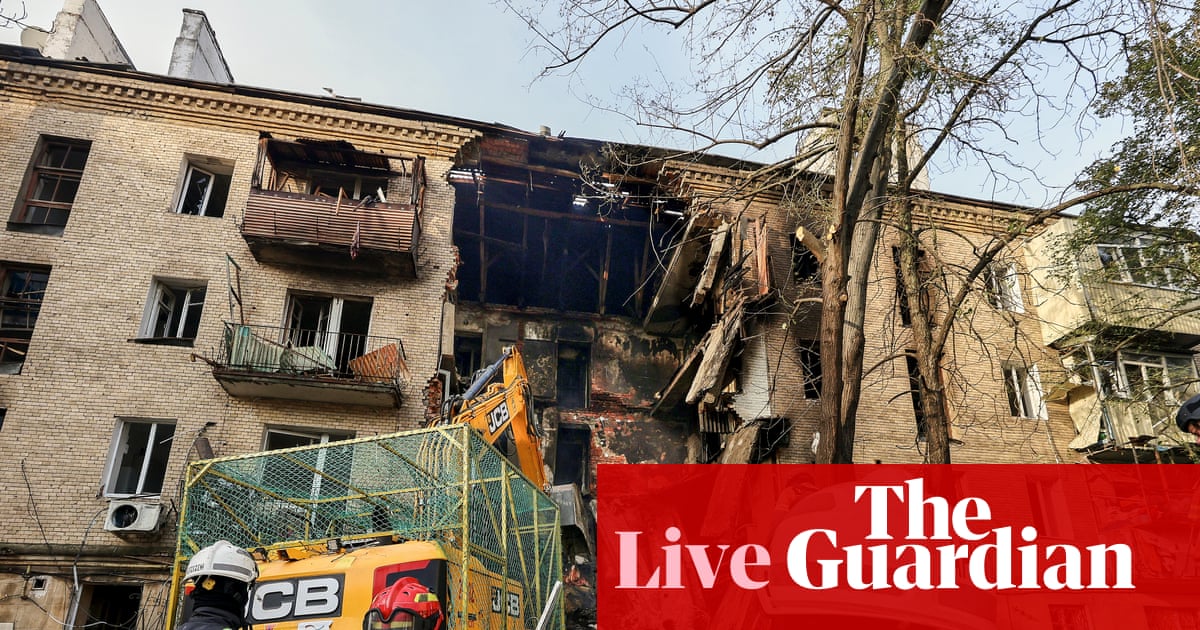
“An ordinary residential building was destroyed in Kharkiv; the rescue operation continued virtually all night as first responders searched for people under the rubble. Four people were killed in this strike on the building in Kharkiv. My condolences to all their families and loved ones. In Kharkiv alone, 41 people were injured in just one evening.
There was also a particularly vile ballistic missile strike on Kyiv – five missiles that hit civilian infrastructure. Unfortunately, we received no early warning from our partners about this strike. Intelligence on Russian ballistic missile launches helps save lives, and this is one of the most critical issues. This is precisely what helps prevent people from being killed – when there is an early warning about ballistic missiles.”
Zelenskyy also says Ukraine has halted strikes on Russian oil refineries for two days after Trump’s ceasefire announcement, but “Russia did not heed the American president.”
“During this time, the Russians have attacked both our energy facilities and our critical infrastructure, sending absolutely clear signals that they have no intention of refraining from strikes on Ukraine. Nineteen regions of our country have come under attack in these two days alone.
Our position remains unchanged: Ukraine is ready for reciprocal steps toward de-escalation, and effective pressure on Russia is needed to make de-escalation happen. Wars end when the aggressor realizes that it cannot prolong the war.
Global pressure on Russia contributes to exactly that – bringing peace closer. But direct or indirect support for Russia, slowing down assistance to Ukraine, and making it harder to protect lives against ballistic missiles will certainly not help bring peace. Everyone needs peace. A strong America, a strong Europe, and strong partners are needed.”
And, on that note, we will be closing the blog for today.
-
Ukraine’s president Volodymyr Zelenskyy said Russia “did not heed” Trump’s call for ceasefire as he worried that Ukraine had “no early warning” before a major strike on Kyiv (11:42, 17:22).
-
But despite frantic speculations, Ukraine’s foreign minister Andrii Sybiha insisted that Kyiv’s intelligence cooperation with the US “continued” (11:37).
-
His comments came as several European foreign ministers lined up to offer their support for Kyiv, despite growing attacks from Russia and political pressure from the US president, Donald Trump (10:22, 10:25, 10:29, 10:31, 10:34, 10:36, 10:43).
Elsewhere,
-
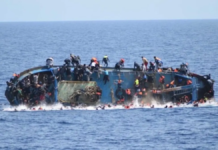
11 people are missing after a drone attack near the Bulgarian cost sunk a merchant vessel and damaged another (9:58, 10:14), a week after a very similar incident, prompting the Bulgarian government to summon Russia’s top diplomat in the country.
-
French trade unions and student groups say that almost half a million people took part in today’s protests across the country, on the fifth day of public mobilisation on the issue (17:22), with the Swedish climate activist Greta Thunberg also joining the movement (15:45).
-
Pope Leo has been admitted to hospital in Rome for an operation to remove a small growth from his lung, a discovery a top Vatican cardinal said had come “like a bolt out of the blue” (13:08).
-
The US ambassador to Greece, Kimberly Guilfoyle, has been asked to resign after several controversies surrounding her conduct were reported by the US press (16:03, 16:23).
If you have any tips, comments or suggestions, email me at jakub.krupa@theguardian.com.
I am also on Bluesky at @jakubkrupa.bsky.social and on X at @jakubkrupa.
The (outgoing, it seems) US ambassador to Greece Kimberly Guilfoyle has responded to the White House’s briefing that she had been asked to resign from the post (16:03, 16:23).
In a very lengthy post on X, she (tl;dr) insisted all allegations against her were “false” and that she would “vigorously defend” her name – but she’s going anyway.
You can read it in full here:
“Serving as the United States Ambassador to Greece has been the honor of a lifetime. I will forever be grateful to President Donald J. Trump and Secretary of State Marco Rubio for entrusting me with the extraordinary privilege of representing the greatest country in the history of the world.
From my first day as Ambassador, I have worked tirelessly to advance President Trump’s America First agenda, strengthen our strategic alliance with Greece, and deliver meaningful victories for the American people.
During my tenure, we have helped secure historic agreements to expand American liquefied natural gas exports to Europe, advanced the Vertical Corridor to reduce Europe’s dependence on Russian energy, strengthened our defense and security partnership with a critical NATO ally, and expanded opportunities for American businesses and investment throughout the region.
I am especially proud of the role our Embassy has played in strengthening American energy dominance, advancing economic cooperation, and ensuring that the United States remains the indispensable leader in Southeast Europe.
These accomplishments are a testament to President Trump’s bold leadership, Secretary Rubio’s commitment to American diplomacy, and the extraordinary men and women who serve our country every day.
I also want to address the recent allegations against me. These allegations are false, and I intend to vigorously defend my name, my reputation, and my integrity. I have dedicated my professional life to fighting for justice, standing up for what is right, and defending the values that make America exceptional. I will not allow false accusations to define my decades of public service.
My gratitude and respect for President Trump and Secretary Rubio remain unwavering. I am proud of what we accomplished together, and I will always be a loyal supporter of President Trump and his mission to Make America Great Again.
While my time as Ambassador may be coming to an end, my commitment to President Trump, the America First movement, and the country I love will never end. It has been the honor of my lifetime to serve the United States of America. My deepest heartfelt appreciation to the people of Greece for their hospitality, partnership, and welcoming me with open arms. God bless President Trump, God bless our incredible diplomats and service members, and God bless the United States of America.”
Ukraine received no early warning from its partners about a Russian ballistic missile strike on Kyiv in which five missiles hit civilian infrastructure, Volodymyr Zelenskyy said on Tuesday.
The Ukrainian president described the attack on Monday as “particularly vile”. He emphasised that receiving intelligence from Ukraine’s western allies “helps saves lives, and this is one of the most critical issues”.
“This is precisely what helps prevent people from being killed – when there is an early warning about ballistic missiles,” he wrote on social media. He did not apportion blame for the lack of warning, calling it unfortunate.
US officials made explicit threats over the weekend to their Ukrainian counterparts that the Trump administration was on the brink of halting intelligence sharing with Kyiv.
However, speaking in Warsaw, Ukraine’s foreign minister, Andrii Sybiha, indicated that cooperation was continuing and said the lack of warning over the Kyiv attack was due to a “special type” of Russian weaponry.
Donald Trump has demanded that Ukraine stop attacking Russian oil refineries and has blamed Zelenskyy for the rise in fuel prices in the US. On Friday the US president announced a deal with Vladimir Putin to import diesel from Russia, dropping previous US sanctions.
He also claimed Moscow and Kyiv had agreed an “energy ceasefire”, something Zelenskyy described as “news to me”. On Tuesday Ukraine’s leader said his military had not struck Russian oil refineries or energy facilities in the two days following Trump’s Sunday announcement.
The Kremlin, however, had ignored the “ceasefire” and continued to bomb Ukraine’s energy infrastructure as before, with multiple attacks, he said. “Russia did not heed the president … The Russians sent absolutely clear signals that they have no intention of refraining from strikes,” he noted.
Ukrainian commanders say American intelligence is not needed to identify targets for deep strikes on Russia, with oil refineries marked on Google Maps. But they say it plays a crucial role in warning of Russian ballistic missile launches, and the takeoff of long-range bomber aircraft.
French trade unions and student groups say that almost half a million people – 480,000 to be precise – took part in today’s protests across the country, with some police tensions reported on the sidelines of the main march in Paris.
in Madrid
The Spanish lawyer Miriam González Durántez has launched a new liberal, centrist party, vowing to clean up politics and give voters an alternative to the dominant socialist and conservative parties as the country gears up for next month’s snap general election.
González Durántez, an ex-EU adviser who is married to the former British deputy prime minister Nick Clegg, says her new party, Democracia21, will offer a modern, transparent kind of politics that “doesn’t feed on fear, insults or nostalgia”.
Democracia21’s manifesto accuses both the ruling Spanish Socialist Workers’ party (PSOE) and the rightwing People’s party (PP) of squandering decades of government for short-term political ends.
“In the meantime: housing became unaffordable, young people left, bureaucracy grew like a religion, and bickering took the place of governing,” it says.
“Old-school politics turned every problem into a narrative – and every solution into an electoral threat.”
Rob Cameron
A same-sex couple are suing authorities in Slovakia for refusing to register their Austrian marriage, testing whether a landmark EU court ruling can turn recognition abroad into legal security at home.
Their fight exposes a clash between European obligations and national restrictions – and what that means for LGBTQ+ people living under Robert Fico’s populist-nationalist government.
Ivan Novotný, 31, and Metod Špaček, 51, married in Austria in 2020, but six years on, their marital status at home remains unrecognised.
There is no same-sex marriage in Slovakia, a socially conservative, predominantly Catholic country; neither is there any form of civil partnership.
But Novotný and Špaček, who are both lawyers and former diplomats, are not asking for that. They want the Slovakian authorities to recognise a marriage that was concluded legally in another EU country – something the bloc’s top court has said is mandatory for all EU members.
The couple argue they are on solid legal ground after a ruling by the EU’s highest court in November 2025 in response to a case brought by a Polish same-sex couple who had married in Berlin.
Our colleagues over in the US have more on this breaking story after the White House confirmed Kimberly Guilfoyle has been asked to resign as US ambassador to Greece.
Oh, that’s interesting.
During Marco Rubio’s recent visit to Greece, we extensively covered the various controversies surrounding the US ambassador to the country, Kimberly Guilfoyle.
In a series of stories, the Wall Street Journal has reported questionable conduct by Guilfoyle, including an alleged threat to a host country official, accepting improper gifts and services and offering to use her influence inside the administration in return for the payment of a large credit card bill.
US president Donald Trump had said on Monday that he was considering firing Guilfoyle, telling reporters: “We’re not happy.“
Well: the White House has just confirmed she has been asked to resign from the post.
“We have asked Ambassador Guilfoyle to resign,” said White House new press secretary Katie Zacharia. “She has been a wonderful asset to the team, and we wish her well.“
The news immediately made the splash on various Greek news websites, including Kathimerini.
Elsewhere, the Swedish climate activist Greta Thunberg has joined demonstrating high school students in France as the country braced for another day of nationwide protests over chronic teacher shortages, overcrowded classes and crumbling buildings.
“Young people are not being included in the conversation,” Thunberg, 23, who became famous as a teenager through school strikes demanding action on the climate crisis, told reporters outside the Lycée Paul Éluard in the Paris suburb of Saint-Denis.
As lawyers in their robes formed a human chain to protect pupils after multiple accusations of police brutality, she added: “Our future is being stolen from us and, as we have seen here, schools are not getting the investment they need.”
Now in their third week, the protests – backed by unionists, some teachers and radical leftwing opposition politicians – have shaken a government caught between calls for urgent public investment and pressure to reduce France’s ballooning deficit and debt.
Finland’s prime minister Petteri Orpo said that US president Donald Trump’s recently announced agreement for Russia to release large amounts of diesel onto world markets was a “huge disappointment”.
Orpo told reporters that a “direct deal with Putin” was “against everything we have done together and together with the United States through the coalition of the willing and in supporting Ukraine.”
He added that such a deal “funds Putin’s war” against Ukraine.
The Finnish prime minister urged Europe and Ukraine’s supporters to “say this forcefully to Trump”.
“Continuing support for Ukraine is now more essential than ever,” he added.
The president of the European Commission, Ursula von der Leyen, called for tougher measures to curb illegal migration in a letter sent to the 27 leaders of the EU member countries ahead of a discussion on the topic scheduled for Friday.
She said this summer’s huge border crossing of migrants from Morocco into Ceuta – in which about 140 people are estimated to have died – showed just how quickly “sudden massive arrivals can put pressure on the EU’s external borders”.
Her proposals include broadening the powers of the EU’s border agency, Frontex, including a new “Quick Reaction Force for crisis deployment”, and increasing the bloc’s return rate.
The European Parliament in June approved an overhaul of migration policy aimed at speeding up deportations and allowing member states to establish centres abroad, in what critics warned could weaken safeguards for asylum seekers.
Donald Trump’s plans to import diesel from Russia drew swift condemnation from Ukraine and other (traditional) allies, with European officials fearing it undermined transatlantic unity at a time when Moscow is escalating its attacks on Ukrainian energy infrastructure ahead of another gruelling winter.
But speaking to the AFP news agency on Tuesday, the EU economy commissioner, Valdis Dombrovskis, said that Russian diesel sales recently authorised by the US were unlikely to significantly move the price of the commodity, which has spiked since the start of the US-Israel war on Iran in late February. Dombrovskis said:
As regards specifically this question on Russian diesel exports, if we look at the volumes, they are not of any macroeconomic significance, and frankly, there are strong doubts whether Russia is even able to supply those volumes, and according also to US quality standards, those are big question marks.
Nato’s secretary general Mark Rutte said that Nato will “adjust” as needed to the evolving nature of threats it faces after two merchant ships were once again struck off the Bulgarian coast (9:58).
Eleven people are still missing after one of the ships sank.
Responding to the incident, Nato’s Rutte said:
“I spoke with Bulgarian PM @RumenRadevPM about the latest attacks on commercial shipping in the Black Sea. Nato will continue to work closely with our Allies in the Black Sea.
We have already strengthened our posture along the eastern flank and will continue to monitor the security environment, adjusting our deterrence and defence posture as needed.”
German foreign minister Johann Wadephul also condemned the incident, saying:
“I condemn the appalling attacks on merchant vessels in the #BlackSea. They are an attack on international shipping & on global food security, depriving the most vulnerable of much-needed supplies. Our thoughts are with the victims – and our solidarity with our ally #Bulgaria 🇧🇬”
Pope Leo has left the Vatican in a convoy of vehicles ahead of his expected admission to Rome’s Gemelli hospital for surgery to remove a small growth found on one of his lungs, the first major health issue of his 17-month tenure, Reuters reported.
The surgery is expected to take place later today, and all of Pope Leo’s public events have been cancelled until next Tuesday.
Oh, actually, one more bit of news from elsewhere: the Spanish royals are now visiting Ceuta.
King Felipe VI and Queen Letizia are on a diplomatically sensitive visit to the North African enclave, their first trip there since 2007, just months after a migration border crisis there in late July.
I will keep one eye on this, and you can watch the scenes live here:
Let’s go back to Ukraine and related security news.
German police detained a woman in Berlin and a man over a fire that struck a Polish Starlink internet station in September, Polish broadcaster RMF FM reported Tuesday, citing unnamed sources.
According to RMF FM, a Polish broadcaster, the woman may have been acting as a driver for the two men, and “assisted with the logistics of the sabotage operation,” AFP reported.
Polish prime minister Donald Tusk said on Monday that Germany detained two Turkish men suspected of setting fire to the station in central Poland, calling it “another act of hybrid warfare”.
The fire at the Starlink station in central Poland broke out overnight in late September, prompting concerns about sabotage.
Swedish parliament speaker Andreas Norlén says he will put Andersson’s candidacy to lead a single-party government to test her support in parliament.
The vote will take place on Thursday.
Andersson is likely to fail as her potential coalition partners are not expected to support a single-party government – in fact, Norlén acknowledged that Andersson’s talks to date had not even focused on this option.
If she fails, Norlén will consult with party leaders on next steps and who should be given a chance to form the next government, but he wants to see some urgency in this process.
He doesn’t rule out giving the task to another party leader after that.
If a PM candidate(s) put forward by the speaker get(s) rejected four times, it triggers a snap election, and so Norlén says that moving forward on this timeline – making the first step – should focus some minds and help drive the process further.
As promised, there is also an update from Sweden, where the Social Democrats leader Magdalena Andersson has said that despite some progress, there are still no “condition” in place to confirm a new left-leaning government.
She reported back to the parliament’s speaker on the talks, and it’s up to him to decide what’s next and whether she should continue the exploratory talks, she said, as reported by SVT.
She says further progress requires parties to be “constructive” and focus on “solving issues” and what the new government can do.
“It’s a complicated parliamentary situation … after the election … and I expect it will be some time before we have a new government,” she said in English.
Parliamentary speaker Andreas Norlén will say what he wants to do next at his press conference in about 15 minutes.
Ukraine’s Volodymyr Zelenskyy also responded to the Russian attacks on Ukraine overnight, saying Moscow has used “more than a hundred different weapons,” from “jet-powered drones, loitering munitions and ballistic missiles.”
And, interestingly, he pointedly says Ukraine had “no early warning” on one of the strikes in Kyiv.
“An ordinary residential building was destroyed in Kharkiv; the rescue operation continued virtually all night as first responders searched for people under the rubble. Four people were killed in this strike on the building in Kharkiv. My condolences to all their families and loved ones. In Kharkiv alone, 41 people were injured in just one evening.
There was also a particularly vile ballistic missile strike on Kyiv – five missiles that hit civilian infrastructure. Unfortunately, we received no early warning from our partners about this strike. Intelligence on Russian ballistic missile launches helps save lives, and this is one of the most critical issues. This is precisely what helps prevent people from being killed – when there is an early warning about ballistic missiles.”
Zelenskyy also says Ukraine has halted strikes on Russian oil refineries for two days after Trump’s ceasefire announcement, but “Russia did not heed the American president.”
“During this time, the Russians have attacked both our energy facilities and our critical infrastructure, sending absolutely clear signals that they have no intention of refraining from strikes on Ukraine. Nineteen regions of our country have come under attack in these two days alone.
Our position remains unchanged: Ukraine is ready for reciprocal steps toward de-escalation, and effective pressure on Russia is needed to make de-escalation happen. Wars end when the aggressor realizes that it cannot prolong the war.
Global pressure on Russia contributes to exactly that – bringing peace closer. But direct or indirect support for Russia, slowing down assistance to Ukraine, and making it harder to protect lives against ballistic missiles will certainly not help bring peace. Everyone needs peace. A strong America, a strong Europe, and strong partners are needed.”
Disclaimer : This story is auto aggregated by a computer programme and has not been created or edited by DOWNTHENEWS. Publisher: theguardian.com