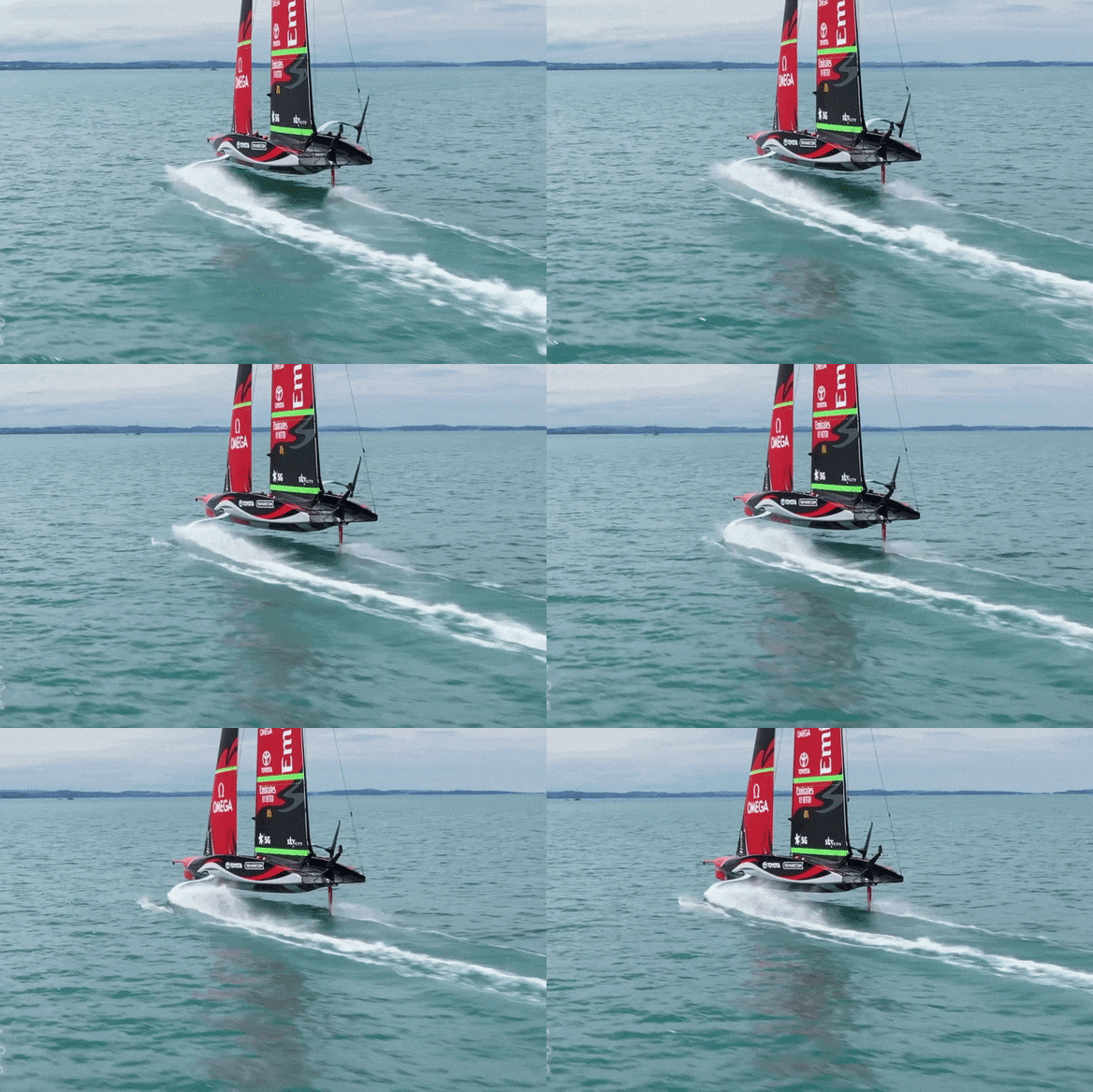

If the last time you watched an America’s Cup was in 1983 when Australia II broke the longest winning streak in sports history, you’ll likely remember the secret weapon that helped them do so.
The boat’s winged keel was so innovative it had to be hidden under green drapes whenever out of the water, and even controversial enough that its legality was questioned by the race’s host, the New York Yacht Club whose members watched on in horror as Australia won their Cup, breaking America’s 132-year dominance.
But that same secret weapon is now considered to be so antiquated that none of the modern-day fleet use keels. In fact, most of the sailors spend as much time as possible out of the water.
The technological advancements in the America’s Cup have been so drastic in the four decades since Australia last won they’d be unrecognisable to anyone who hasn’t been paying attention since.
“It’s huge now, the whole program,” said sailor and writer David Salter. “It’s not blokes in boxer shorts just going out for a sail.”
When the America’s Cup began in 1851, the boats were called schooners, had several masts and were at least 30 metres long. When John Bertrand skippered the Ben Lexcen-designed Australia II to victory at Newport Rhode Island, north of New York, the fleet featured much smaller aluminium yachts but at least resembled the original schooners.
The mechanical advancements have been so fast and frequent since, that multi-hull yachts have been introduced and then abandoned again, leaving us with the AC75 monohulls.
The AC75s are carbonfiber monohulls with hydrofoils which lift the boats off the water, aided by a sail more reminiscent of an aeroplane wing than the cotton schooner sails.
“There’s as much aerodynamics into the design these days as there is naval architecture,” Salter said.
Teams more closely resemble astronauts than the sailors of yesteryear. Each wear helmets with mouthpieces to communicate, and none will be hoisting sails themselves.
“That’s the way this sort of high-end sailing is going. It’s what’s called stored power batteries or hydraulic systems. Whereas in the old days it was human grunt,” Salter said.
“The cup is now so technological that it’s detached from the principles of sailing that 99.9 per cent of the people who sail as a hobby would understand.
“It is so rarefied, so complex and so incredibly expensive that it has no connection to normal sailing… It’s a completely different world now.”
While the Australia II crew were paid just $12 a day, modern crew will be far more expensive and harder to recruit as they entertain contracts from teams around the world. Salter estimates a team would need a budget of at least $150 million to cover the yacht and teams needed to be competitive in the modern cup.
For those now eager to tune in to Australia’s challenge at the America’s Cup next year, Salter has a condensed preview: “Boats sitting on one foil roaring back and forth for 20 minutes covered with sponsor’s logos.”
From our partners
Disclaimer : This story is auto aggregated by a computer programme and has not been created or edited by DOWNTHENEWS. Publisher: www.smh.com.au