
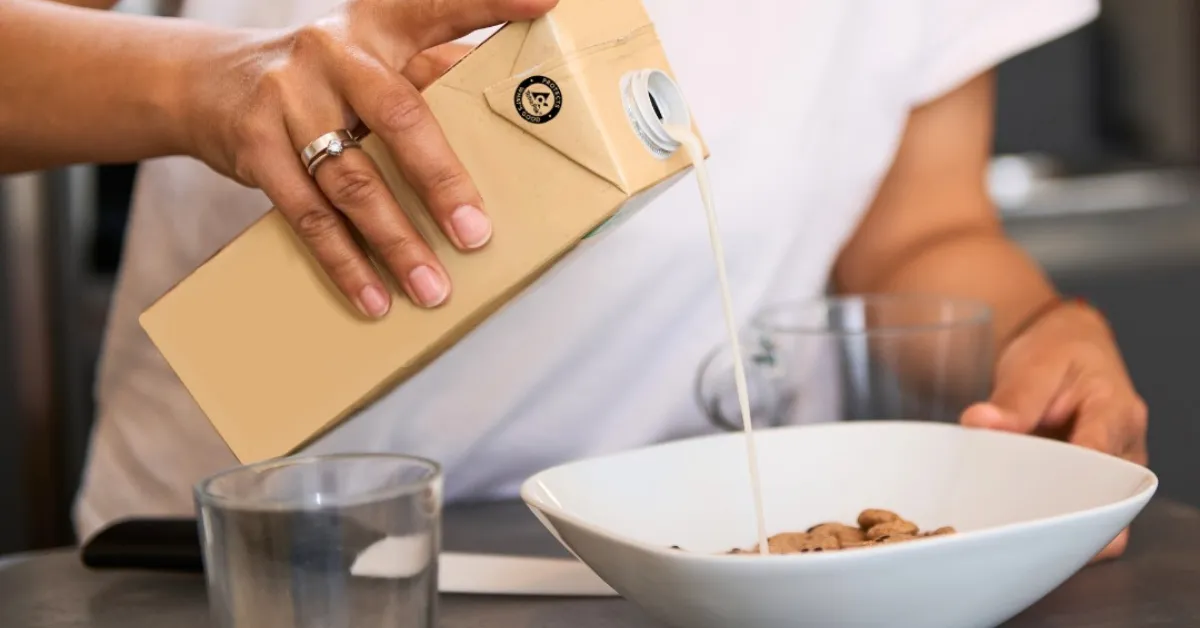
On a long train journey from Delhi to Jaipur, Meera reaches into her bag and pulls out a small carton of milk for her son. They have been on the train for hours. The pantry car has stopped coming by, the summer heat has settled in, and there is no fridge anywhere close.
She looks at the pack for a second before opening it.
“How is this still safe to drink?” she wonders.
Many parents have paused over a carton of milk like this. Maybe in a supermarket aisle. Maybe while packing a school bag in the morning. Maybe before a long trip. The thought is simple: if this milk has been outside the fridge, how is it still okay?
Most of us grew up seeing milk handled in one familiar way. It came home in a packet or vessel, was boiled, cooled, and then kept in the fridge. So a sealed carton sitting on a shelf can feel strange, even when it is safe.
That is where the questions begin. Does it contain preservatives? Is it overly processed? Can milk really stay safe without refrigeration? And if it can, what exactly makes that possible?
These doubts make sense, especially in a country where boiling milk has long been associated with care, hygiene, and trust. But behind the carton is a process rooted less in additives and more in food science — one designed to keep milk safe while reducing exposure to contamination.
The questions we all have about carton milk
Meera’s hesitation is not unusual. Many people still look at carton milk and wonder if it is the same milk they are used to drinking.
According to Saurabh Kumar Sinha, Marketing Director at Tetra Pak South Asia, that is one of the most common misunderstandings.
“In reality, it is the same milk, simply handled in a way that prioritises safety and consistency through carefully controlled processes and packaging,” he tells The Better India.
The doubt often comes from what we are used to at home. For many of us, milk has always followed a familiar routine: bring it home, boil it, cool it, and then store it. That one step of boiling feels like care. It feels like safety.
“This habit is deeply rooted in tradition and care, especially when it comes to feeding families,” Sinha explains.
So when milk comes in a carton and can stay outside the fridge before it is opened, it can feel unfamiliar at first. But food scientists say the long shelf life does not come from preservatives. It comes from two things working together: heating the milk at a very high temperature for a few seconds and then packing it in a sterile carton that keeps air and germs out.
What actually happens to your milk
At the centre of carton milk production is a process called Ultra High Temperature or UHT treatment.
Think of it like this: the milk is given a very quick, very strong heat treatment. It is heated to above 135 to 140°C, but only for a few seconds, and then cooled down fast.
That short burst of heat helps remove harmful microorganisms without keeping the milk on the stove for a long time. After this, the milk is packed in sterile packaging, so germs do not get back in. That is what helps the milk stay safe and stable before the carton is opened.
/filters:format(webp)/english-betterindia/media/media_files/2026/05/27/tetra-pak-2026-05-27-13-13-46.png)
Photograph: (TBI Team)
Sinha explains it with a comparison many households will recognise. “The UHT milk is heated to a much higher temperature than home boiling, usually around 135 to 140°C — but only for a few seconds,” he says.
The point is the timing. The milk is heated much more strongly, but for a much shorter period. So the exposure to heat is brief. “This short, high-temperature step makes the milk safe while preserving its natural qualities,” he adds.
There are different ways of doing this. In some systems, the milk comes into direct contact with steam under controlled conditions before being cooled quickly. In others, heat is passed through specialised equipment without direct contact with the milk.
The machinery may be complex, but the purpose is simple: bring down harmful microbes and keep the milk safe without keeping it on heat for a long time.
How the packaging keeps it protected
Heating milk is only one part of the process.
Once the milk has been heated and cooled, it is packed in a completely clean and controlled space. This is called an aseptic environment.
In simple terms, the milk, the machines, and the inside of the carton are all sterilised before the milk is filled and sealed. This step is important because milk can become unsafe again if it comes in contact with air, germs, or dirty surfaces after heating. The aseptic process helps prevent that from happening.
/filters:format(webp)/english-betterindia/media/media_files/2026/05/27/tetra-pak-2026-05-27-13-18-50.png)
“The packaging is just as important as the process,” says Sinha. “Immediately after heating, the milk is packed in specialised aseptic packaging in a completely sealed environment, so it’s protected from air and contaminants.”
The cartons themselves are made with multiple protective layers that act as barriers against light, oxygen, and external contamination. This is what allows unopened milk to remain stable at room temperature without preservatives.
“When it comes to UHT milk in cartons, no preservatives are needed,” Sinha says. “The longer shelf life comes from the combination of heat treatment and airtight packaging, which helps protect the milk naturally.”
For a parent or a working person, all of this may come down to one simple thing: a pack of milk that can sit in a kitchen cabinet, travel in a bag, or be kept for later without needing a fridge before it is opened.
Why it does not need refrigeration before opening
For most people, the first thing they notice about carton milk is the convenience. You can carry it, store it, and open it when needed.
But that convenience comes from how the milk is processed and packed.
Juhi Gupta, Sustainability Director at Tetra Pak South Asia, says this matters most on days when a fridge is out of reach. “In a village with long power cuts, on a train journey, in a hostel room, or in a rented flat where there is no refrigerator, an unopened carton of milk can still be stored and used when needed.
There are many people who depend on ambient milk cartons because they don’t have refrigeration or the time to buy fresh milk every morning,” she explains.
The same idea also applies before the milk reaches a shop or a home. Since unopened UHT milk does not need to be kept cold all the time, it does not depend as heavily on refrigerated storage and transport.
“You don’t need refrigerated trucks for transportation,” Gupta explains. “That reduces energy consumption during storage and transport.”
/filters:format(webp)/english-betterindia/media/media_files/2026/05/27/tetra-pak-2026-05-27-13-14-56.png)
Gupta says the carton itself also helps. The packs are light and can be stacked well, so more cartons can fit into one vehicle. This can reduce the number of trips needed. It also allows milk to travel longer distances without spoiling before it reaches the people who need it.
“Milk may be produced in one place but reach areas far away from where it was packaged,” Gupta adds.
For the person buying it, all of this shows up in simple, everyday ways: milk kept aside for a busy week, carried on a journey, used during a power cut, or stored for a day when stepping out to buy fresh milk is difficult.
“It is easy to carry, easy to store, and people can feel reassured that the milk is unlikely to spoil because of these conditions,” Gupta adds.
Myths to watch out for
Even as carton milk becomes more common in Indian households, several misconceptions continue to shape public perception. Experts say many of these myths come from the same place: people are unfamiliar with what happens before the pack reaches them.
/english-betterindia/media/post_attachments/c0a9c1a0-2a5.png)
Myth: Carton milk contains preservatives.
Fact: Experts say UHT treatment and sterile packaging remove the need for preservatives. The shelf life comes from heat treatment and airtight aseptic packaging.
Myth: Milk that lasts longer must be heavily processed.
Fact:The process mainly involves heating the milk briefly at very high temperatures to reduce harmful microbes, followed by sealed packaging designed to prevent contamination.
Myth: Milk in cartons is different from regular milk.
Fact: “It is the same milk, simply handled in a way that prioritises safety and consistency,” Sinha says.
Myth: Safe milk must always be refrigerated.
Fact: Unopened UHT milk stays stable at room temperature, within the stated shelf life, because it has been packed in a sterile environment. It needs refrigeration only after it is opened.
Myth: Carton milk is only for travel or emergencies.
Fact: Many consumers initially choose carton milk for travel or emergencies before gradually using it more often because it is easy to store and use.
Experts also point out that packaging is often judged without considering its role in preventing food spoilage.
“What would happen if there were no packaging?” Gupta asks. “Food waste would be significantly higher. Packaging plays an important role in extending shelf-life, thereby also increasing the reach of food beyond the immediate neighbouring areas.”
She adds that disposal matters too. The pack has to enter the right recycling stream after use. “It is also the responsibility of citizens to dispose of packaging correctly so it enters the right recycling stream,” she says.
From doubt to a more informed choice
Back on the train, Meera twists open the carton and pours the milk into a paper cup for her son.
This time, the pause is shorter. Not because the questions disappeared, but because the answers became clearer.
The long shelf life does not come from a hidden list of preservatives. It comes from heat, sterile packing, and a sealed carton that keeps the milk protected until it is opened.
/filters:format(webp)/english-betterindia/media/media_files/2026/05/27/tetra-pak-2026-05-27-13-12-34.png)
For many families, carton milk may still take some getting used to. Boiling milk at home is a habit built over years, and habits connected to children and food are hard to change.
But once you understand what happens before the carton reaches you, the doubt starts to ease.
The question changes from “How can this be safe?” to “What has been done to keep it safe?”
And sometimes, that answer is enough. It lets a parent open a carton on a hot train, pour milk into a cup, and feel sure about what they are giving their child.
This article has been published in partnership with Tetra Pak.
Disclaimer : This story is auto aggregated by a computer programme and has not been created or edited by DOWNTHENEWS. Publisher: thebetterindia.com



