
Exiled Russian master Andrey Zvyagintsev is continuing his brilliant comeback since a life-threatening bout of COVID in 2021.
One of the world’s greatest living filmmakers, best known for The Return, Leviathan and Loveless, was in a medically induced coma for two weeks then spent 11 months paralysed and struggling to breathe in various hospitals.
Zvyagintsev.Edwina Pickles
Three weeks ago, Zvyagintsev’s first film since what he calls his rebirth, the gripping crime thriller Minotaur, won the Grand Prix at Cannes. On Sunday night, it claimed the $60,000 official competition prize for “audacious, cutting-edge and courageous” cinema at Sydney Film Festival.
A jury headed by Brazilian director Kleber Mendonça Filho (The Secret Agent) announced it had won the Sydney Film Prize on the closing night of the 73rd festival at the State Theatre.
“This is a film about something which unfortunately never go out of style, which is power used to crush people,” the jury said. “And it’s all done in a way that feels strongly Hitchcockian [and] strongly cinematic.”
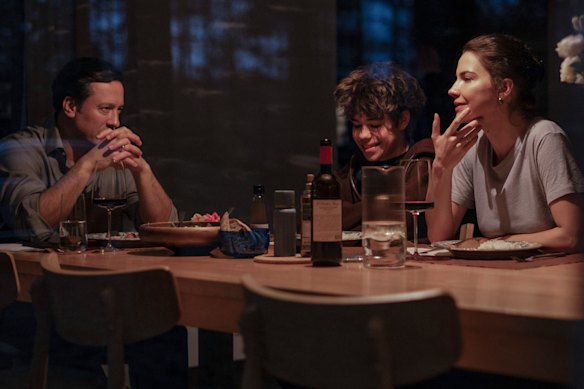
Set against the backdrop of Russia’s invasion of Ukraine, Minotaur is about a wealthy Russian businessman (Dmitriy Mazurov) who is under pressure to lay off staff and discovers his wife (Iris Lebedeva) is having an affair as Russian President Vladimir Putin launches a “special military operation” in Ukraine in 2022.
In a modern take on the Greek minotaur myth, the businessman has to nominate 14 staff members who will be sent to the front line.
France-based Zvyagintsev, 62, has made an absorbing film that delves into the dark forces operating in Russian society, including corruption, obnoxious wealth, the sacrifice of civilian lives in Ukraine and the abuse of authority.
After winning in Cannes, he urged Putin to start listening to the Russian people and end the “senseless” war in Ukraine.
“Except for the limbs torn off from your fellow citizens in the name of an illusory goal, except for the massacre of young people that the country needs to build life and the future – nothing good is on the horizon if we don’t stop,” Zvyagintsev wrote to the Russian president.
Putin’s longstanding spokesman Dmitry Peskov responded that the filmmaker did not have the right to call for peace because he had never condemned the “massacre in the Donbas” – the alleged violence against Russian speakers that disinformation campaigns had cited as a pretext for the invasion.
Zvyagintsev flew for two days to get to Sydney for the Australian premiere of Minotaur and a filmmaking masterclass.
“He felt as if he was flying to Mars but he got to Australia and he is really excited,” his interpreter said. “It’s an adventure.”
Minotaur was the standout in a competition that included the Cannes Palme d’Or (the top prize) winning Fjord, about the religious discrimination a couple faces when they move to Norway, and the Camera d’Or (best first film) winning Ben’Imana, a Rwandan drama set during the reconciliation hearings following the Tutsi genocide in 1994.
Minotaur will screen at the Melbourne International Film Festival in August. It is then expected to get a cinema release.
The winner of the $20,000 Australian documentary competition was Time and Tide, which has Chinese-Australian writer-director Vee Shi discovering family pain when he returns to his hometown in Fuqing. The jury called it a “transcendent work [that] delivered raw and authentic emotion”.
The Dendy Awards for Australian short films were dominated by Indigenous stories.
Siena Mayutu Wurmarri Stubbs’ Manutji (Catching Eyes), a romance set in an Aboriginal community, won best live action short; and Judith Pungarta Inkamala, Marjorie ‘Nunga’ Williams and Nelson Armstrong’s Our Choir Has Always Been Travelling, about the Ntaria Choir, won the Yoram Gross animation and the rising talent awards.
Cristabel Sved won the Rouben Mamoulian award for best Australian director for the romance Date 3; and production designers Angelina Kovacs and Sophie Ravant won best craft practitioner for Flesh Fruit, about the mysterious origin of a farmer’s new product.
The Sydney-UNESCO City of Film award went to writer-director Fadia Abboud (Here Out West, House of Gods). Banchi Hanuse’s Ceremony won the First Nations prize and Matasila Freshwater and Lachlan McLeod’s Sukundimi Walks Before Me claimed the Sustainable Futures award.
Unseasonably warm winter weather helped the festival attract solid audiences over 12 days.
Other festival highlights included Christopher Nelius’ documentary Whistle, a comic look at an American whistling competition; Anthony Maras’ Pressure, a tense drama about a brilliant meteorologist’s involvement in the D-Day landing; and Genevieve Clay-Smith’s warm-hearted family drama Boss Cat.
Two more standouts were from South Korea: Yeon Sang-ho’s hugely entertaining zombie action film Colony and Yoon Ga-eun’s The World Of Love, a tender comic drama about a spirited teenage girl whose buried trauma resurfaces.
Want more film stories? We’ve got you.
Must-see movies, interviews and all the latest from the world of film delivered to your inbox. Sign up for our Screening Room newsletter.
From our partners
Disclaimer : This story is auto aggregated by a computer programme and has not been created or edited by DOWNTHENEWS. Publisher: www.smh.com.au