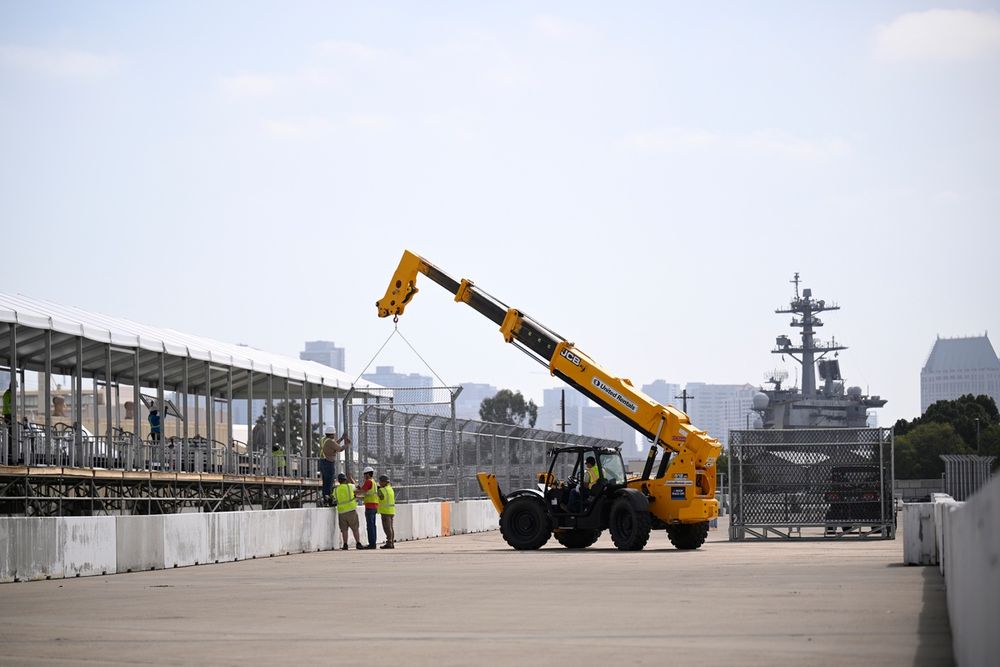
Preparing to race at a brand new track like the San Diego street course can be a daunting task when there isn’t any data or video to study so we dug into how the tools are built that help competitors to prepare. Driver-in-the-loop simulators are a key part of modern racing so we spoke with Keith Rodden at General Motors to learn more about the process for building out San Diego in their simulation tools.
Rodden is the chief engineer and technical director for the NASCAR programs at General Motors which has him leading various technical groups that support the Chevrolet teams competing in the NASCAR national series. Part of those responsibilities is that his group oversees a lot of the manufacturer testing and provides a variety of tools to their teams including the driver-in-the-loop simulators.
A track like San Diego is a unique challenge because they’re often starting from scratch when building their tools so the first item they need is a baseline map and fortunately NASCAR works with rFactor to give all the manufacturers a base map of the new course months before it is ready to race. rFactor will scan everything from the track surface to things like walls and other objects in the environment. Once GM has the files for the track, their work starts to fine tune all the details and in the early days that can be something as simple as looking at pictures or asking drivers that have been on site for media events to validate what was returned in the track scan.
Perfecting the sim to reflect the real-life conditions
San Diego track construction
Photo by: Orlando Ramirez Getty Images
In the meantime, NASCAR will work with Goodyear in order to measure grip for various surfaces of the track and they will share that data with GM so that they can add it to their sim tools. In order to validate that grip data, GM engineers will look at the surfaces at a course like San Diego and find similar surfaces at other street or road courses and adjust so that they’re a closer match to what they believe drivers will actually see and feel.
Much of this process goes down to very specific numbers but Rodden shared that they will also take feedback from drivers that are on site to do a bus tour or track walk and drivers will often hop off their media tour buses and drag their shoes on the surface to make sure that the grip data matches what they’re feeling.
“We need to get the visuals correct so that the drivers have markers. So just having folks get to the area ahead of time while they’re building the track and getting some good imagery of that is very important.”
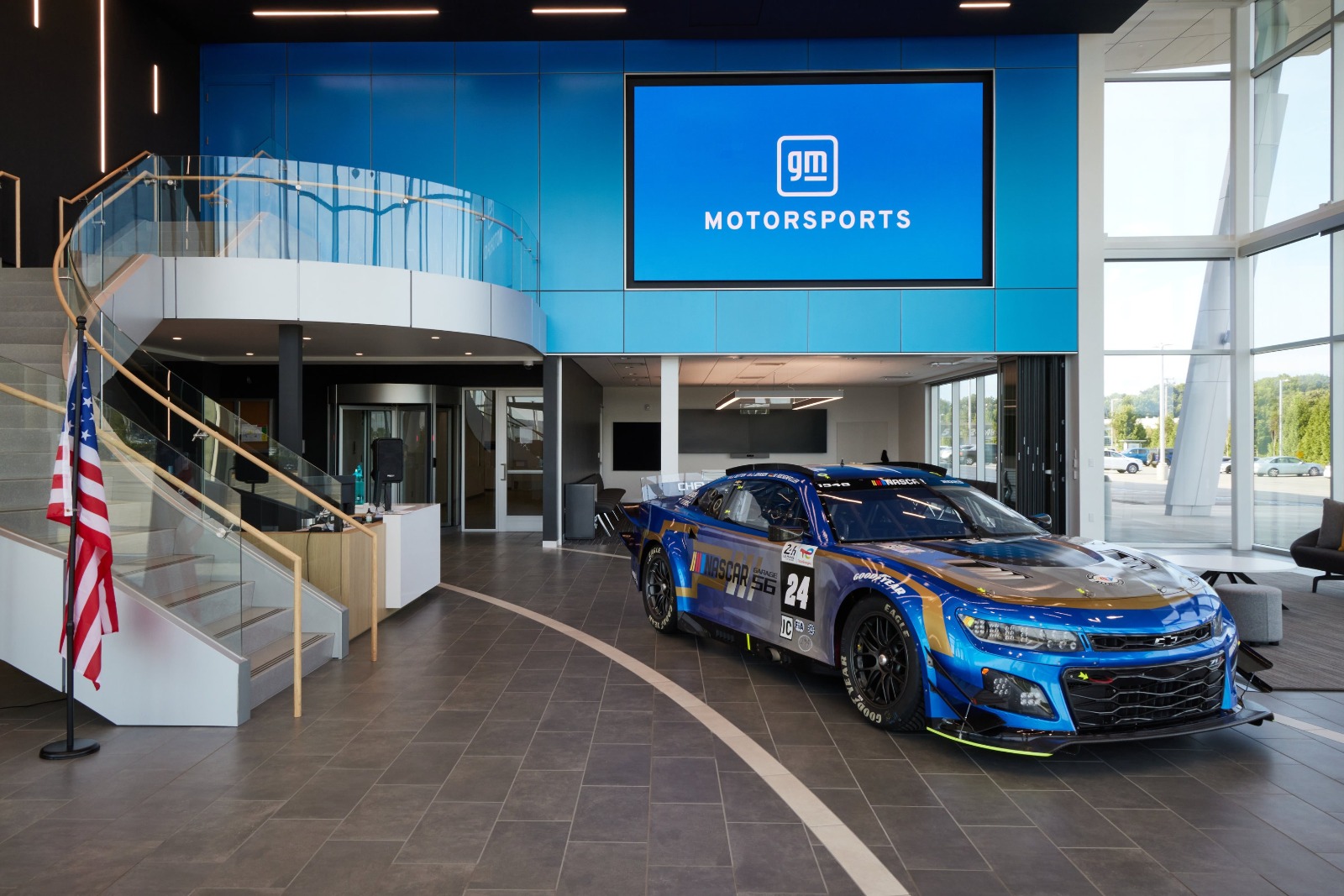
Once they have enough data, engineers at GM that have a driving background will start to drive the sim to verify that it makes sense and that there aren’t any gaps in the data that they’ve entered before they bring their partner teams and driver in to test it. They do a lot of testing and validation because many of the elements will be an educated estimate all the way down to the actual lap time according to Rodden.
“Just like Chicago street course, we have no idea what the lap time is going to be. We have a target, right? We might be plus or minus three seconds.”
Once the engineers are happy with what they see on their drives of the sim, GM will often bring in some of their development drivers as the next step of quality control and they’ll spend time driving and critiquing the track and settings in order to make further improvements. Once they feel like they’ve gotten the track to eight percent or better they will finally bring the teams to start testing it and get their feedback.
As these drivers start testing the sim and going back to the course, they’ll give additional feedback on what they see there. Rodden mentioned that drivers like Connor Zilisch spending time on site at San Diego filming for things like the NASCAR vs Navy film on Amazon Prime can offer valuable feedback to improve their simulation tools incrementally. All of these updates to the simulation tools are frequent all the way up until the race and as we spoke with Rodden just a week ahead of the San Diego race weekend he shared that they were getting ready to release another significant update to the sim tool to help drivers practice in the lead up to the race.
The development of the sim tool doesn’t end once the race is completed because GM will bring in two drivers immediately after the race is done to do a post-race simulation session. The goal of this session is to validate everything they have in the sim tool while the track is still fresh on the drivers minds. This allows them to make the tool significantly more accurate so they have a better model for any future races at the track.
Returning to a known track … but seven years later
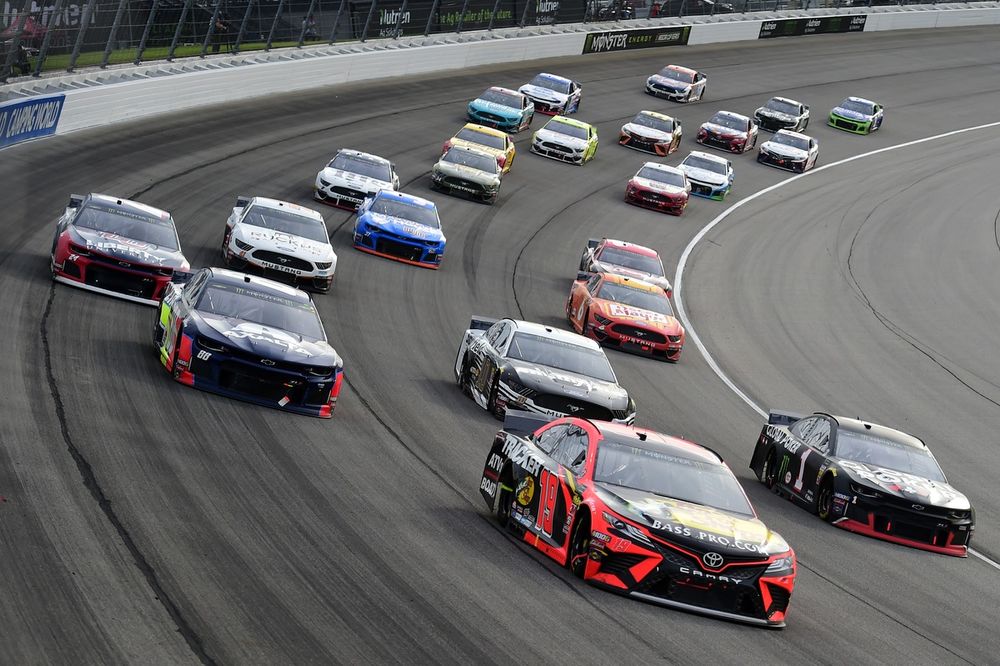
Restart
Photo by: Jared C. Tilton / Getty Images
Going back to Chicagoland is a different type of challenge because all the teams and manufacturers have some data on the track but it hasn’t been updated in years and the current generation of Cup cars have never seen that surface so it requires its own simulation build as well. They start with the existing data and scans that they have of the track and combine that with the car model for the Next Gen Cup car to give them a start. Rodden actually drove the sim himself and the initial settings were a bit on edge because of how they set the limiters in the shocks.
“I got to drive the Cup model around and with the limiters around the car, it was very, very rough. If you attacked the bumps in three and four wrong, you were spinning around very quickly. So we did quite a bit of work on it.”
NASCAR and Goodyear conducted a tire test in April and NASCAR brought rFactor in to do a rescan of the track and according to Rodden it confirmed to them that the track surface had become rougher as it has aged since NASCAR last ran there. This required adjustment to all of the models they had built and tested ahead of the tire test and the scan in order to make them more accurate for what they expect the drivers to experience.
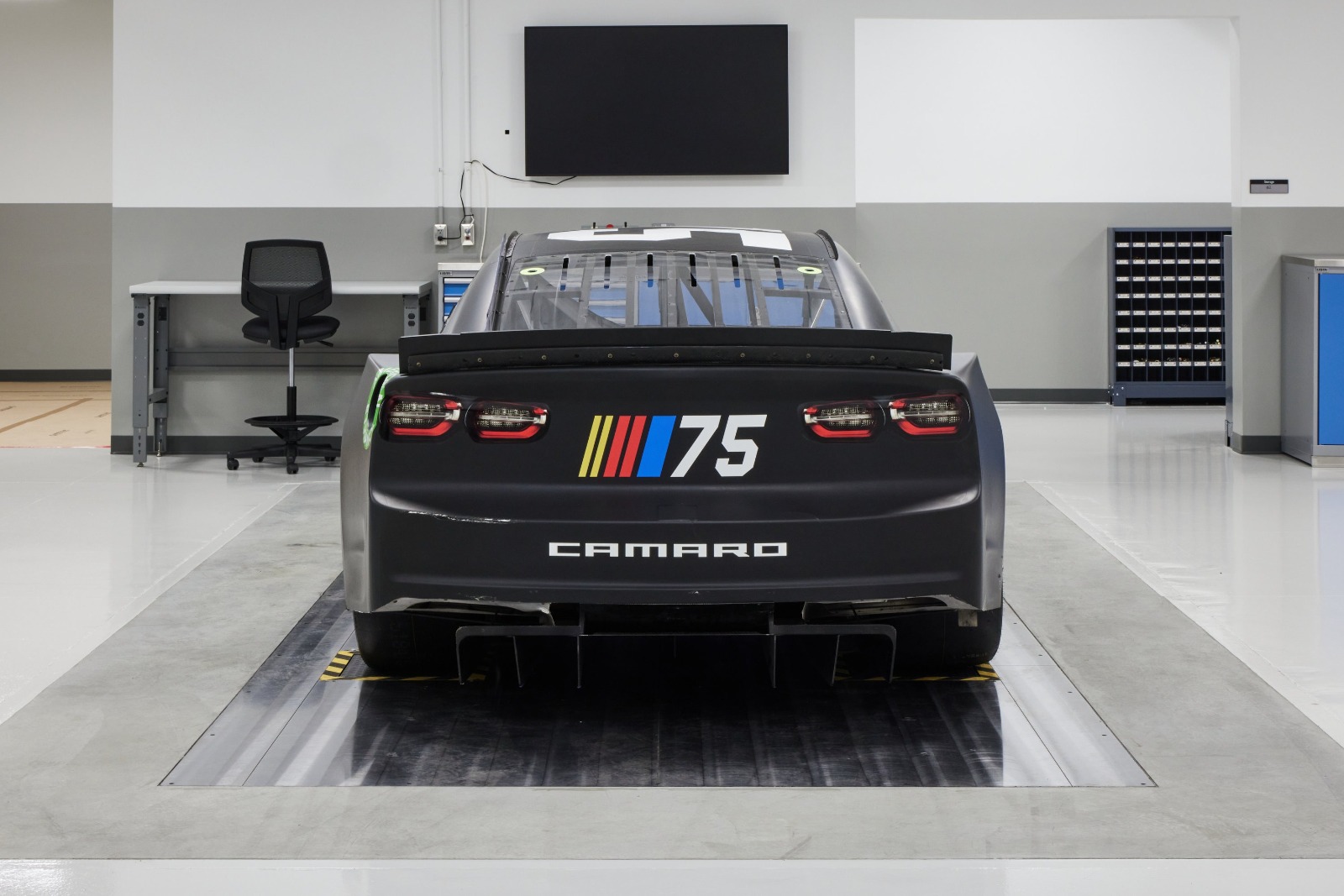
One of the benefits of having a fully functioning existing track like Chicagoland over a new track like San Diego is that they can complete these tires tests and scans well ahead of time along with having the ability to do wheelforce transducer tests which are happening this week. These types of tests give the manufacturers force and moment data on the cars. Wheelforce transducers can measure longitudinal force, lateral force, and normal force. They can also measure aligning moment, overturning moment, and rolling resistance moment. One of those sensors being mounted on each wheel allows manufacturers to capture the loads on the individual tires and build real world data that can be combined with some of the other telemetry in order to improve the tire models that are used for the simulation tools.
In addition to the data that is fed back into the tools, these real world tests also help them to validate things like shock settings, especially when it comes to the limiters on the Cup cars which are critical in maximizing aero. Getting those settings wrong can result in cars bottoming out and wrecking especially on changing surfaces like bumps according to Rodden.
“It sounds like there’s some danger for the shock limiters if you get it wrong. I think that honestly, turn two bumps, the tunnel bumps at Pocono aren’t so different than the tunnel bumps at Chicagoland.”
Rodden also shared their confirmation that the surface had gotten significantly rougher over the last few years and compared it to how Darlington has aged which leads him to believe that the track will be challenging for drivers.
“Chicagoland, it’s like you’re always turning. You’re barely straight there. You’re straight there just for a second in the middle of the back stretch.”
His observations from the tire test along with the history of the track lead him to believe that we’re likely to see good racing when Cup cars return there next month.
“It’s a fairly unique track, but I’m looking forward to it. I hope that it’s spread out, the groove widened out at the tire test. So I’m hoping that that continues for the race weekend.“
We want your opinion!
What would you like to see on Motorsport.com?
– The Motorsport.com Team
Disclaimer : This story is auto aggregated by a computer programme and has not been created or edited by DOWNTHENEWS. Publisher: motorsport.com